
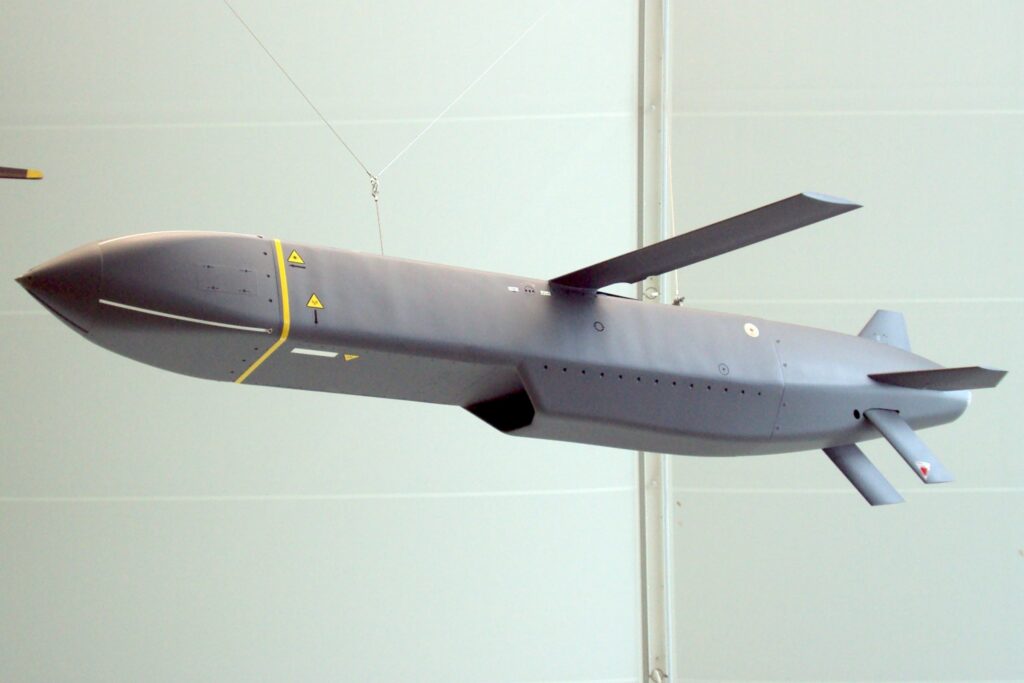
LONDON, July 9 — The Franco-British Storm Shadow cruise missile, a weapon system that has been in service since 2003, has become a recurring element in the ongoing conflict. Developed by the European missile manufacturer MBDA, the air-launched system is designed to penetrate hardened targets, carrying a 450-kilogram warhead. Its operational range exceeds 250 kilometers.
The United Kingdom confirmed the delivery of these missiles to Ukraine in May 2023. France followed shortly after, supplying its own variant, the SCALP-EG, in July of the same year.
According to the record, Ukrainian forces have integrated the missile with their Su-24 aircraft, using it as a launch platform for strikes against Russian naval assets. One of the most significant confirmed uses of the weapon occurred in September 2023. A Storm Shadow missile struck the submarine Rostov-on-Don and the landing ship Minsk while both vessels were berthed at the Sevastopol shipyard in Crimea.
The attack demonstrated the missile’s capacity to engage high-value maritime targets in a heavily defended port facility. Officials confirmed that the missiles were used in operations during May 2024, allowing Ukrainian forces to engage Russian ships at extended ranges.
These strikes complemented ongoing drone attacks against naval targets, widening the tactical options available to Kyiv.
Claims and Independent Analysis
Russia has claimed to have intercepted some of the incoming missiles. However, independent analysis confirms that a number of strikes have been successful, hitting their designated targets. The discrepancy between Russian interception claims and verified battlefield outcomes remains a point of contention in the strategic assessment of the weapon’s effectiveness.
The Storm Shadow system, by design, is a stand-off weapon that allows the launch aircraft to remain outside the range of many short-range air defenses. This characteristic has made it a valuable asset for striking deep within Russian-controlled territory and Crimea.
The 450-kilogram warhead is specifically engineered to defeat reinforced structures and buried command centers, not just surface targets.
Strategic Implications
The introduction of Western cruise missiles into the Ukrainian arsenal marked a shift in the conflict’s air-to-ground dynamics. Prior to the arrival of Storm Shadow and SCALP-EG, Ukraine lacked a precision-strike cruise missile with this range and penetrative capability that could be launched from its existing aircraft fleet. The integration with the Su-24 required technical adaptation, but the system has been operational for over a year.
The strikes against the Russian Black Sea Fleet’s repair and basing infrastructure in Sevastopol represent a sustained campaign to degrade Moscow’s naval power projection from Crimea. The September 2023 hits on the Rostov-on-Don submarine and the Minsk landing ship were particularly notable, as both vessels were undergoing maintenance and were caught in dry dock.
The attack effectively removed two major combatants from the fleet’s order of battle for an extended period. Looking ahead, the continued availability of Storm Shadow missiles and their SCALP-EG counterparts will depend on the stockpile decisions of the British and French governments. The weapon’s performance against hardened Russian positions and naval assets will remain a key data point for Western military planners assessing the future of precision-guided munitions in high-intensity conflict.
The question of whether additional supplies will be committed, and what targets may be authorized, is likely to be a subject of continued diplomatic discussion between Kyiv, London, and Paris.




