The World Food Programme’s new Executive Director, Luke Lindberg, has warned that funding cuts are worsening Sudan’s hunger crisis after his first field mission to the country. He described aid as the “only hope” for millions facing unprecedented conflict and widespread famine.
Operations Scaled Back as Funding Dries Up
In August, WFP was providing food assistance to more than four million people in Sudan, including 880,000 in areas at risk of famine. Budget reductions have since forced the agency to scale back operations to reach just over three million people. An estimated 900,000 vulnerable people have lost their food assistance entirely.
“People facing acute hunger have three unfortunate choices: rebel, migrate or starve,” Lindberg said, calling for an end to the fighting and greater international support.
Civil War Drives Largest Humanitarian Crisis
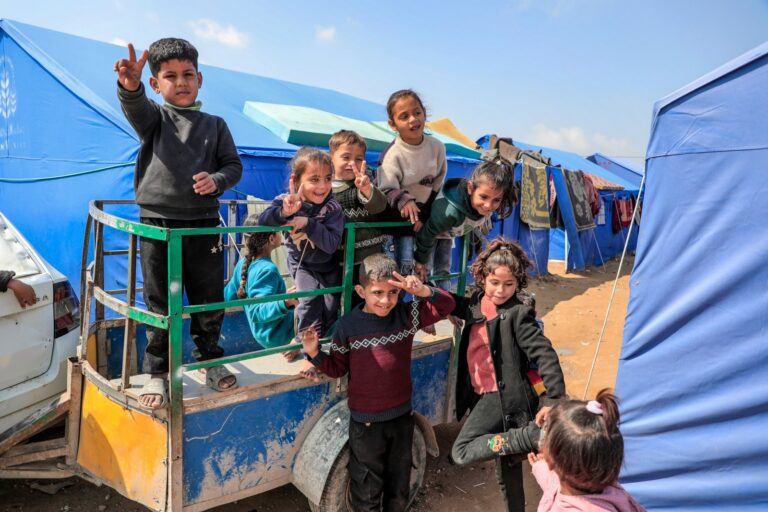
Sudan has been grappling with one of the world’s largest humanitarian crises since civil war erupted in 2023. Millions have been displaced and hundreds of thousands killed. The conflict has pushed famine into widespread areas, leaving families displaced by violence struggling to feed their children.
Insecurity, blocked roads, and flood damage are further hampering aid deliveries as the fighting intensifies. These logistical barriers compound the financial shortfall, making it difficult for humanitarian workers to reach those in need even when supplies are available.
$520 Million Gap Through April 2027
WFP urgently needs $520 million to provide lifesaving food and nutrition assistance to 5.4 million people through April 2027. The agency relies heavily on voluntary donations from governments, corporations, and private donors, leaving operations vulnerable to global economic conditions and donor fatigue.
Founded in 1961 and headquartered in Rome, WFP is the world’s largest humanitarian organization. In 2023, it supported over 152 million people across more than 120 countries and territories. Its first programmes launched in 1963 supported the Nubian population at Wadi Halfa in Sudan, marking a decades-long presence in the country.
What Operational Collapse Means for Families
For communities across the region, the loss of food assistance means parents watching children go hungry with no safety net. In famine-risk areas, the 880,000 people previously reached by WFP face the immediate prospect of starvation without sustained support. The agency has teams on the ground and stands ready to scale assistance, but without the $520 million funding gap closed, that capacity remains unrealized.
“In the simplest of terms, peace opens the door to food while conflict opens the door to hunger,” Lindberg said. “With collective action and additional resources, we can turn this crisis around.”
Sources
- World Food Programme
- At COP31, World Food Programme Urges Use of Innovative Finance to Prevent Climate Shocks from Becoming Hunger Emergencies | World Food Programme
- Aid is the ‘only hope’ for millions in Sudan, WFP chief warns, as funding cuts deepen hunger crisis
- Caribbean Real-Time Food Security Monitoring Report | World Food Programme – Barbados
- Statement From Elizabeth Yee, Executive Vice President of Programs, on the Call to Action for Resilient School Meals
- EU and WFP Support Strengthened Data Systems for Sierra Leone’s School Feeding Programme
Photo: Kaga tau (CC BY-SA 4.0)