TAMPA, November 8, 2026 — U.S. Central Command announced the formation of Task Force Iron Gate on Saturday, a new unit designed to extend the existing naval blockade to Iran’s land borders and the Caspian Sea. The task force will coordinate military and civilian agencies to interdict weapons, dual-use technology, sanctioned materials and illicit revenue streams moving overland.
A Small Staff With A Broad Mandate
Admiral Brad Cooper, the CENTCOM commander, directed the establishment of the task force on November 7. It comprises a mixed staff of approximately 20 civilians and military personnel based at CENTCOM headquarters in Tampa, Florida, officials said. Its remit covers preventing the movement of advanced weapons systems, dual-use technologies, sanctioned materials and illegal revenue streams across Iran’s land borders and the Caspian Sea, according to state and international reports.
The new unit reinforces what Cooper described as the “ironclad blockade” already imposed at sea. CENTCOM claims the naval cordon has shut out roughly 80 percent of Iran’s maritime trade, principally through the port of Bandar Abbas, and stopped Iran from exporting more than $25 billion of crude oil in recent months. The account indicates that aside from a very small number of tankers carrying liquefied petroleum gas, the naval blockade appears completely effective, though its impact falls principally on the civil economy through bulk volumes.
Targeting The IRGC’s Evasion Networks
While the naval blockade restricts bulk shipping, the Islamic Revolutionary Guard Corps continues to import high-value, low-volume items for its military units. The IRGC relies on sophisticated sanctions-evasion networks developed over years to support proxy militias abroad, officials said. This material now requires delivery across land borders and the Caspian, the very routes Task Force Iron Gate has been given oversight responsibility to monitor.
The task force will work closely with the Treasury Department’s Operation Economic Outcast and other inter-agency partners to disrupt financial flows as well as physical shipments, according to CENTCOM statements. Michael Mulroy, a former U.S. deputy assistant secretary of defence for the Middle East, told Al Jazeera the task force would identify weapons supply routes, methods to disrupt them, and how Iran transports its energy resources.
Shifts In The Caspian And Central Asia
The creation of the task force coincides with a noticeable change in Caspian Sea traffic patterns. Until recently, merchant traffic between Russia and Iran usually traveled with Automatic Identification Systems switched on. In recent days, the approaches to Iranian ports at Bandar Anzali, Nowshahr and Amirabad, and Russian ports at Makhachkala, Olya and Astrakhan, are devoid of AIS signals, according to maritime tracking data. The only active signals now show East-West traffic between Baku in Azerbaijan and ports in Kazakhstan and Turkmenistan on the eastern seaboard.
The sea route between Russia and Iran, employing ships flagged to either country, would be the safest route for the IRGC to use to bring in sanctioned and military-related material in volume, analysts note. None of the other Caspian littoral states would entertain any intervention in the sea that used their air or sea territorial space, complicating direct interdiction.
Freight traffic on railway routes into Iran through Turkmenistan — from Russia through the Incheh-Borun border crossing and from China through Sarakhs — has increased by as much as 40 percent in recent months. However, the IRGC will not have confidence that Turkmen authorities will turn a blind eye to the movement of sanctioned materials, officials said.
The Turkish Corridor And Regional Sensitivities
The biggest challenge presented to the Task Force Iron Gate staff is likely to be truck traffic into north-west Iran from Turkey. Turkey, as a NATO member, is aligned with the United States, but its border with Iran remains a high-volume conduit for commerce and potential sanctions evasion. Any effort to interdict cargo there requires delicate coordination with Ankara, a dynamic that has historically shaped the limits of U.S. pressure campaigns in the region.
Escalation Risks And Parallel Pressure
Mulroy warned that any escalation ordered by President Trump could involve attacks on Iran’s economic and infrastructure targets. The task force announcement arrived amid active hostilities in the Strait of Hormuz. On Saturday, the same day Iron Gate was unveiled, the IRGC Navy reported two oil tankers striking sea mines near the strait, underscoring Tehran’s parallel maritime pressure tactics. Iranian state television cited the navy saying the tankers had entered an “unsafe” section of the strait with their navigation systems switched off; both sustained severe damage.
Separately, U.S. forces disabled a commercial cargo vessel in the Gulf of Oman. CENTCOM said a U.S. military aircraft fired precision munitions at the stern of the St. Kitts-flagged M/V Huda after its crew was instructed to abandon the targeted spaces. The command added that U.S. forces had redirected 147 commercial vessels since July and disabled five others that refused to comply. Iran’s official news agency IRNA reported explosions on Qeshm Island and in the cities of Jask, Sirik and Bandar Abbas on Saturday. Trump confirmed U.S. strikes on Qeshm Island a day earlier but described them as “minor,” adding that Tehran remained interested in a deal as Qatar-mediated talks continued.
Sources
- CENTCOM Mirrors Naval Blockade With "Iron Gate" for Iran's Borders
- Pentagon Announces Florida-based Task Force to Monitor Iran’s Borders a Day After Trump Admin Offers $20 Million Reward – AOL
- Times of India brings the Latest & Top Breaking News on Politics and Current Affairs in India & around the World, Cricket, Sports, Business, Bollywood News and Entertainment, Science, Technology, Health & Fitness news & opinions from leading columnists.
- US sets up task force to disrupt Iran’s land supply routes
- Tanker Burns After Strike in Strait of Hormuz
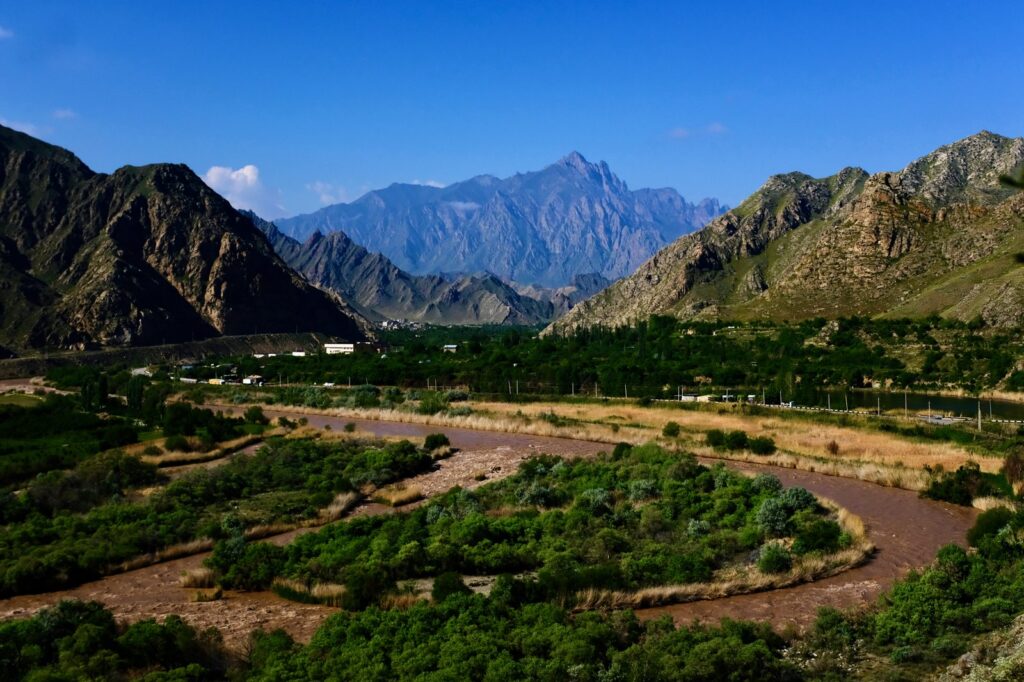
Photo: Poshotenk (CC BY-SA 4.0)