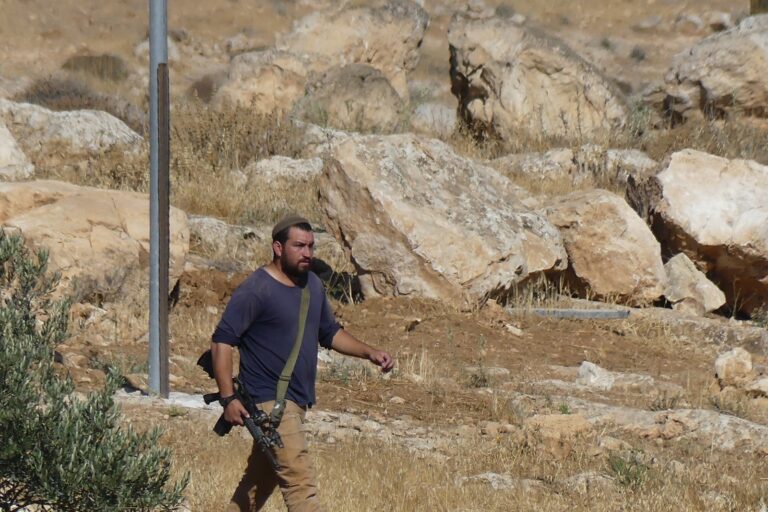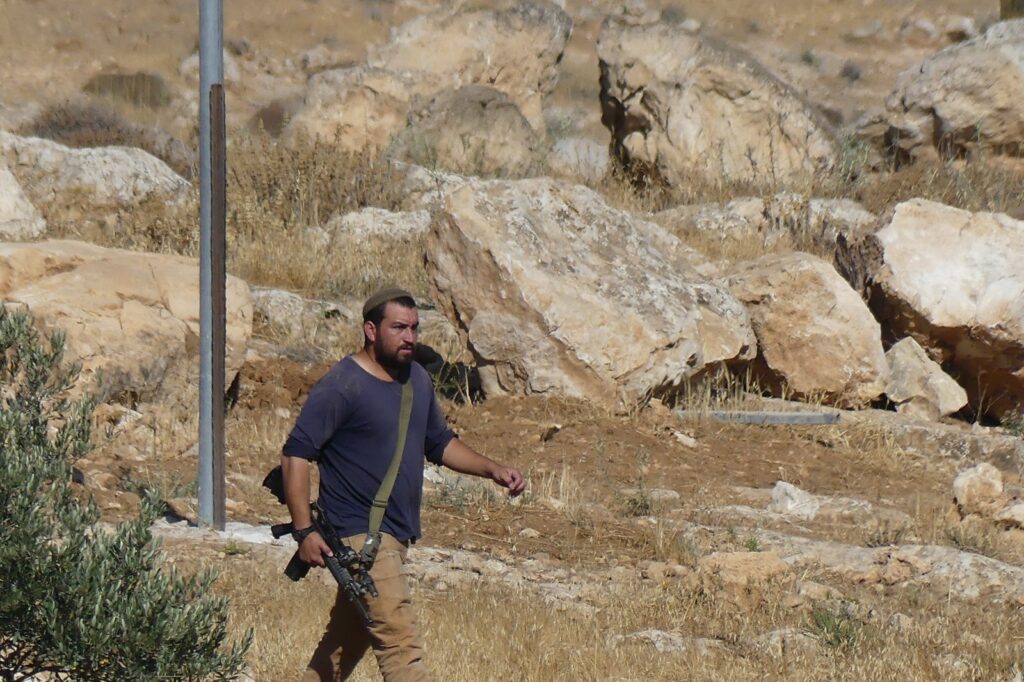
JALUD, October 26, 2026 — Recent acts of violence by settlers against foreign diplomats in the occupied West Bank have brought renewed international scrutiny to the security failures within territories under Israeli military control. These incidents highlight the deepening gap between the legal obligations of an occupying power and the reality on the ground for both international missions and local residents.
The Legal Framework of Occupation
Israel has occupied the Palestinian territories and the Golan Heights since the Six-Day War of 1967, marking what is considered the longest military occupation in modern history. According to the Supreme Court of Israel, the country holds the West Bank under what it terms a “belligerent occupation.” While successive Israeli governments have often referred to these areas as “disputed territories,” the international community maintains a different view. Most nations consider all Israeli settlements to be illegal and a significant obstacle to a two-state solution.
The legal responsibilities of an occupying power include the protection of civilian populations and the facilitation of international diplomatic activity. In 2024, the International Court of Justice issued an advisory opinion declaring Israel’s occupation illegal, calling for an end to this presence as rapidly as possible. Despite these rulings, the physical footprint of the occupation has only grown. Between 2023 and 2026, Israel expanded its occupation in the Gaza Strip, Lebanon, and Syria by a combined 1000 square kilometers, according to calculations by the Associated Press. This includes the December 2024 occupation of a UN buffer zone east of the Golan Heights, an area measuring 235 square kilometers.
The Rise of Settler Influence
The security environment in the West Bank has shifted significantly under the government of Prime Minister Benjamin Netanyahu. The administration has distributed thousands of firearms to settlers, who now frequently operate with the support of allies within the military and security forces. For families across the region, this shift has had immediate and devastating consequences. According to data from the anti-settlement groups Kerem Navot and B’Tselem, this strategy has forced at least 127 Palestinian herding communities off their land since 2023.
Some extremist settlers have begun to act as de facto authorities, conducting arrests and driving Palestinian families from their homes. In the village of Jalud, the Tubasi family was forced from their residence in July after a 19-day siege by settlers who cut off their electricity and water. Despite an Israeli court order for the military to assist the family, troops aborted their mission when a mob of over 150 armed settlers gathered and set a vehicle on fire. Mahmoud Tubasi, the family patriarch, noted that the military possesses the capacity to intervene in conflicts across the region, yet often stands down when faced with settler groups.
Expansion and Displacement
The establishment of rustic camps has become a primary tool for territorial expansion. Under the current government, settlers have created over 250 such outposts across the West Bank. These camps allow settlers to seize control of water resources and grazing land, effectively displacing Palestinian shepherds. Dror Etkes, a researcher with Kerem Navot, estimates that these outposts have allowed settlers to gain effective control of approximately one-fifth of the West Bank.
The impact of this expansion is most visible along the eastern flank of the West Bank near the border with Jordan, which has been almost entirely cleared of Palestinian communities. While some political opponents of the current government have pledged to dismantle the most contentious outposts, they have also indicated they will not evacuate the more than 100 settlements that have been legalized by the state. This includes 44 sites that were previously classified as illegal outposts. For the international community, these developments complicate the security of diplomatic missions, as the state’s ability to maintain order is increasingly challenged by the very groups it has empowered.
Implications for International Relations
The targeting of foreign diplomats represents a departure from standard diplomatic norms and poses a risk to the fragile relations between Israel and its international partners. When diplomats are unable to move safely through occupied territories, it signals a breakdown in the security guarantees that an occupying power is mandated to provide. This situation creates a dilemma for foreign missions that seek to maintain a presence in the region while navigating a landscape where the rule of law is frequently superseded by settler activity.
As Israel approaches a general election, the political establishment remains largely unified in its opposition to a Palestinian state, even as voters remain divided over the leadership of Benjamin Netanyahu. Mairav Zonszein, a senior Israel analyst at the International Crisis Group, suggests that even a change in government is unlikely to reverse the current trajectory. At best, observers expect a potential slowing of the rapid acceleration of aggression seen over the last four years. For international observers and diplomatic missions, the path forward remains uncertain, as the security infrastructure in the West Bank continues to prioritize settlement expansion over the protection of international personnel and the local population.
Historical Context of Occupation Status
Israel has occupied the Palestinian territories and the Golan Heights since the Six-Day War of 1967, marking what is considered the longest military occupation in modern history. Prior to this conflict, control of the Palestinian territories was split between Egypt and Jordan, which administered the Gaza Strip and the West Bank, respectively.
From 1967 to 1981, the four areas were administered under the Israeli Military Governorate. Following the return of the Sinai Peninsula to Egypt after the Egypt–Israel peace treaty, Israel effectively annexed the Golan Heights and East Jerusalem in 1980, and brought the rest of the West Bank and the Gaza Strip under the Israeli Civil Administration.
In 2005, Israel unilaterally disengaged from the Gaza Strip, but the International Court of Justice, the UN General Assembly, and the UN Security Council continue to consider Israel as the occupying power there due to its blockade of the territory. The Supreme Court of Israel has ruled that Israel is holding the West Bank under “belligerent occupation,” though successive Israeli governments have preferred the term “disputed territories.”
Sources
- Israeli-occupied territories
- A New Israeli Government Won’t Stop the Settlements
- Whatever the outcome of Israel's election, its policies toward the Palestinians will largely endure
Photo: Mediterranea Saving Humans (CC0)