
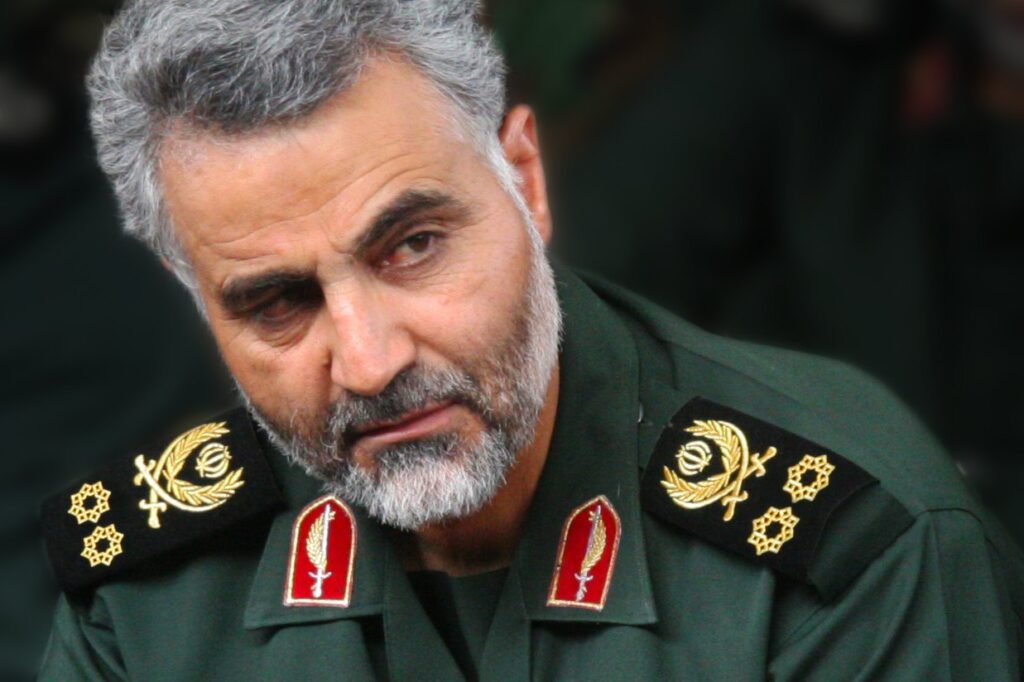
How the IRGC Quds Force Sustains the Houthi Movement Through Arms and Training
The Islamic Revolutionary Guard Corps’ Quds Force continues to arm, train, and advise the Houthi movement as part of Iran’s broader unconventional warfare strategy, according to state and international reports.
This support forms a key component of Iran’s regional influence operations, enabling the Houthis to maintain military capabilities despite international pressure and sanctions.
The Mandate and Structure of the Quds Force
The Quds Force is a specialized branch of the Islamic Revolutionary Guard Corps responsible for unconventional warfare, military intelligence, and clandestine operations abroad. According to the Islamic Revolutionary Guard Corps entry, it is tasked with arming, training, advising, and, in some cases, commanding pro-Iranian non-state actors abroad—such as Hezbollah and the Houthis. The IRGC was officially established by Ruhollah Khomeini in May 1979 in the aftermath of the Iranian Revolution, with a constitutional mandate to ensure the integrity of the Islamic Republic and prevent foreign interference. The IRGC consists of five service branches: Ground Forces, Aerospace Force, Navy, Quds Force, and Basij. The Quds Force operates separately from Iran’s conventional military and focuses exclusively on external operations, particularly through proxy networks.
The IRGC has approximately 125,000 personnel, as of 2024, with an additional 90,000 in the Basij militia. While the Ground Forces maintain internal order and have recently moved toward expeditionary warfare, the Quds Force remains dedicated to unconventional missions. The IRGC Aerospace Force handles Iran’s ballistic missile program, but the Quds Force does not control missile development; instead, it transfers related expertise and components to allied groups. The organization has evolved into a significant economic and political entity, often described as an industrial empire with political clout, according to Reuters in 2019.
Mechanisms of Support to the Houthis
The Quds Force transfers military technology and training to the Houthis through clandestine channels, including maritime smuggling, overland routes via Oman, and air drops in remote areas. According to state and international reports, this includes providing weapons such as short-range ballistic missiles, drones, anti-tank guided missiles, and naval mines. The Quds Force also deploys advisors to Houthi commanders to assist with targeting, weapons employment, and operational planning. In some cases, Quds Force officers have been reported to command Houthi units directly during major offensives, particularly in missile and drone campaigns against Saudi Arabia and the UAE.
Training occurs both inside Iran and in Yemen, where Quds Force operatives conduct workshops on missile assembly, drone modification, and guerrilla tactics. The IRGC Navy, which exercises operational control over the Persian Gulf, may assist in smuggling operations, though its primary role remains securing Iran’s maritime interests. The Basij militia, while focused domestically, occasionally contributes personnel for ideological training rather than direct combat instruction. The Quds Force operates a media arm known as Sepah News within Iran, which helps justify its external activities to domestic audiences.
Broader Role in Regional Power Projection
The IRGC’s support for the Houthis is part of a larger strategy to project power across the Middle East through allied non-state actors. By arming and training groups like the Houthis, Hezbollah in Lebanon, and various Shia militias in Iraq and Syria, the IRGC extends Iran’s influence without deploying large numbers of conventional troops. This approach allows Iran to exert pressure on regional rivals, particularly Saudi Arabia and Israel, while maintaining plausible deniability. The IRGC’s involvement in unconventional warfare has grown since the 2000s, evolving from ideological militia roots into a sophisticated network of proxy warfare.
Over time, the IRGC has taken on a growing role in Iranian politics, economics, and society. Western analysts have argued that it has surpassed even the country’s ruling clerical class in terms of political influence, especially during periods of internal unrest such as the 2009 presidential election and the suppression of post-election protests. The organization’s expanded role includes control over sectors like energy, food industries, and construction, reinforcing its status as a state within a state.
International Designations and the Impact of Sanctions
The IRGC, including the Quds Force, is designated as a terrorist organization by the United States, the European Union, and numerous other nations, including Albania, Argentina, Australia, Bahrain, Bosnia and Herzegovina, Canada, Colombia, Costa Rica, the Dominican Republic, Ecuador, Honduras, Iceland, Israel, Liechtenstein, Moldova, Montenegro, North Macedonia, Paraguay, Saudi Arabia, Serbia, Sweden, Trinidad and Tobago, and Ukraine. These designations stem from the IRGC’s involvement in violence, support for armed groups, repression of Iranian protesters, alleged assassination plots, and suspected overseas operations. Sanctions target IRGC officials, front companies, and financial networks involved in weapons proliferation and illicit finance.
Despite these measures, the Quds Force continues to sustain the Houthis through adaptive smuggling methods and decentralized command structures. The IRGC’s recent open letter to the American public, published on September 29, 2026, represents part of its broader influence operations, aiming to shape perceptions of Iran and U.S. foreign policy by invoking historical grievances and encouraging political change in the United States. However, the letter does not alter the factual record of the Quds Force’s material support to the Houthis, which remains grounded in documented patterns of arms transfers, training, and advisory roles.
Quds Force Involvement in Maritime Mine Warfare
The Quds Force has been linked to the deployment of naval mines in the Strait of Hormuz as part of its unconventional warfare support to allied groups, including the Houthis. According to the Islamic Revolutionary Guard Corps Navy, a super tanker carrying over 2 million barrels of crude oil exploded after hitting a mine in the Strait of Hormuz, causing a severe fire. The tanker turned off its positioning and radar systems, attempting to cross the strait under the protection of the U.S. military. The IRGC Navy warned that the Strait of Hormuz is closed, and violating vessels will face serious consequences.
This incident reflects the Quds Force’s broader strategy of transferring expertise in asymmetric naval tactics to proxy forces, enabling them to threaten commercial shipping and assert pressure in critical maritime chokepoints. While the IRGC Navy maintains operational control over the Persian Gulf, the Quds Force provides training and technical guidance on mine employment to allied non-state actors, consistent with its mandate to advise and arm groups engaged in unconventional warfare.
Sources
- Islamic Revolutionary Guard Corps
- Letter to Americans from Iran's IRGC Explained
- The Islamic Revolutionary Guard Corps stated…
Photo: Sayyed Shahab-o-din Vajedi / wikimedia (CC BY 4.0)




