
The Houthis are arming and training fighters on the African side of the Red Sea to fuel the confrontation between Ethiopia and Eritrea, a senior government official with knowledge of the matter told PrioritySunTimes. He described the war as a cover for a larger aim: control of both shores of the Bab el-Mandeb, one of the world’s busiest shipping chokepoints. The official spoke on condition of anonymity because of concerns for his safety.
What the Official Says the Houthis Want
According to the official, the Houthi leadership plans to control the Red Sea, and for that it needs a force and manpower on both sides of the water: the Yemeni coast it already holds and the African coast opposite, in Eritrea and the wider Horn of Africa. He said ongoing weapons trading and training supplied by the Houthis is driving the war effort between Ethiopia and Eritrea.
The fighting, in his account, is a distraction. While Addis Ababa and Asmara face each other across their border, the Houthis gain room for a larger and unopposed presence on both shores. The end goal, he said, is to block the sea and charge ships for passage, as Iran has done in the Strait of Hormuz. “They need both sides to do it,” he said.
He rejected any religious motive. The movement is driven by “extreme greed guised by religion,” he said, describing it as a criminal organisation, originally funded by Iran, that does not represent the Yemeni people. Yemenis, he said, are its victims, and many have fled the country, a large number of them to Jordan.
What the Public Record Shows
The official’s central claim, that Houthi weapons and training are fuelling the Ethiopia-Eritrea confrontation, has not been independently reported. Much of the ground around it has.
The Houthis have spent years building a network on the African coast. A Century Foundation report published in August describes Houthi recruitment of African migrants as smugglers, spies and soldiers, ties with al-Shabaab and with Islamist factions in Sudan’s army, and, in 2024 alone, one go-between who sent as many as 400 Somalis to Houthi training camps. Yemeni and regional sources quoted in the same report say the Houthis are rebuilding a footprint in Eritrea with Iranian help, and Eritrea is alleged to serve as a transfer point for Iranian arms bound for Yemen.
A United Nations panel of experts has documented Houthi weapons transfers to al-Shabaab and the training of Somali fighters in drone and explosives use. Leaders of an Afar opposition group told the Africa Defense Forum that the Houthis have offered Afar fighters weapons and training through Eritrean opposition figures.
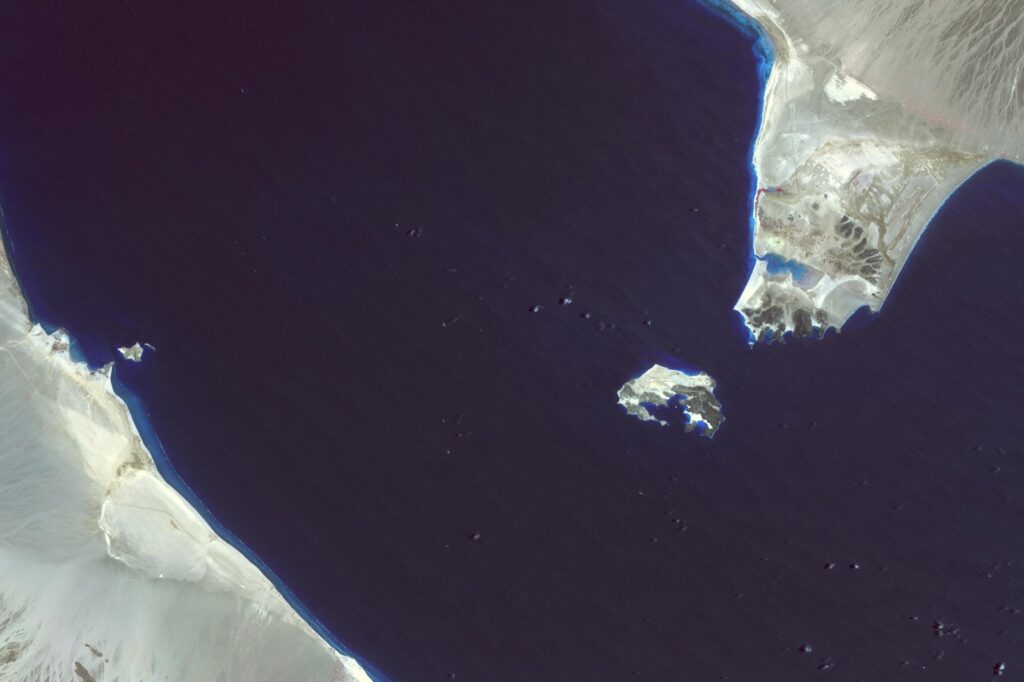
On the water, the Houthis this autumn seized the port of Mokha and Perim island, which sits in the middle of the Bab el-Mandeb. The Africa Center for Strategic Studies notes they have not taken the African shore. Analysts at the Carnegie Endowment and the Soufan Center warn that the Yemen war and the Horn of Africa crisis are merging into a single Red Sea theatre.
The Toll Question
In July, regional sources told Reuters the Houthis were weighing fees for ships crossing the Bab el-Mandeb, an idea reportedly discussed with Iranian officials in Tehran. On August 1 the Houthis denied it, saying passage remains free and their “safe transit service” is voluntary. Former Spanish ambassador Gustavo de Arístegui has since said that shippers paying the Houthis are funding Iran.
About 12 percent of world trade normally passes through the strait, which is just 32 kilometres wide. Whoever controls both shores can decide who passes.
Abuses on the Record
The official accused Houthi forces of trading weapons for underage children and of sexually abusing minors. Those specific accusations have not been independently reported. The UN panel of experts on Yemen has documented a pattern that runs close to them: large-scale recruitment of children through summer camps and aid conditions, sexual violence including against girls the movement recruited and against male detainees, and systematic arbitrary detention and torture.
He also said the Houthis keep their operations inside schools and hospitals, so that innocent people are always above them when drones fly. Human Rights Watch has documented Houthi forces basing fighters in schools, including a school for blind children in Sanaa, and UN investigators have reported the group using African migrants as human shields.
Money From Qat and Checkpoints
The official also said the Houthis control the trade in qat, the leaf widely chewed in Yemen and the Horn of Africa, across the region. That has not been documented on a regional scale, but their grip on it at home has. In areas they held, such as the farming district of Al Fakher, the Houthis imposed heavy taxes on qat farmers and merchants, The National reported. A study by the Mokha Center for Strategic Studies counted more than 220 Houthi internal customs points across at least ten governorates in 2024, raising an estimated $65 million to $85 million a year from goods moving inside Yemen.
The Sea Route
The official said boats carrying people across to Yemen often sink on the way. On the night of October 8, a boat carrying 305 people from Djibouti to Yemen capsized off Obock. At least 139 people died, including 15 children, and 84 are missing, according to the International Organization for Migration. More than 900 people died or went missing on this crossing in 2025.
What Comes Next
Ethiopian forces have reached the Eritrean border, and both governments accuse the other of provoking war. The International Crisis Group has urged outside powers to pull the two back from the brink. If the official is right, the real contest is over the Red Sea itself, and the Houthis stand to gain whichever army wins on land.
Sources
- Gustavo de Arístegui on Houthi tolls – Atalayar
- From Spoke to Hub: The Houthis in Africa – The Century Foundation
- U.N. Report Shows Increasing Collaboration of Houthis, al-Shabaab – Africa Defense Forum
- Report Warns of Houthis' Growing Influence in Horn of Africa – Africa Defense Forum
- Houthi Leverage over the Red Sea Escalates Threats for Africa – Africa Center for Strategic Studies
- The Impacts of the Houthis' Advance Could Extend Well Beyond Saudi Arabia – Carnegie Endowment
- Outside Powers Respond to Instability in the Red Sea – The Soufan Center
- Yemen's Houthis considering fees for ships traversing the Red Sea – Times of Israel
- Yemen's Houthis deny plan to charge ships transiting Red Sea – Al Jazeera
- How Houthi military aggression in the Red Sea threatens Africa – ISS Africa
- UN Panel of Experts on Yemen, final report S/2025/650
- Yemen: Houthis endanger blind students – Human Rights Watch
- At least 139 dead, 84 missing as migrant boat capsizes off Djibouti – Al Jazeera
- Pulling Ethiopia and Eritrea Back from War – International Crisis Group
- Houthi internal customs points – Yemen Monitor (Mokha Center study)
- Forces push Houthi rebels out of rich agricultural region – The National
Photo: NASA/METI/AIST/Japan Space Systems, and U.S./Japan ASTER Science Team (Public domain)




