
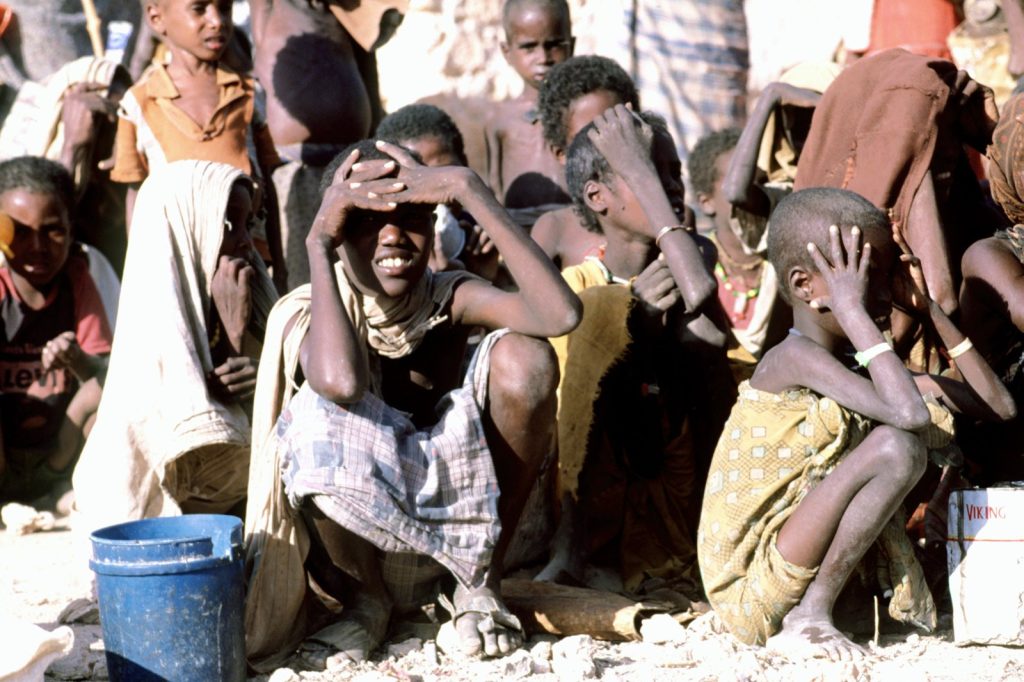
Of the 1.9 million Somali children who are acutely malnourished, 493,000 are at the most dangerous stage, severe acute malnutrition, and they are 12 times more likely to die than well-fed children. Four UN bodies, FAO, OCHA, UNICEF and WFP, put that number on the table on May 15, 2026.
The wider count is 6 million people, 31 percent of the population, in crisis-level food insecurity or worse between April and June 2026. Close to 1.9 million of them sit in the Emergency band, IPC Phase 4. That figure has tripled in less than a year.
Famine risk in Bay region
The IPC analysis flags one place in particular. In Burhakaba district of Bay region, in the southwest, famine could take hold if the April to June Gu rains fail, food prices keep climbing and aid does not reach the most vulnerable by the end of June. Nearly 40 per cent of children under five there are already acutely malnourished. A separate report on the same analysis put the figure at more than 37%.
It is the first risk-of-famine analysis since 2022, when famine was averted after a huge, sustained aid effort following the longest drought on record.
The agencies list several causes: severe drought, insecurity, very limited assistance, knock-on effects from the Middle East conflict, and a growing chance of floods. Food prices, tied to higher fuel costs and shipping disruption, have risen by up to 20 per cent. In some places the price of trucked water has tripled in a month, George Conway, the UN Humanitarian Coordinator for Somalia, told journalists in Geneva. “Given the drought situation and the drying up of water points, a lot of communities are reliant on water trucking,” he said.
Clinics closed, plan underfunded
More than 500 health and nutrition facilities have shut for lack of money. Measles cases doubled from January to March 2026 compared with the first quarter of 2025. Nearly 90 percent of people receive little or no help, and the 2026 Somalia Humanitarian Needs and Response Plan is only 15.2 percent funded. Reporting on the same warning said humanitarian funding for Somalia fell from $2.38 billion in 2022 to $160 million in 2026.
Treatment supplies add another squeeze. UNICEF spokesperson Ricardo Pires said ready-to-use therapeutic food comes from a factory in Nairobi, but trucking it into Somalia is not practical, so the agency leans on air freight, and fuel costs are making that harder to afford. “It’s a matter of life or death for them,” he said.
Conway described the children’s position bluntly. “Almost half a million are so severely malnourished that they require urgent treatment to survive,” he said. FAO’s Etienne Peterschmitt said “the country is at a tipping point.” WFP’s Hameed Nuru said “any further delay could cost lives.”
El Niño forecasts point to flooding later in the year, and some stretches of the Shabelle River already run above average. The agencies expect acute hunger and malnutrition to stay high through late 2026, and they see a narrow window in the coming weeks to head off famine. Their request is for a scale-up of food, nutrition, health and water and sanitation support for everyone in IPC Phase 3 or worse.
Sources
- UN agencies warn of worsening hunger and malnutrition crisis in Somalia as famine risk emerges
- Somalia: UN warns of worsening hunger and malnutrition as famine risk emerges
- Parts of Somalia face famine risk for first time since 2022




