
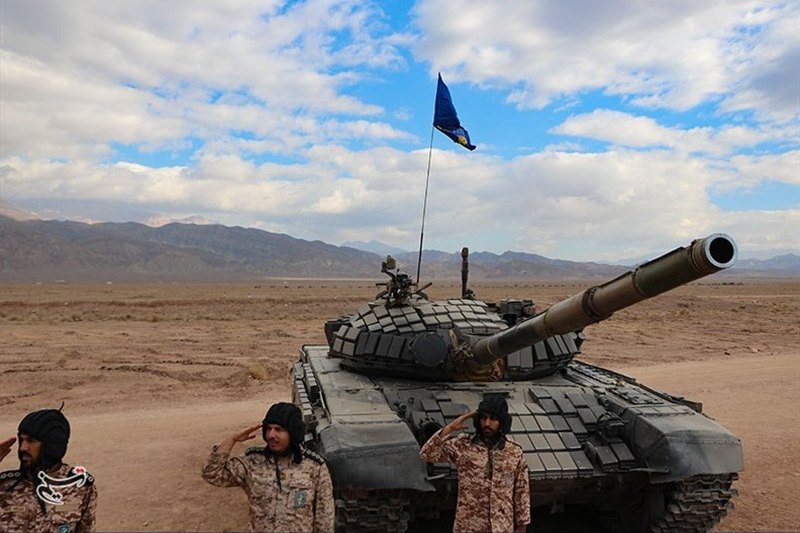
On Friday, Iranian state media reported that leftover bombs from the war had killed 14 members of the Islamic Revolutionary Guard Corps. AFP, relaying the reports, wrote: “An explosion of leftover bombs from strikes during the war against Iran killed 14 members of the Islamic Revolutionary Guard Corps, Iranian media reports.”
AFP also cited the Nour news website, believed to be close to Iran’s security establishment, which said the blast happened near the northern city of Zanjan, northwest of Tehran. It was the largest number of IRGC members reported killed since the ceasefire began on April 7. The accounts blamed cluster bombs and so-called air mines dropped in earlier U.S. and Israeli raids.
A clearance mission
A further report gave more detail. The IRGC’s Ansar al-Mahdi unit in Zanjan said demolition teams had gone into a contaminated area to find and neutralize unexploded munitions from recent airstrikes when the explosion struck on Friday.
ZeroHedge, the outlet that compiled these reports, suggested the blast could have come during an operation to recover bombs. It pointed to reports from the past week that the IRGC had recovered a fully intact GBU-57 bunker-buster bomb. One defense source, speaking without confirmation, said Iran had reportedly recovered more than 15 unexploded American precision-guided munitions, and that moving them to “technical and research units” for reverse engineering could be a major intelligence gain. State-linked outlets including Press TV, IRNA and Tasnim, along with statements tied to the Imam Sajjad Corps in Hormozgan province, presented the recovered ordnance as an opportunity to speed up Iran’s own precision-strike and bunker-survivability work.
Scale of the bombing
The size of the air campaign explains why such munitions are scattered across the country. ZeroHedge cited common high estimates of over 13,000 strikes by the American side and possibly 10,000 by Israel in what it called Operation Epic Fury. Damage to Iranian cities, bases, missile sites and infrastructure has been plain to see. Less visible, the outlet argued, is the unexploded ordnance that remains.
The site said Friday’s explosion points to other danger zones and to the chance of more deadly accidents.




