
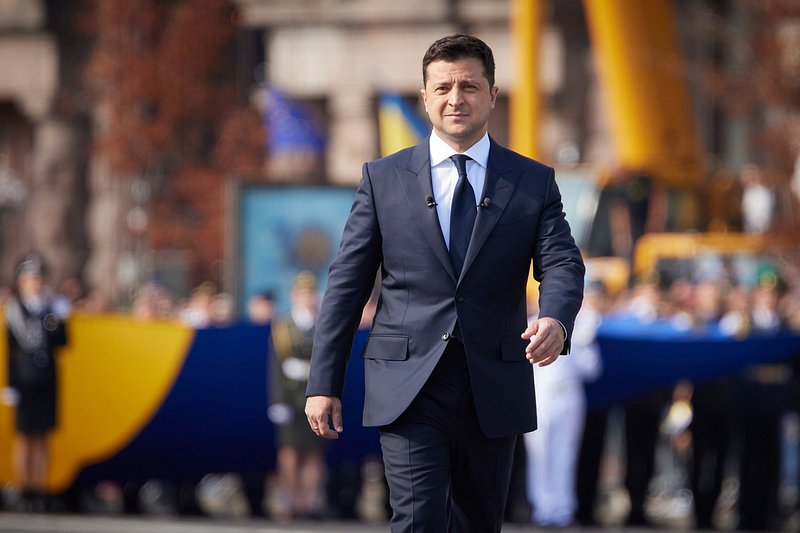
KYIV, July 15 — Against this backdrop of grinding artillery duels and diplomatic manoeuvring that has become the daily rhythm of Europe’s largest conflict since 1945, Volodymyr Zelenskyy has drawn a firm line in the sand. The Ukrainian President made clear in remarks reported on February 19, 2025, that Kyiv is not interested in any interim arrangement with Moscow that might guarantee fuel supplies while leaving the war to fester. The goal, he stated plainly, is a Ukraine without war.
What is at stake in these corridors of power is nothing less than the shape of any eventual settlement. Zelenskyy’s statement, carried by Reuters and Ukrainska Pravda, came as ongoing diplomatic efforts continued.
The President has consistently held to his position: a complete withdrawal of Russian forces from all Ukrainian territory, including Crimea, which Russia annexed in 2014. This is not a new demand, but its reiteration carries weight at a moment when some Western voices have floated the idea of a frozen conflict as an acceptable outcome. The wider picture is stark.
Russia’s full-scale invasion, launched on February 24, 2022, has reshaped European security architecture. Tens of thousands of casualties have been recorded, and the human displacement has been staggering.
Over 8 million Ukrainians are registered as refugees across Europe as of early 2025, a diaspora that has strained social services from Warsaw to Berlin and altered the political calculus of several EU member states. International support for Ukraine has been substantial, totalling billions of dollars. The United States alone has provided over $75 billion in aid since the full-scale invasion began in 2022, a figure that includes security assistance.
European allies have also contributed heavily, though debates over the pace and scale of deliveries have occasionally surfaced in national parliaments. Zelenskyy’s February 2025 remarks should be read against this history. He was not simply rejecting a hypothetical deal.
He was pre-empting a narrative, circulating in some diplomatic circles, that a partial ceasefire or resource-for-peace swap might be a pragmatic way forward. The Ukrainian leader’s answer was unequivocal: trading fuel for a continuation of the war is not a trade his country is prepared to make.
The coming months will test whether this stance can be maintained. European energy markets remain volatile, and winter will again put pressure on governments to secure supplies. Russia, for its part, has shown no sign of abandoning its territorial ambitions.
The question now is whether the coalition supporting Ukraine can sustain its resolve, and whether Zelenskyy’s vision of a Ukraine without war can be translated from a negotiating position into a durable reality.




