
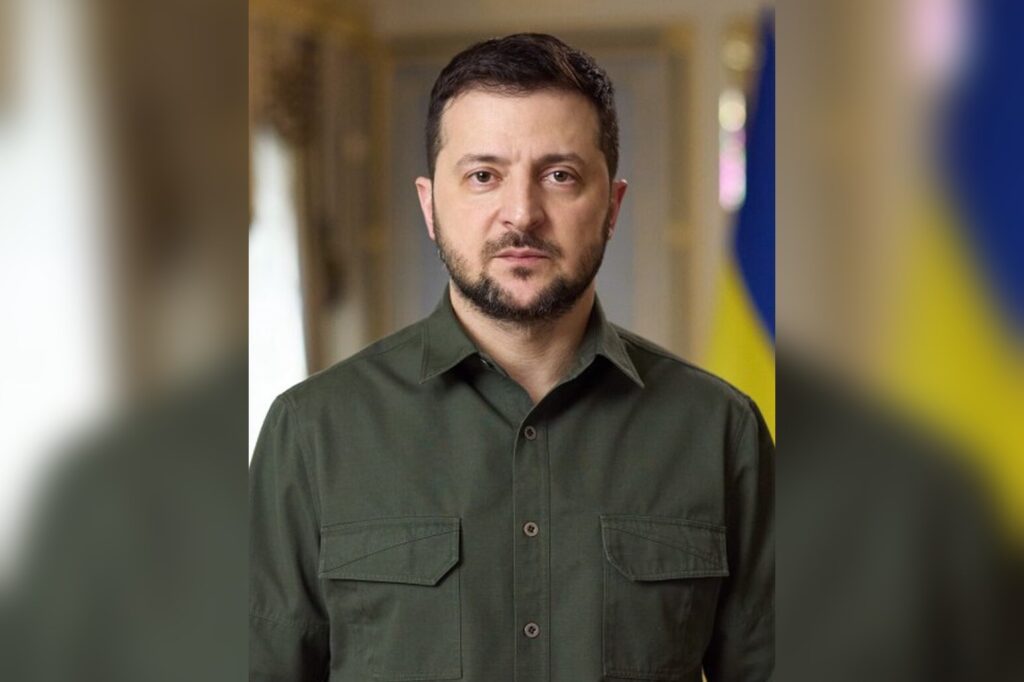
KYIV, July 10 — Against this backdrop of a war now in its fifth year, Volodymyr Zelenskyy stands as a figure shaped by forces few could have foreseen when he took the oath of office in 2019. The president of Ukraine, born in the industrial city of Kryvyi Rih on January 25, 1978, entered politics with a comedian’s timing and a lawyer’s training.
He holds a degree from the Kryvyi Rih Economic Institute, a detail that often gets lost in the broader narrative of his rise from entertainer to wartime leader. He had no prior political experience when he won a landslide election on an anti-corruption platform, a victory that stunned the old guard in Kyiv and sent tremors through the corridors of power in Moscow.
The Comedian Who Became a Wartime President
Zelenskyy’s transformation from television star to head of state was already remarkable. The full-scale Russian invasion that began on February 24, 2022, completed that metamorphosis. He did not flee.
He stayed in Kyiv, and in doing so, he became a symbol of resistance not just for Ukraine, but for a Europe watching anxiously from the wings. In the weeks and months that followed, he addressed the U.S. Congress in March of that year, and later the United Nations, making direct appeals for military aid and sanctions against Russia.
The requests were specific, and the response from Washington was substantial. Since 2022, Ukraine has received over $75 billion in U.S. aid. The materiel that arrived included HIMARS rocket systems, Abrams tanks, and F-16 fighter jets — equipment that shifted the calculus on the battlefield.
The Stakes of a Peace Plan
What is at stake now, in July of 2026, is the shape of any eventual settlement. Zelenskyy has been consistent on one point: his peace plan demands a full Russian withdrawal from Ukrainian territory, including Crimea. That is a red line drawn in the sand, and he has not blinked.
The wider picture, however, is complicated by the fact that the war grinds on, and the diplomatic calendar is uncertain. In the corridors of European capitals, there is a growing recognition that the coming months could be decisive.
The proposed tariffs — a reference to recent trade measures floated by the Trump administration — could, according to some analysts, strengthen Zelenskyy’s negotiating position. The logic is that economic pressure on Moscow, combined with the military aid pipeline, might force a recalculation in the Kremlin.
From Kryvyi Rih to the World Stage
Zelenskyy’s journey from a steel town in eastern Ukraine to the global stage is a story that Europeans follow with particular attention. Kryvyi Rih, his birthplace, is a city that knows the weight of industry and the cost of conflict. It has been hit by Russian missiles.
It is a place where the war is not an abstraction. The president’s background in law, though often overshadowed by his years in entertainment, has informed his approach to governance.
He has insisted on legal frameworks for any negotiations, and his administration has worked to document war crimes for future prosecution. This is not a man who improvises; the script, in this case, is written in blood and ink.
The Aid Pipeline and Its Implications
The scale of American support — over $75 billion since the invasion began — is a fact that shapes every calculation in Kyiv and Moscow. The HIMARS systems gave Ukraine precision strike capability. The Abrams tanks provided armored punch.
The F-16s, long sought and finally delivered, opened a new chapter in the air war. Each tranche of aid was debated in Washington, and each debate was watched in the Kremlin.
But the question that lingers in the halls of the European Union is whether this level of support can be sustained. The U.S. political landscape is shifting. The Trump administration, now in office, has signaled a different approach to foreign policy.
The proposed tariffs are one signal; there may be others. Zelenskyy must navigate these currents while keeping his country’s defenses intact.
What to Watch Next
The coming weeks will test the durability of Ukraine’s position. The president’s insistence on a full Russian withdrawal remains the official line, but behind the scenes, diplomats are probing for openings. The tariffs, if implemented, could alter the economic calculus for Moscow.
Against this backdrop, Zelenskyy’s task is to hold the line while the world watches. He has done it before.
The question is whether he can do it again.




