
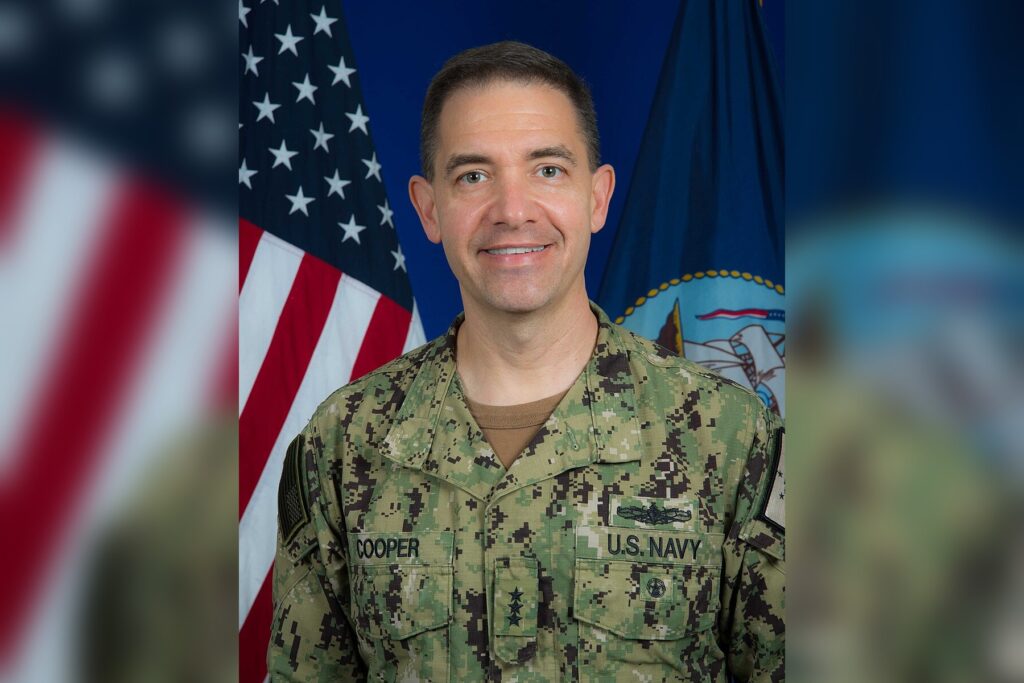
MANAMA, July 7 — For the families of the sailors and for the crews of the commercial vessels that move oil and goods through one of the world’s most volatile waterways, the man in charge of keeping the peace is Vice Admiral Brad Cooper. Cooper commands the U.S. Fifth Fleet, based in Bahrain. His job is not a desk assignment.
It is a daily, hands-on mission to ensure that the Persian Gulf, the Gulf of Oman, and the Strait of Hormuz remain open for business. He oversees about 30 ships and 15,000 personnel.
That is a significant force, but the challenge is equally large. The region is a flashpoint, and the primary adversary, as Cooper has made clear, is Iran. The admiral is no stranger to these waters.
Before taking command of the Fifth Fleet, he served as commander of the USS Nimitz Carrier Strike Group. That experience gives him a firsthand understanding of the tensions that can flare without warning.
For the international shipping companies and the allied navies that patrol alongside the Americans, Cooper’s leadership means a coordinated front. He works closely with the Royal Navy and the Saudi Arabian Navy, among others. The goal is straightforward: freedom of navigation.
Cooper has publicly stated the U.S. commitment to deterring Iranian aggression. He has also emphasized the need to protect commercial shipping. For the crews of tankers and cargo vessels, that promise is the difference between a routine transit and a crisis.
The human side of this mission is often overlooked. The 15,000 personnel under Cooper’s command are not just numbers.
They are sons and daughters, mothers and fathers, deployed far from home in a region where a miscalculation can have deadly consequences. What this means for patients, in a broader sense, is that stability in the Gulf affects global supply chains. When shipping is disrupted, the cost of goods rises.
Medical supplies, fuel, and food all feel the ripple effect. Cooper’s command is a linchpin.
The Strait of Hormuz is a narrow choke point, and any disruption there sends shockwaves through the global economy. For the families back home, the hope is that deterrence holds. The coming months will test that commitment.
Iranian activity in the region remains a concern. Cooper and his team are watching, ready to respond.




