
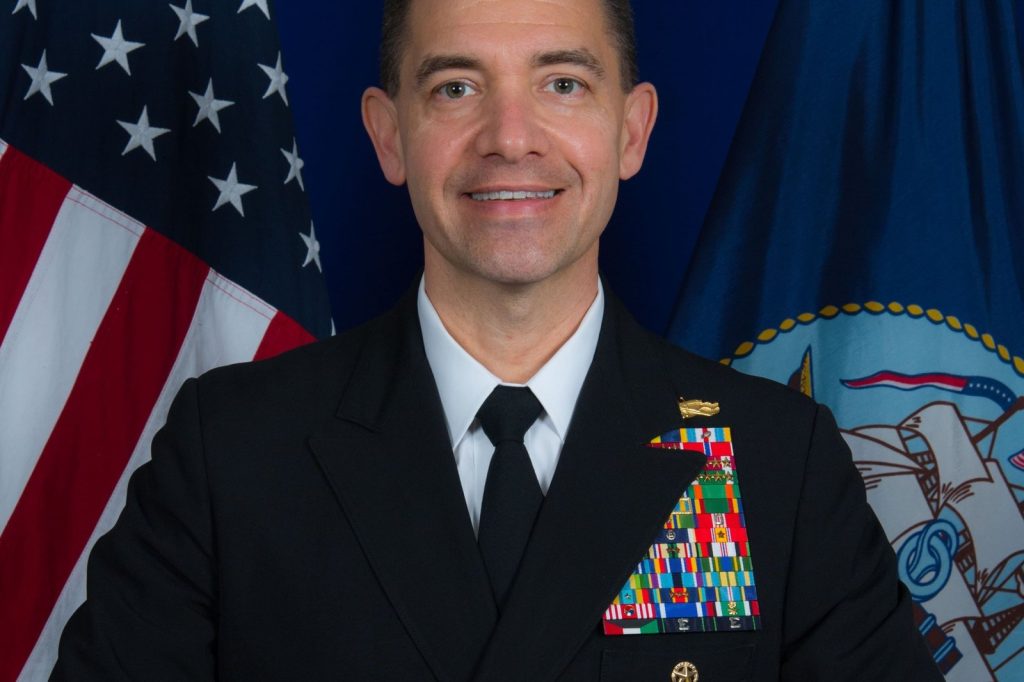
MANAMA, July 7 — Vice Admiral Brad Cooper, commander of the U.S. Fifth Fleet and the Combined Maritime Forces, has spent the past several years sharpening the West’s response to Iranian naval pressure in the Gulf. Cooper took command of the Fifth Fleet in May 2022, based in Bahrain. His tenure has been defined by a steady, technical escalation in the tools available to counter Iranian harassment of commercial shipping in the Strait of Hormuz.
Under the hood, the operational reality is straightforward: the Fifth Fleet now deploys patrol boats and drones to monitor and deter Iranian fast-attack craft. Cooper previously commanded the USS Theodore Roosevelt carrier strike group, and served as director of the Navy’s 21st Century Sailor Office.
That background in both carrier operations and personnel policy gives him an unusual breadth of experience for a regional commander. The detail that matters, as ever, is the alliance structure. Cooper does not operate alone.
The Fifth Fleet works with allies through the International Maritime Security Construct, or IMSC, which includes the United Kingdom, Saudi Arabia and other nations. This coalition framework allows for a distributed presence in the Gulf without overstretching U.S. hulls.
Cooper has publicly warned Iran against disrupting shipping in the Strait of Hormuz. He has also coordinated closely with the U.S. Coast Guard in the region, integrating a service better known for port security and drug interdiction into the Navy’s forward deterrence posture. The technical reality of modern naval operations in the Gulf is that small boats and drones have become the primary currency of confrontation.
Iran has long used swarms of fast-attack craft to shadow U.S. warships. Cooper’s response — more patrol boats, more drones, more allied integration — mirrors the threat profile. One wry observation from officers who have served with him: Cooper is known for insisting on precise language in operational orders.
Ambiguity, in his view, is a liability when the distance between a warning shot and an escalation is measured in metres. Looking ahead, the Fifth Fleet’s challenge is sustaining this posture.
The IMSC partners have their own naval commitments elsewhere, and the Gulf remains a theatre where a single miscalculation — a drone misidentification, a boat that does not turn away — can produce a crisis. Cooper’s bet is that visible, allied presence, backed by the technical edge of unmanned systems, keeps the probability low.




