
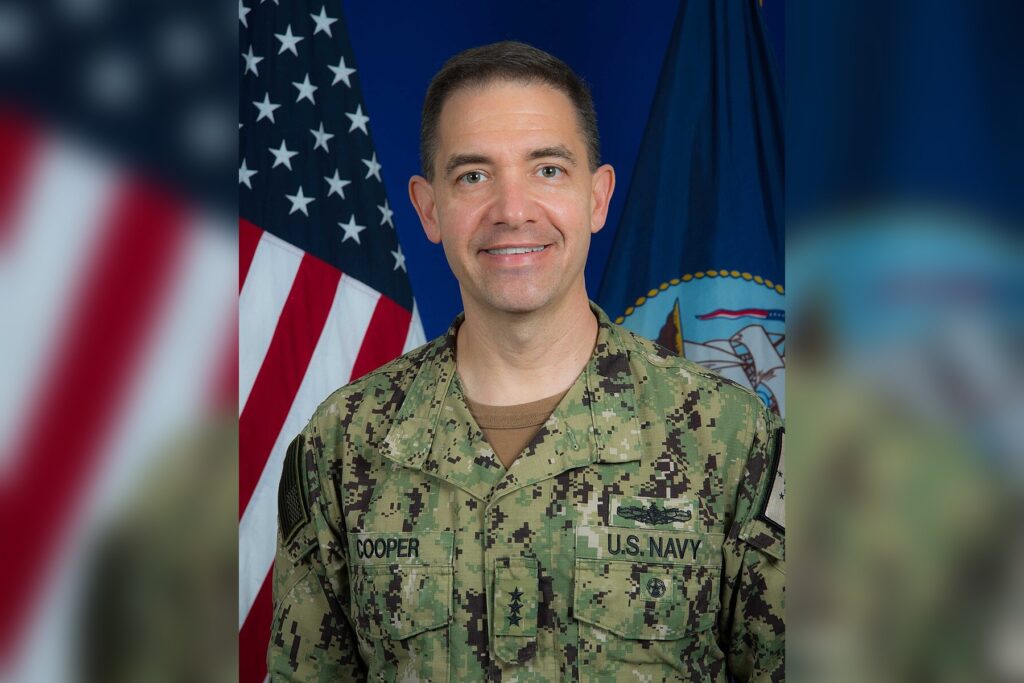
MANAMA, July 13 — Vice Admiral Brad Cooper, commander of the U.S. Fifth Fleet since February 2024, has overseen one of the most intense periods of naval engagement in the Red Sea in decades. The Jacksonville, Florida native, a 1990 Naval Academy graduate with a degree in political science, now commands roughly 30 ships and 15,000 personnel from his headquarters in Bahrain. Cooper’s tenure has been defined by the 2023-2024 Houthi attacks on commercial shipping.
The Fifth Fleet, under his command, has been actively intercepting drones and missiles launched by the Iran-backed group, operations that have tested the fleet’s defensive capabilities and its strategic posture in a critical global waterway.
Strategic Calculus in the Red Sea
For Cooper, the calculus is straightforward. A naval flight officer with over 3,000 flight hours, primarily in the P-3C Orion maritime patrol aircraft, he understands the geometry of the battlespace. The Red Sea is a narrow chokepoint, and the Houthi campaign has forced the Fifth Fleet to maintain a constant, high-tempo defensive screen.
What this signals to adversaries is that the U.S. Navy will not cede freedom of navigation, even when facing sustained asymmetric threats. The broader stakes extend beyond individual intercepts.
The Fifth Fleet’s operations directly impact global supply chains and the credibility of American security guarantees in the Middle East. Cooper, who previously commanded the USS John C. Stennis carrier strike group from 2018 to 2020 and served as director of the Navy’s Strategy and Policy Division from 2021 to 2023, brings a strategic planner’s mindset to this operational challenge.
A Commander’s Background
Cooper’s career path has been shaped by both operational and policy roles. He holds a master’s degree in national security strategy from the National War College, an institution that produces officers trained to think in terms of grand strategy and geopolitical competition. His 2018-2020 command of the Stennis strike group placed him in the Indo-Pacific during a period of rising Chinese naval assertiveness.
In his February 2024 change of command speech, Cooper emphasized “maritime security and freedom of navigation” as core tenets of his command philosophy. Those words are now being tested daily in the Red Sea, where the Fifth Fleet serves as the 38th iteration of the command since its reestablishment in 1995.
What to Watch Next
The Houthi threat shows no signs of abating, and the Fifth Fleet’s operational tempo will likely remain high. Cooper’s ability to sustain this defensive posture while maintaining readiness for other contingencies will be closely watched. The Red Sea campaign has become a proving ground for the Navy’s ability to counter drone swarms and missile salvos — a tactical challenge that will define naval warfare for years to come.




