
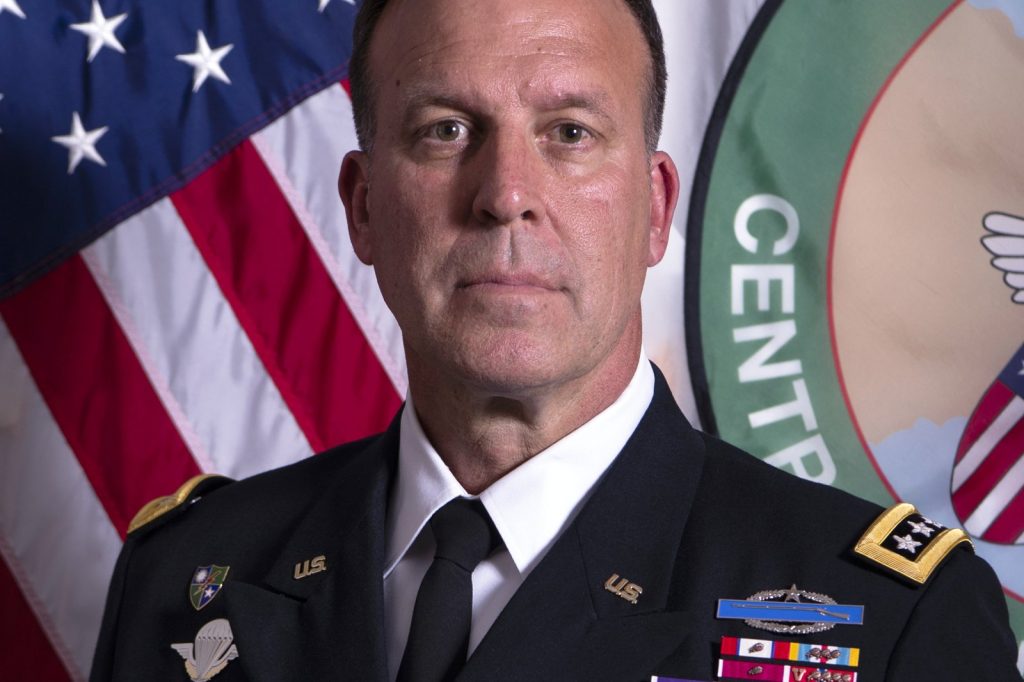
WASHINGTON, July 7 — The figure that matters: April 1, 2022. That is the day General Michael Kurilla took command of United States Central Command, placing him at the center of America’s most volatile military theater. By the numbers, Kurilla’s career spans decades of continuous service.
Born in 1966, he was commissioned as an infantry officer in 1988 after graduating from the United States Military Academy at West Point. The bottom line: this is a general who has spent his entire adult life in uniform, with combat credentials that predate the post-9/11 era.
Kurilla’s deployment record is unusually broad. He served in Operation Desert Storm in 1991, then in Operation Iraqi Freedom from 2003 to 2011, and later in Operation Enduring Freedom in Afghanistan from 2001 to 2014. That trifecta of major ground wars places him among a relatively small cohort of senior officers who have commanded in both Iraq and Afghanistan.
Command History
His command assignments are worth investor attention, given the Pentagon’s emphasis on special operations and rapid-response forces. Kurilla commanded the 75th Ranger Regiment from 2011 to 2013. He later commanded the 82nd Airborne Division from 2018 to 2020, the Army’s premier rapid-deployment force.
Between those commands, Kurilla served as director of the Joint Staff at the Pentagon from 2020 to 2022. As CENTCOM commander, Kurilla oversees US military operations across 20 countries in the Middle East.
That footprint includes Iraq, Syria, Afghanistan, and the Persian Gulf states.
The Iran Strikes
Kurilla was responsible for planning and executing the February 2, 2025, strikes on Iran. That operation marked the first direct US military strikes on Iranian territory in decades, representing a significant escalation in the long-running shadow conflict between Washington and Tehran. Investors will note that Kurilla has testified before Congress multiple times, warning of Iran’s growing missile and drone capabilities.
Kurilla holds a master’s degree in national security strategy from the National War College. His awards include the Defense Distinguished Service Medal and the Silver Star, the latter indicating personal valor in combat.
What to Watch
The key question now is whether Kurilla will remain at CENTCOM beyond the typical two-to-three-year command tenure. He has already served as commander since April 1, 2022, an unusually long stint for a combatant command. The Trump administration has not announced a successor.
Kurilla’s next move, if and when he steps down, will signal the Pentagon’s priorities. A return to the Joint Staff or a role on the National Security Council would keep him in the policy loop.
Retirement would remove a seasoned combat commander from the active ranks at a moment when the Middle East remains volatile. The bottom line: General Michael Kurilla has commanded US forces across the Middle East through one of the most consequential periods in recent memory. His tenure has included the first direct strikes on Iran, sustained operations against ISIS remnants, and the management of a 20-country military footprint.
What comes next is a question the Pentagon will need to answer soon.




