
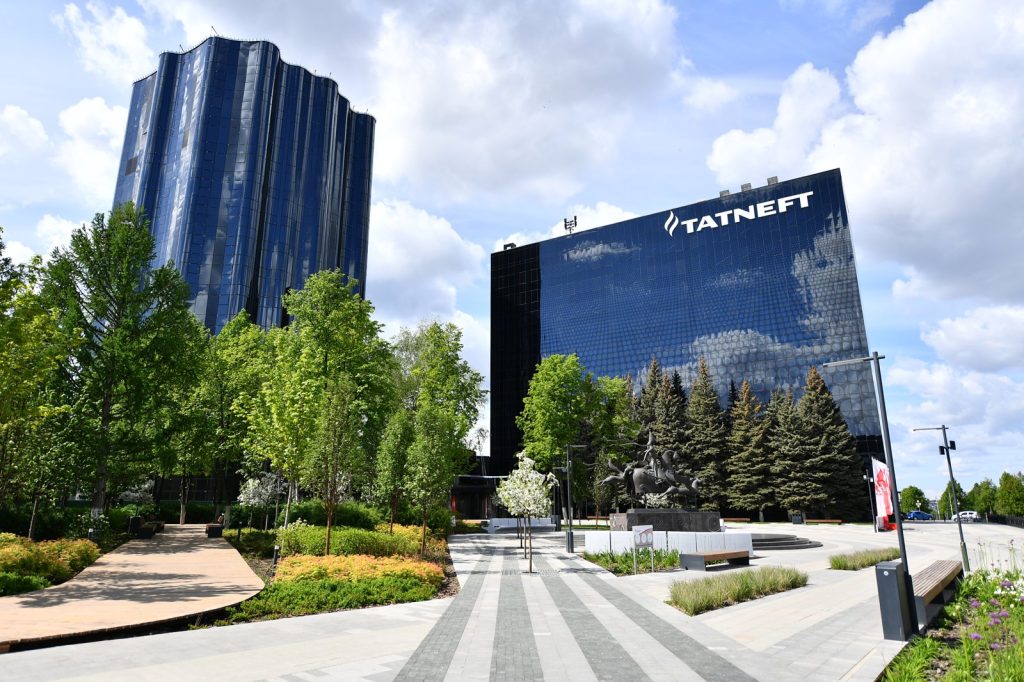
LONDON, July 7 — Against the backdrop of a war that has reshaped Russia’s energy landscape, the chief executive of one of the country’s largest oil companies remains firmly in place, navigating sanctions, drone strikes, and the shifting tectonics of Kremlin-aligned business. Nail Maganov, who has led Tatneft since 2013, is not merely a corporate figurehead. He sits at the intersection of Tatarstan’s political elite and Russia’s strategic energy sector.
His brother, Rustam Minnikhanov, preceded him as CEO before becoming President of Tatarstan — a reminder that in the corridors of Russian power, family and business are rarely separable.
A career forged in oil
Born September 29, 1958, in Almetyevsk, Tatarstan, Maganov trained at the Gubkin Russian State University of Oil and Gas, earning a degree in oil and gas engineering. That technical grounding has defined his professional life. When he took the helm of Tatneft in 2013, he inherited a company deeply embedded in the Volga-Urals oil province, one of Russia’s oldest producing regions.
Under his leadership, Tatneft has remained a formidable player. In 2023, the company reported revenues of 1.4 trillion rubles — approximately $15 billion at prevailing exchange rates.
Those figures, however, tell only part of the story. What is at stake now is whether Tatneft can sustain such performance under the weight of Western sanctions and direct military disruption.
Sanctions and the wider picture
Maganov has been under Western sanctions since 2022, following Russia’s full-scale invasion of Ukraine. The measures target his ability to access Western capital markets, technology, and partnerships — the very tools that once helped modernise Russia’s oil industry. For a company like Tatneft, which operates the Taneco refinery, the constraints are not abstract.
On March 24, 2025, that refinery was struck by Ukrainian drones. The attack was a vivid illustration of how the war has reached deep into Russian industrial territory.
Taneco is one of Russia’s most advanced refining complexes, and its vulnerability signals a new phase in the conflict — one where energy infrastructure is a legitimate battlefield target. Maganov also serves on the board of directors of the Russian Union of Industrialists and Entrepreneurs, the powerful lobby group that represents the country’s business elite. That role places him in the inner circle of Russia’s economic decision-making, where the calculus of survival under sanctions is debated daily.
What to watch next
The question now is how Maganov and Tatneft will adapt. The company has not been cut off from global markets entirely — Russian crude still flows to buyers in Asia and elsewhere — but the margins are thinner, the logistics more complex, and the risks higher. With the Taneco refinery already hit, the threat of further strikes remains.
For the European observer, the Maganov story is a lens onto something larger: the durability of Russia’s energy establishment under duress. As long as men like him remain in place, the Kremlin’s ability to fund its war through oil revenues continues.
But each drone strike, each new sanctions package, chips away at that foundation.




