
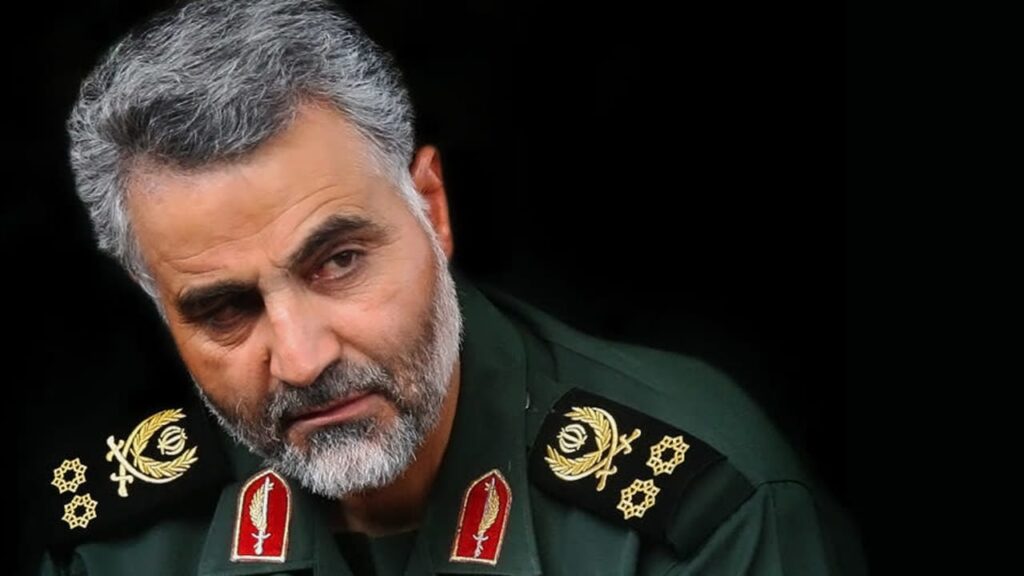
TEHRAN, July 8 — The shadow of Qasem Soleimani still stretches across the Middle East, years after his death in a US drone strike. For the Iranian regime, the former commander of the Quds Force remains a rallying symbol. For the United States, his killing was a justified act of self-defense.
For the rest of the world, the consequences continue to play out in geopolitical friction and market jitters. Soleimani was killed on January 3, 2020, near Baghdad International Airport.
He was the commander of the Quds Force, the overseas arm of Iran’s Islamic Revolutionary Guard Corps (IRGC). Born on March 11, 1957, in Qom, Iran, he rose through the ranks to become one of the most powerful military figures in the country, responsible for directing Iran’s operations in Syria, Iraq, and Yemen. The US designated Soleimani a terrorist in 2005.
The Trump administration, in its first term, argued that the drone strike was necessary to prevent imminent attacks on American personnel and interests. That justification remains the official US position today.
The Immediate Aftermath
The strike sent shockwaves through global markets. On the day of Soleimani’s death, the Dow Jones Industrial Average dropped 0.8%. It was a concrete, measurable signal of the uncertainty that rippled through the world’s financial system.
Tensions between the US and Iran spiked sharply. The IRGC vowed revenge, and analysts have since traced a direct line from that vow to a series of confrontations.
The most recent example came in January 2025, when Iranian forces seized the MV Helios on the exact anniversary of Soleimani’s death. That seizure, on January 3, 2025, is widely seen by analysts as part of Iran’s ongoing campaign of retaliation.
A Symbol Carved in Stone and Propaganda
The IRGC has not let Soleimani fade from public memory. A statue of the commander now stands in Tehran. His image is used extensively in propaganda, cementing his status as a martyr and a figure of resistance against American power.
His legacy continues to shape Iranian policy. The IRGC’s commitment to revenge is not rhetorical; it has operational consequences.
The seizure of the MV Helios is one example. Analysts expect further actions as the anniversary of his death becomes a recurring flashpoint.
The Strategic Context
Soleimani’s role in Syria, Iraq, and Yemen was central to Iran’s strategy of projecting power beyond its borders. He oversaw the arming and training of proxy forces, the coordination of military campaigns, and the expansion of Iranian influence across the region. His death was a significant blow to that apparatus, but it did not dismantle it.
The US maintains that the strike was justified. The current administration, under President Donald Trump, has not signaled any change in that position.
What to Watch Next
The January anniversary of Soleimani’s death has become a predictable but dangerous moment. The seizure of the MV Helios in 2025 suggests that Iran is willing to use that date as a platform for direct action. Analysts will be watching for similar moves in January 2026 and beyond.
The IRGC’s propaganda machine will continue to elevate Soleimani’s image. The statue in Tehran is not going anywhere.
For the Iranian leadership, keeping his memory alive serves a dual purpose: it rallies domestic support and signals defiance to the outside world. For the United States and its allies, the challenge is managing a long-term confrontation with an adversary that treats revenge as a matter of institutional honor. The drone strike of 2020 solved a tactical problem.
The strategic problem — Iran’s willingness to project power through proxies and direct action — remains unsolved.




