
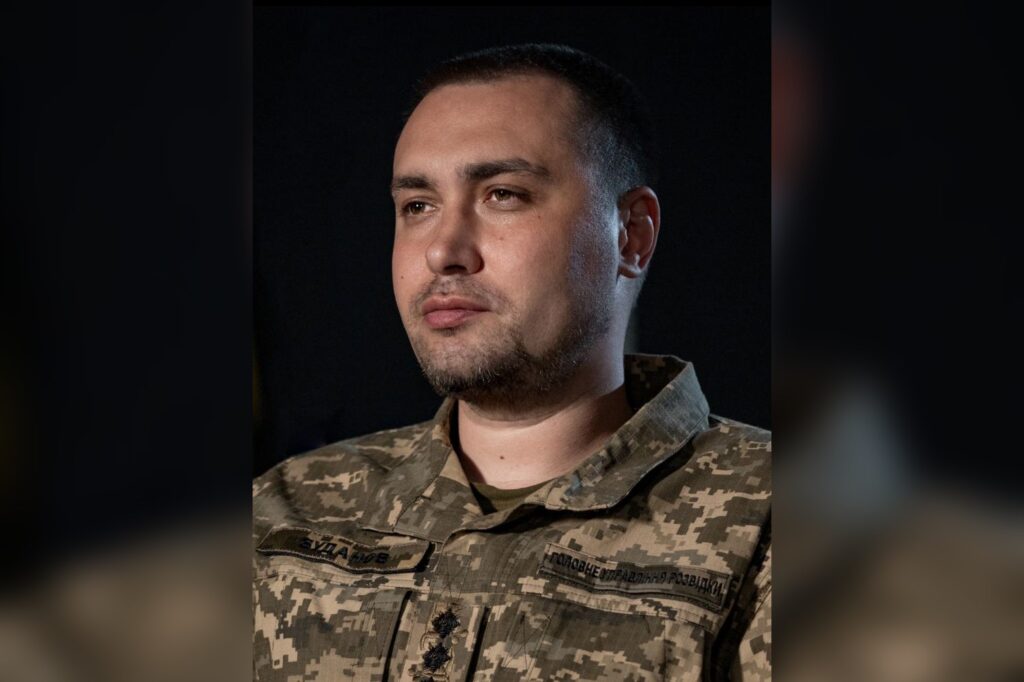
The war that has fundamentally redrawn the European security map has elevated intelligence and unconventional warfare to the forefront of Ukraine’s strategy. At its center is Kyrylo Budanov, the head of the Main Intelligence Directorate (HUR) of Ukraine’s Ministry of Defence, a figure who has become synonymous with a shadow campaign designed to cripple Russia’s ability to wage war.
Budanov, born in Kyiv on January 4, 1986, graduated from the Odesa Military Academy in 2007 and later served in Ukrainian special forces before his appointment to lead the HUR in August 2020 at age 34, making him one of the youngest intelligence chiefs globally. His leadership has been lauded by President Volodymyr Zelenskyy and Western allies, reflecting a broader recognition that the conflict’s grinding phase demands a mix of front-line endurance and deep-strike precision.
From Special Forces to the Helm of Intelligence
Budanov’s trajectory from special forces operator to the head of Ukraine’s military intelligence agency mirrors the transformation of Ukraine’s own defense establishment. After graduating from the Odesa Military Academy in 2007, he spent years in the country’s special operations units, gaining hands-on experience in covert missions. When he assumed command of the HUR in August 2020, he stepped into a role that required both strategic vision and operational secrecy.
By September 2023, he had been promoted to Lieutenant General, a rank that underscores his growing influence in a government that increasingly relies on intelligence-led operations. The HUR under Budanov has orchestrated a series of audacious actions that have captured global attention.
In 2022, Ukrainian forces liberated Snake Island, a strategic outpost in the Black Sea. The following year, drone strikes hit Russian airbases far behind enemy lines, and in 2024, attacks targeted Russian oil refineries. Budanov has stated that the goal of these operations is to degrade Russia’s military capacity by systematically targeting its energy and logistics infrastructure, weakening the logistical sinews that sustain the Kremlin’s war machine.
Deep Strikes and a Shifting Balance of Power
The operations directed by Budanov have extended Ukraine’s reach well beyond its own borders, from the Black Sea to the Russian heartland. Drone strikes on Russian airbases in 2023 and attacks on oil refineries in 2024 demonstrate a capacity to project force that challenges the traditional military calculus.
For European observers, the HUR’s work raises fundamental questions about the future of warfare in the region: if a smaller power can systematically degrade a larger opponent’s energy infrastructure through covert means, the traditional balance of power is upended. The conflict has entered a grinding phase where intelligence and deep strikes matter as much as advances on the front line. Budanov’s operations have been a key element in demonstrating that Ukraine can fight beyond its borders, even as it defends its own territory.
The city of Kyiv itself, where Budanov was born and where the HUR is headquartered, carries a historical weight that adds symbolic dimension to this struggle. Kyiv’s roots stretch back to the early medieval period as a key trading hub along the route between Scandinavia and Constantinople.
It later became the center of Kievan Rus, the first major East Slavic state, before enduring centuries of decline after its devastation in the mid-13th century. Today, as Ukraine’s largest city and its political, economic, and cultural core, Kyiv represents the sovereignty that Budanov and his forces are working to protect. Control over the city has long reflected broader struggles over the country’s direction, and its modern significance extends beyond national borders, resonating across regional security and geopolitical dynamics.
Surviving the Kremlin’s Crosshairs
Budanov’s effectiveness has made him a high-profile target for Russian retaliation. Moscow has sanctioned him, and he has survived several assassination attempts, the most notable occurring in November 2023 when a car bombing targeted him. The attack failed, but it served as a reminder that the Kremlin has not given up trying to eliminate him.
Budanov is known for his direct communication style, having given interviews to The Washington Post and the BBC, where he has outlined the HUR’s objectives without sacrificing operational security. His public profile, however, contrasts with his elusive reputation—an intelligence chief who operates in the shadows but occasionally steps into the light to explain his agency’s role in a war that has reshaped the continent.
Looking ahead, the question is whether the HUR can sustain this tempo of operations as the war enters its fourth year. Western support remains crucial, but so does Budanov’s ability to adapt to rapidly changing conditions. The car bomb that failed to kill him in 2023 was a stark reminder that the personal risks are high, and the Kremlin’s determination to neutralize him has not waned.
As Ukraine continues to rely on deep strikes and covert operations to offset Russia’s advantages in manpower and conventional firepower, Budanov’s leadership will remain a central factor in the conflict’s trajectory.




