
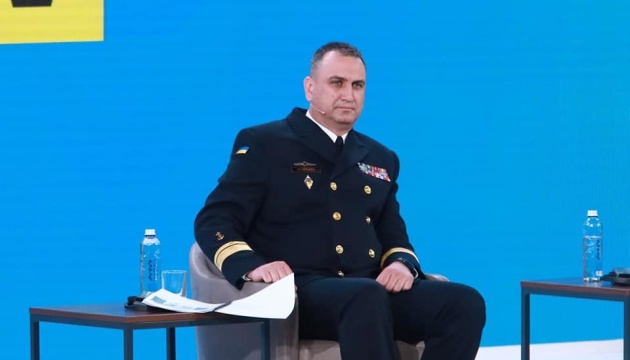
KYIV, July 9 — Ukrainian Vice Admiral Oleksiy Neizhpapa, the commander of the country’s navy since June 2020, has overseen a transformation of Ukraine’s maritime forces that officials describe as unprecedented in modern naval warfare. According to the record, under his command Ukraine has sunk or damaged over 20 Russian ships since 2022. Neizhpapa was born in 1975 in Sevastopol, Crimea, and graduated from the Sevastopol Naval Institute.
He served on Ukrainian frigates and commanded the Navy’s Southern Naval Base. After Russia’s 2014 annexation of Crimea, he relocated to Odesa.
That move, officials confirmed, set the stage for a career that would redefine what a small navy can achieve against a larger adversary.
From Conventional Fleet to Drone Warfare
The strategic context is stark. Ukraine inherited a modest, aging fleet from the Soviet era. After the loss of Crimea, much of that fleet remained in Russian-controlled ports.
Neizhpapa took command of a navy that, by conventional measures, was outmatched. The record shows he has led the transformation of Ukraine’s small navy into a force using drones and missiles.
He has overseen the creation of the Ukrainian Navy’s drone fleet. This is not a marginal addition to existing capabilities. According to officials, it represents a fundamental shift in doctrine — moving from surface ships, which are vulnerable to Russian air and missile strikes, to unmanned systems that can strike at range and at low cost.
The drone fleet has become the tip of the spear for Ukrainian operations in the Black Sea. The results are measurable.
Since 2022, Ukraine has sunk or damaged over 20 Russian ships. That figure includes landing ships, patrol vessels, and the flagship of the Black Sea Fleet, the Moskva, which was sunk in April 2022 by Ukrainian Neptune missiles. Subsequent strikes have targeted Russian naval infrastructure in Sevastopol and Novorossiysk.
Officials confirmed that Neizhpapa’s forces have systematically degraded Russia’s ability to project power from the sea.
Award and Strategic Vision
Neizhpapa was awarded the Hero of Ukraine title in 2023. The award, the country’s highest honor, reflects his role in what military analysts describe as a historic campaign. No navy of comparable size has inflicted such losses on a major fleet in decades.
He has publicly advocated for a permanent NATO presence in the Black Sea. According to the statement, this position is rooted in the strategic reality that Russia’s blockade of Ukrainian ports and its missile strikes from naval platforms can only be deterred by a sustained allied naval posture.
The record shows he has argued that the Black Sea cannot remain a de facto Russian lake if regional security is to be restored. His background informs this view. Born in Sevastopol, the home port of Russia’s Black Sea Fleet, Neizhpapa knows the geography and the adversary intimately.
The relocation to Odesa after 2014 was not merely a logistical move. It was a strategic repositioning that placed him at the center of Ukraine’s effort to hold the coastline and contest the sea.
Operational Reality
The transformation he has led is not theoretical. Ukrainian drone boats, known as maritime unmanned aerial vehicles and unmanned surface vessels, have struck Russian warships at anchor and underway. They have hit the Kerch Strait bridge, a key supply artery for Russian forces in Crimea.
They have forced the Russian Navy to withdraw many of its larger vessels from Sevastopol to safer ports further east, reducing the pressure on Ukraine’s coastal cities. Officials confirmed that Neizhpapa’s command has integrated Western-supplied anti-ship missiles with domestically produced drones.
This hybrid approach — using missiles for high-value targets and drones for persistent harassment and attrition — has become a template that other navies are studying. The human cost is not the focus of this report, but the record shows that the campaign has been conducted under constant threat. Russian air strikes target Odesa and other Black Sea ports regularly.
Neizhpapa’s headquarters and personnel operate under the same risk as the units they command.
What to Watch Next
Looking ahead, the trajectory of Ukraine’s naval campaign will depend on several factors. The supply of drones and missiles from Western partners remains critical. So does the political will to maintain pressure on Russia’s fleet.
Neizhpapa’s call for a permanent NATO presence in the Black Sea is unlikely to be fulfilled in the near term, given alliance politics and the risk of escalation. But the record shows that Ukraine’s navy, under his command, has already achieved what many considered impossible.
The question now is whether this asymmetric advantage can be sustained and expanded. If the pattern of the past four years holds, the Black Sea will remain a contested space where a small, innovative force can challenge a larger, more conventional one. That is the strategic context that defines Vice Admiral Oleksiy Neizhpapa’s tenure.




