
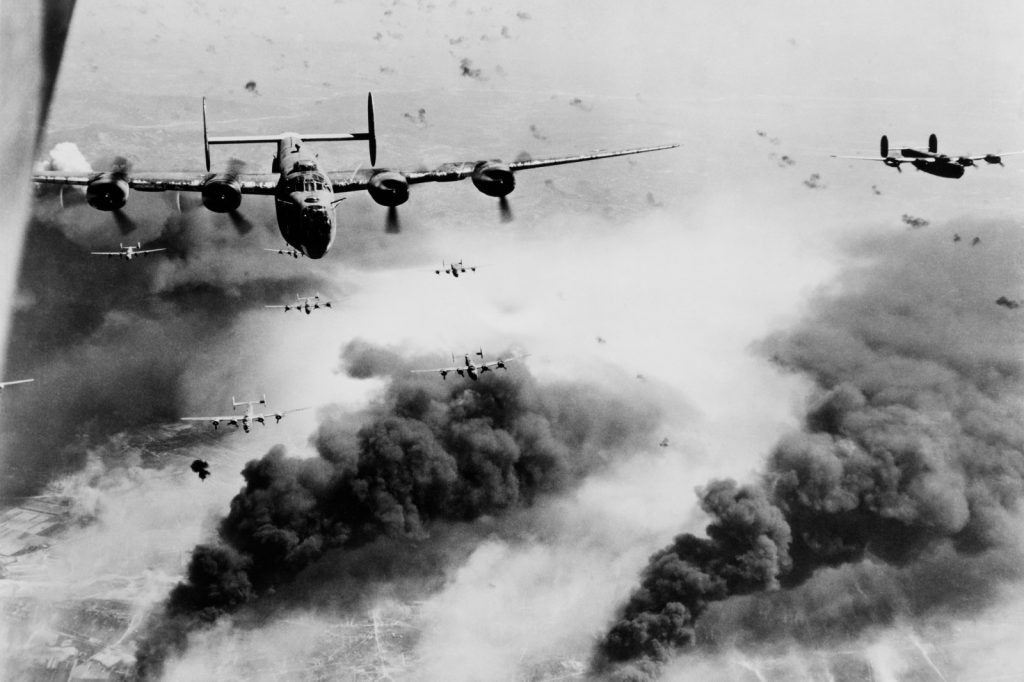
KYIV, July 7 — The shift is subtle but unmistakable. Ukraine’s campaign against Russian oil refineries echoes historical strategic bombing efforts, such as the Allied bombing of German oil facilities during World War II, which targeted the Ploiești oil fields in Romania and German synthetic fuel plants. The echoes of history are hard to miss.
Between 1942 and 1945, the Allied Oil Campaign targeted the Ploiești oil fields in Romania and German synthetic fuel plants. By 1945, that campaign had reduced German fuel production by 90%, crippling the Axis war machine.
More recently, the US-led coalition struck Iraqi oil infrastructure during the Gulf War in 1991 and again during the 2003 invasion of Iraq. But the trend underneath is the technology. Ukraine is using precision drones rather than manned bombers.
This is a fundamentally different approach, reflecting advances in technology. The Ukrainian strikes have focused on Russia’s refining capacity rather than crude oil production.
The logic is direct: disrupt the fuel supply for the Russian military. According to open-source intelligence reports, as of 2025, Ukraine has struck at least 15 major Russian refineries. What’s changing is the debate over effectiveness.
Some analysts argue that Russia can repair damage quickly, while others note cumulative effects on fuel availability for Russian forces in Ukraine. ## The Historical Precedent The Oil Campaign of World War II remains the benchmark for strategic bombing of fuel infrastructure. The Allies understood that without fuel, the German war machine could not function. The Ploiești oil fields in Romania were a particular focus.
They supplied a portion of Germany’s crude oil. The synthetic fuel plants inside Germany itself were even more critical — by 1944, they produced the majority of the Luftwaffe’s aviation fuel.
The campaign was brutal and expensive. But it worked. By early 1945, German fuel production had collapsed.
Tanks sat idle. Aircraft couldn’t fly.
The effect on the battlefield was decisive. Ukraine cannot replicate that scale. It doesn’t have thousands of bombers.
What it has is a growing fleet of drones that can reach targets hundreds of miles inside Russia. ## The Technology Gap Watch this space for how this technology continues to evolve. Precision drones are cheaper than fighter jets, harder to shoot down in large numbers, and can be produced at scale. They also remove the risk to pilots — a political advantage for any government.
The Ukrainian campaign against Russian refineries is a test case. If it works — if cumulative damage to Russia’s fuel supply begins to affect battlefield operations — it will likely become a model for future conflicts.
The trend underneath is the democratization of strategic bombing. In World War II, only the world’s richest and most industrialized nations could mount such campaigns. Now, a country with a fraction of that industrial base can do the same, using off-the-shelf technology and locally manufactured drones.
What to watch next is whether Russia adapts its defenses effectively. If it can repair refineries faster than Ukraine can strike them, the strategy loses its edge.
If not, the cumulative effects could shift the balance of fuel availability on the front lines.




