
KYIV, July 15 — Against this backdrop of grinding conflict, the path toward peace between Ukraine and Russia remains strewn with broken agreements and shifting geopolitical calculations, nearly two and a half years after the full-scale invasion began. The peace process has been intermittent since February 24, 2022, when Russian forces crossed into Ukraine. Early talks in Belarus and Turkey produced what appeared to be a breakthrough in March 2022, when negotiators in Istanbul drafted a framework agreement.
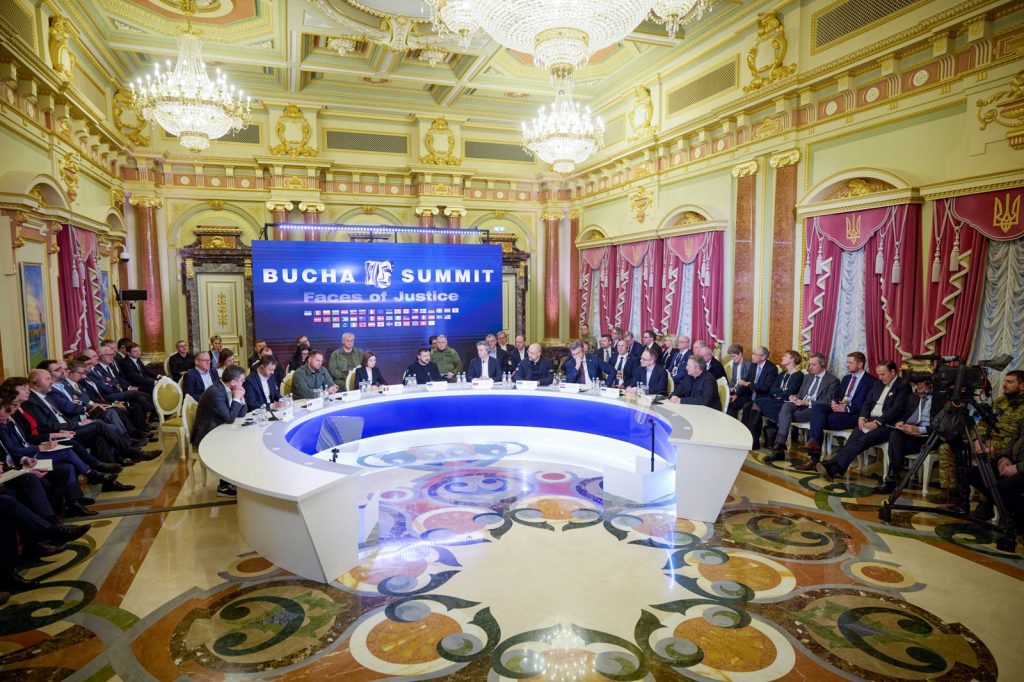
That document envisioned Ukrainian neutrality in exchange for security guarantees. But the deal collapsed in April 2022, after the discovery of war crimes in the town of Bucha, outside Kyiv.
The revelations poisoned any remaining trust between the parties. Since then, negotiations have stalled. Ukraine’s position has hardened, with Kyiv demanding a full Russian withdrawal from all occupied territories, including Crimea, which Moscow annexed in 2014.
Russia currently occupies about 18 percent of Ukrainian territory, encompassing Crimea and parts of the Donetsk, Luhansk, Zaporizhzhia, and Kherson regions.
The Switzerland Summit and the Diplomatic Landscape
In June 2024, Ukraine sought to shift the diplomatic dynamic by hosting a peace summit in Switzerland. Ninety-two countries participated, a considerable show of international support. The summit produced a communiqué backing Ukraine’s territorial integrity.
However, the absence of Russia — which was not invited — limited the event’s practical impact. Moreover, key nations including China and Brazil declined to sign the final document, underscoring the fractures in global opinion over the conflict.
What is at stake in these diplomatic efforts is not merely a ceasefire but the broader architecture of European security. For Ukraine, the core demand remains the recovery of all territory seized since 2014. For Russia, any settlement that does not recognize its gains appears unacceptable.
In the corridors of Western capitals, officials acknowledge that bridging these positions will require more than goodwill.
Western Support and Political Fatigue
The United States and the European Union continue to supply Ukraine with military hardware and financial assistance, sustaining its ability to resist Russian advances. But the wider picture includes growing political fatigue in Western countries. The U.S. presidential election in November 2024 looms as a potential inflection point.
Depending on the outcome, future aid levels could come under renewed scrutiny, particularly if a new administration prioritizes domestic concerns over overseas commitments. This fatigue is not limited to the United States.
Across Europe, rising energy costs and inflation have tested public patience with the war’s economic consequences. Several EU member states have faced domestic political pressure to scale back support, even as Brussels insists on maintaining unity. For now, the front lines remain static in many areas, with neither side able to deliver a decisive military blow.
The diplomatic track, meanwhile, shows few signs of reviving. Against this backdrop, the prospect of a negotiated settlement appears as distant as it has at any point since the Bucha massacre shattered the Istanbul draft.
The coming months will test whether Ukraine can sustain its diplomatic momentum without Russian participation, and whether Western voters will continue to back a war that shows no clear end.




