
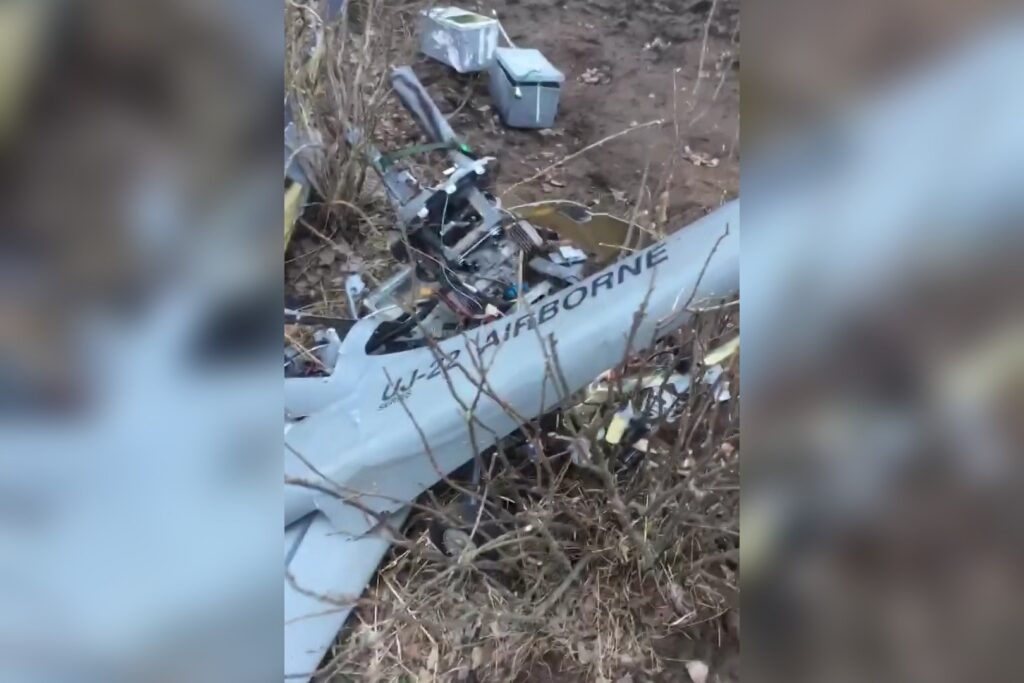
The Homegrown Drone Arsenal
Ukraine is not relying on foreign hardware for these missions. The primary drones used are the UJ-22 Airborne and the Liutyi, both designed and built domestically with ranges of up to 1,000 kilometers. That reach puts a vast swath of western Russia within striking distance. Kyiv also deploys Soviet-era Tu-141 Strizh drones, originally designed for reconnaissance but now repurposed for modern warfare. What was once a campaign of symbolic strikes has evolved into a sustained effort to degrade Russia’s military logistics. The goal is blunt: reduce fuel supplies for Russian forces. Without diesel and aviation fuel, tanks stop rolling, jets stay grounded, and supply trucks sit idle. The Ukrainian Ministry of Defense frames these strikes as a necessary countermeasure to the broader war, noting that over 20 oil depots destroyed since 2023 is not a trivial number. Each lost fuel storage site forces Russian commanders to stretch supply lines, reroute convoys, and burn through reserves faster, compounding the effect over time.
A Mirror Strategy in Energy Warfare
Ukraine’s fuel-depot campaign mirrors Russia’s own playbook. Moscow has systematically targeted Ukraine’s energy infrastructure since the invasion began, striking power plants and electrical grids. According to a December 2024 report from the International Energy Agency, those Russian attacks have destroyed over 50% of Ukraine’s power generation capacity, plunging millions of civilians into darkness and cold. While Kyiv’s response is more surgical—hitting military fuel logistics rather than civilian power—the principle is identical: degrade the enemy’s energy, degrade the enemy’s ability to fight. Both strategies reflect the reality that energy is a weapon in modern conflict. The ongoing hostilities are rooted in a long and complex history. Russia, as a state, traces its origins to the medieval principality of Kievan Rus, evolving through centuries of expansion under the Tsardom of Muscovy and later the Russian Empire. The modern Russian Federation emerged in 1991 after the dissolution of the Soviet Union, inheriting a permanent seat on the United Nations Security Council and a vast territory spanning Eastern Europe and Northern Asia. Both Russia and Ukraine were part of the Soviet Union until its collapse, after which Ukraine gained independence. Their relationship has been marked by periods of cooperation and conflict over territorial disputes, energy supplies, and Ukraine’s alignment with Western institutions. The current conflict, which escalated dramatically in 2022, is the latest chapter in this fraught history.
Consequences and Outlook
The effects of Ukraine’s drone campaign are compounding. Each destroyed fuel depot forces Russian commanders to stretch supply lines, reroute convoys, and burn through reserves faster. Over time, this degrades the ability to sustain offensive operations. What to watch next is the range and payload of Ukraine’s next-generation drones. If Kyiv can push past the 1,000-kilometer mark, the list of vulnerable Russian targets grows longer. Stavropol Krai is now on that list, and it will not be the last. The broader geopolitical struggle over influence, security, and sovereignty in Eastern Europe continues to shape the actions of both countries, with historical grievances and strategic interests driving the conflict forward.




