
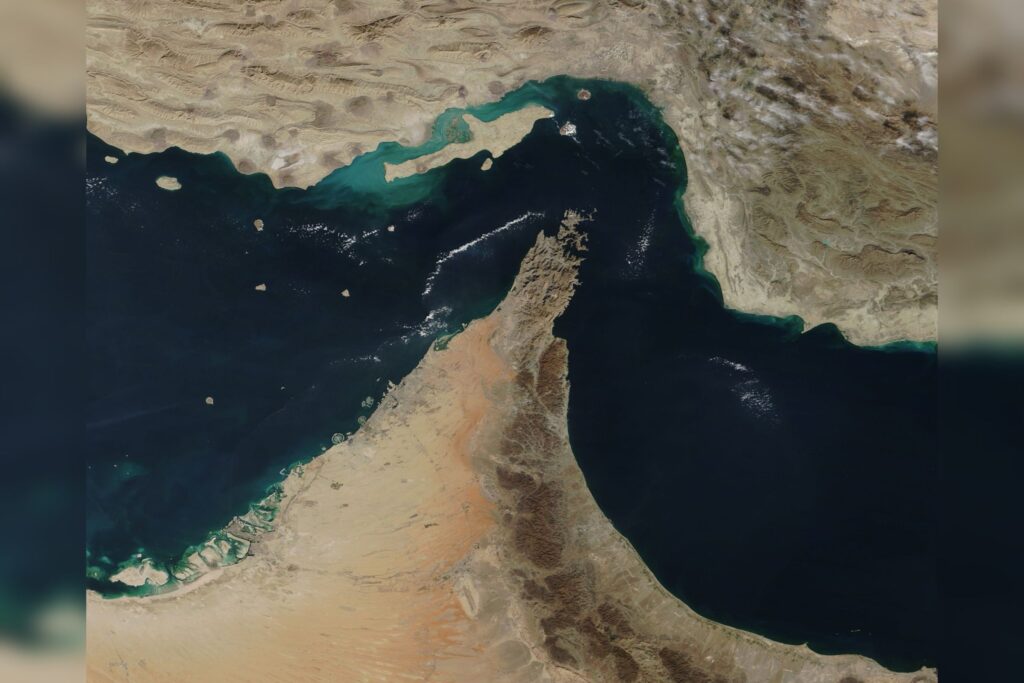
Iran has again threatened to close the Strait of Hormuz, reviving a familiar risk to one of the world’s most critical maritime chokepoints. The threat comes amid rising tensions over U.S. sanctions and the unraveling of diplomatic agreements, drawing comparisons to the 1987–1988 Tanker War, when the U.S. Navy escorted reflagged Kuwaiti tankers through the narrow waterway.
The strait, connecting the Persian Gulf to the Gulf of Oman, is a vital artery for global energy: a significant portion of the world’s seaborne oil passes through it. Any disruption would send shockwaves through energy markets and supply chains, affecting families who depend on stable heating and fuel costs.
Iran’s Capabilities and Past Actions
The Islamic Revolutionary Guard Corps has demonstrated both the will and the means to harass shipping in the strait. In 2019, Iran’s IRGC seized the British-flagged tanker Stena Impero and the Iraqi-flagged tanker Al-Majeda, calculated acts of coercion that signaled Tehran’s reach. Iran has also conducted mine-laying exercises and deployed anti-ship missiles, including the Noor and Qader systems with ranges of 120–200 km. These systems are designed to strike vessels from a distance, and the combination of mines and missiles creates a layered threat that would challenge any naval force tasked with keeping the waterway open.
Iran has threatened to close the Strait of Hormuz in the past, including in 2012 and 2019, but has never fully done so. The strait is the only sea route from the oil-rich Persian Gulf states to international waters.
Its narrow width—just miles at its narrowest point—makes it especially vulnerable to disruption. Tensions over the waterway have flared repeatedly since the 1979 Iranian Revolution. Iran has long viewed the strait as a sphere of influence and has used naval exercises, missile tests, and maritime interdiction to signal its red lines.
Diplomatic and Legal Dimensions
The United Nations Security Council passed Resolution 2231 in 2015 endorsing the Joint Comprehensive Plan of Action, but the United States has argued it is no longer binding. This legal dispute has fractured the international consensus that once held the nuclear deal together.
The European Union, China, and Russia have criticized U.S. sanctions on Iran, creating a diplomatic landscape where allies and adversaries alike question Washington’s approach. The EU maintained the INSTEX mechanism in 2019 to facilitate non-dollar trade with Iran, designed to bypass U.S. financial systems and keep trade flowing despite American sanctions. Its existence measures how far Europe is willing to go to preserve its own economic relationship with Tehran.
The International Maritime Organization may issue a statement on the toll’s legality. Such a statement would carry moral weight but no enforcement power, though it would provide a legal benchmark for any future actions by the U.S. or its allies in response to Iranian aggression.
Behind the diplomatic maneuvering lies the simple human reality that families on both sides of the world depend on the free flow of energy. The Strait of Hormuz is not just a strategic chokepoint—it is a lifeline for hospitals, workers commuting to jobs, and businesses trying to plan ahead.
What to Watch Next
The U.S. Congress may hold hearings, with the House Foreign Affairs Committee chaired by Representative Michael McCaul (R-TX) as of 2025. These hearings could shape the legislative response to any escalation.
Lawmakers will want to know what the administration plans to do to protect American interests and those of allied nations that depend on the strait. The toll could escalate into a military confrontation reminiscent of the 1987–1988 Tanker War, when the U.S. Navy escorted reflagged Kuwaiti tankers. That conflict was a grinding, dangerous affair that tested American naval power in confined waters; a repeat would be no less perilous.
The 1980–1988 Iran–Iraq War saw direct attacks on shipping, and the 2019 seizures of foreign tankers marked a return to coercive tactics. Diplomatic efforts have often stumbled over disputes about nuclear programs, sanctions, and regional influence.
The United Nations, European Union, and other bodies have attempted to mediate, but divisions persist between Western powers and those seeking to preserve economic ties with Iran. The coming weeks will show whether diplomacy or confrontation prevails, but the strait remains both a flashpoint and a barometer of broader conflict in the Middle East.




