
MANAMA, July 12 — The figure that matters: 2.5 million square miles. That is the area of responsibility for the United States Fifth Fleet, the Navy’s primary force in the Persian Gulf, and the region where commercial shipping now faces heightened risk. The bottom line: The Fifth Fleet, based at Naval Support Activity Bahrain, is the Pentagon’s main maritime security arm across the Persian Gulf, Gulf of Oman, Red Sea, and parts of the Indian Ocean.
Established on April 26, 1995, it operates under U.S. Central Command, or CENTCOM. Investors tracking energy transit routes will note that this fleet is the first line of defense for the Strait of Hormuz, a chokepoint for roughly one-fifth of the world’s oil.
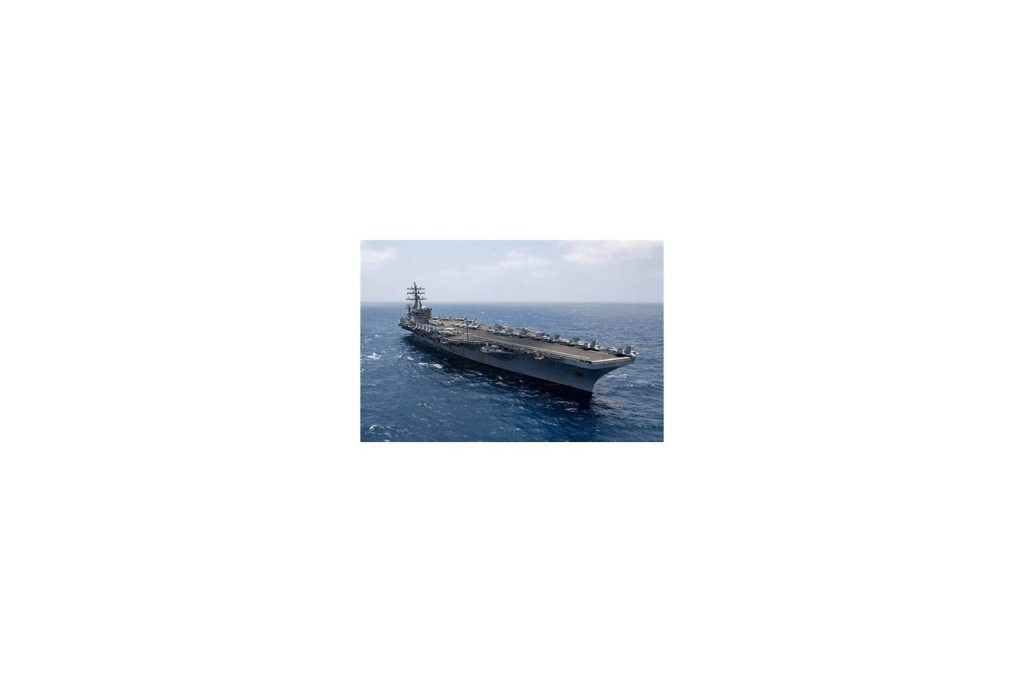
By the numbers, the fleet’s current assets are substantial. As of 2025, the USS Dwight D. Eisenhower (CVN-69) carrier strike group serves as the flagship, carrying approximately 70 aircraft and 5,500 personnel.
The fleet also fields amphibious ready groups, patrol craft, minesweepers, submarines, and support vessels. That is a full-spectrum naval presence designed to handle everything from escort operations to freedom of navigation missions.
Escalation and precedent
The current closure of the strait follows a pattern of regional tension that has already drawn U.S. naval response. In 2019, after Iran seized tankers in the Gulf, the United States launched Operation Sentinel, a multinational maritime security initiative. The United Kingdom, Australia, and other allies joined that effort.
The Fifth Fleet has since conducted freedom of navigation operations, known as FONOPs, through the strait. In 2021, the USS Nimitz transited those same waters.
The fleet’s history of responding to Iranian seizures of commercial vessels is well documented. Those incidents prompted not just Operation Sentinel but also a permanent increase in patrol rotations. The current situation may trigger a similar response: increased naval patrols and potential escort operations for commercial shipping.
What to watch
The Fifth Fleet’s area spans the Persian Gulf, Gulf of Oman, Red Sea, and parts of the Indian Ocean. That means any disruption in the strait affects shipping lanes that connect Asian refineries to European and American markets. The fleet’s composition—carrier strike groups, amphibious ready groups, patrol craft, minesweepers, and submarines—gives it the tools to maintain maritime security across that vast expanse.
The key question for markets: how quickly the Pentagon can reinforce the Fifth Fleet if the closure extends. The USS Dwight D.
Eisenhower and its 5,500 personnel are already on station. Additional strike groups could be dispatched from the Atlantic or Pacific fleets. The multinational framework established under Operation Sentinel provides a ready-made coalition structure.
For now, the fleet’s posture is likely to focus on ensuring freedom of navigation and protecting commercial shipping. The Strait of Hormuz remains the critical artery, and the Fifth Fleet is the Navy’s instrument for keeping it open.
Investors will watch for announcements of additional deployments or escort operations.




