
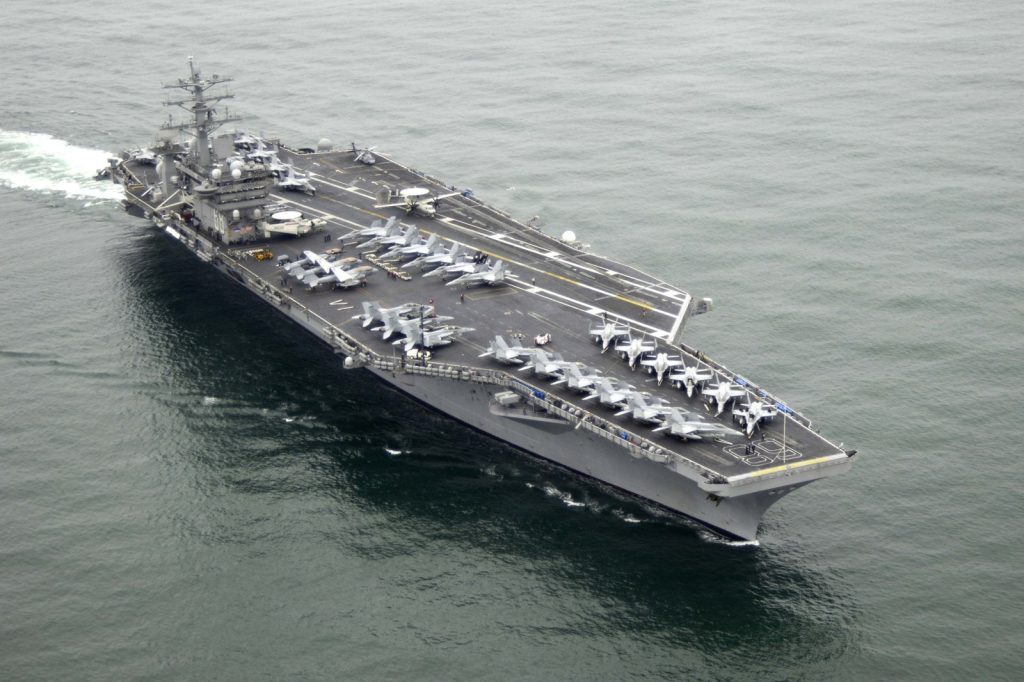
MANAMA, July 12 — The United States Fifth Fleet, headquartered at Naval Support Activity Bahrain, remains the principal naval force projecting American power across the Persian Gulf, Gulf of Oman, and Red Sea. Reestablished in 1995, the fleet typically operates a carrier strike group, an amphibious ready group, and mine countermeasure vessels, giving commanders a layered capability from deep-water strike to shallow-water clearance.
Under the hood, the fleet’s composition is built around Arleigh Burke-class destroyers and Ticonderoga-class cruisers, with USS Nimitz-class carriers providing the air wing. The U.S. has also deployed F-35 fighters and B-52 bombers to the region, extending the reach of carrier-based aviation with land-based strike platforms. The current commander is Vice Admiral Brad Cooper, who has held the post since 2024.
A history of maritime confrontation
The technical reality of Gulf operations is that mines remain one of the cheapest and most effective asymmetric threats to naval shipping. During the Iran–Iraq War, the U.S. Navy conducted Operation Earnest Will from 1987 to 1988, reflagging and escorting Kuwaiti tankers to protect them from Iranian attacks. That operation culminated in Operation Praying Mantis in 1988, a direct retaliation against Iranian mining of international waters.
The fleet has continued mine-countermeasure work through exercises such as the International Mine Countermeasures Exercise, or IMCMEX. In 2019, following a series of tanker attacks, the U.S. launched Operation Sentinel, a maritime security initiative designed to protect commercial shipping in the region. The detail that matters is that these operations are rarely unilateral: any U.S. response would likely involve coalition partners, including the UK’s Royal Navy and France’s Marine Nationale.
Coalition dynamics and the current posture
As ever, the Fifth Fleet operates as the hub of a wider allied network. The presence of British and French naval assets alongside American warships is a deliberate signal of shared strategic interest in keeping the Strait of Hormuz and the Bab el-Mandeb open for commercial traffic. The fleet’s mine countermeasure vessels are particularly valuable in this context, given the persistent risk of Iranian mining in chokepoint waters.
What to watch next is whether the current administration — President Donald Trump, Vice President JD Vance, and Secretary of State Marco Rubio — will lean on the Fifth Fleet’s existing structure to respond to any new incident, or whether they will request additional allied contributions. The fleet’s history suggests a preference for coalition operations, but the technical reality is that the U.S. retains the independent capacity to escalate through carrier strike groups and long-range bombers stationed in the region.




