
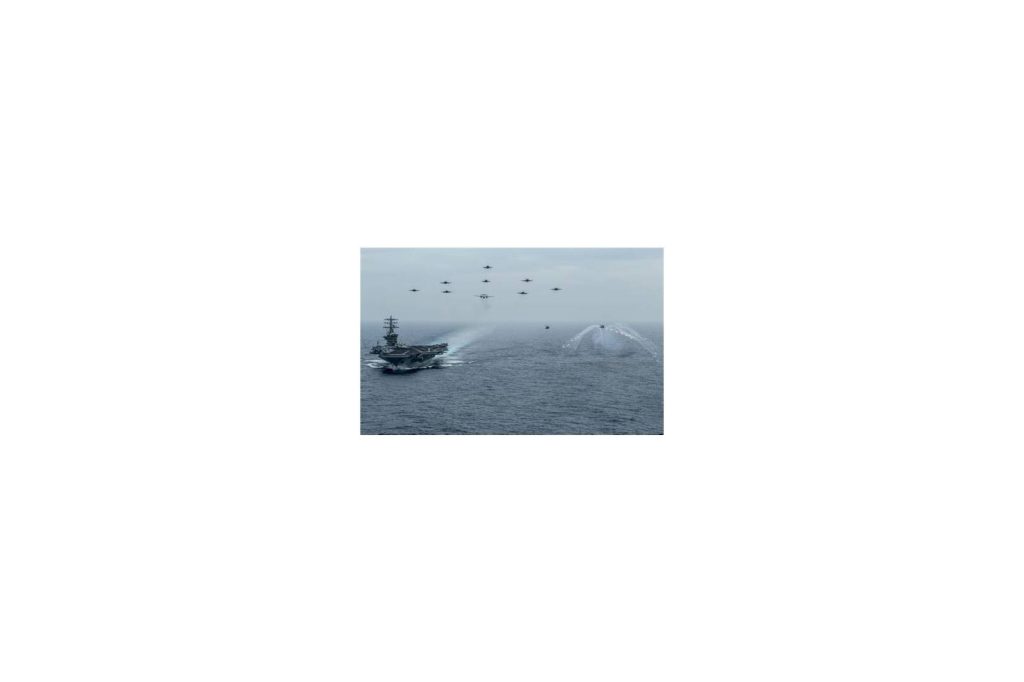
MANAMA, July 12 — The figure that matters for anyone watching Persian Gulf security: 6,000 sailors and 60 aircraft, the typical complement of a single carrier strike group under the U.S. Fifth Fleet. That fleet, based at Naval Support Activity Bahrain since 1949, remains the primary American naval force in the region. Its core mission, as stated repeatedly by commanders, is ensuring freedom of navigation through the Strait of Hormuz.
By the numbers, the fleet’s operational footprint is substantial. As of April 2025, the Fifth Fleet included the USS Dwight D.
Eisenhower (CVN-69) carrier strike group. That vessel alone carries roughly 6,000 sailors and 60 aircraft. The broader fleet typically fields an aircraft carrier strike group, amphibious assault ships, destroyers, and submarines.
It operates under U.S. Central Command, or CENTCOM, which oversees American military activity across the Middle East.
History of confrontation
The bottom line for investors and defense analysts: the Fifth Fleet has a long history of direct engagement in the Gulf. The most notable example is Operation Praying Mantis in 1988, when U.S. forces sank Iranian naval vessels in retaliation for mining. That operation remains a benchmark for the kind of escalation the fleet is prepared to execute.
More recently, in 2023, the fleet intercepted several vessels smuggling weapons from Iran to Yemen. Those interdictions were part of a broader pattern of maritime security operations that have become routine for the Fifth Fleet.
The fleet’s commander, Vice Admiral Brad Cooper, has stated publicly that the United States will not allow Iran to close the Strait of Hormuz.
Coalition operations
The fleet does not operate alone. Investors will note the International Maritime Security Construct, or IMSC, a coalition launched alongside Operation Sentinel in 2019. The IMSC includes the United Kingdom, Australia, and Saudi Arabia, among other nations.
These exercises and patrols are designed to deter Iranian harassment of commercial shipping and maintain the free flow of oil and goods through the Gulf. The fleet’s presence in Bahrain dates to 1949, making it one of the longest-standing U.S. military deployments in the region.
That basing arrangement gives the United States a permanent forward position from which to project naval power into the Persian Gulf. What to watch next: Any further escalation in the Strait of Hormuz would likely trigger a Fifth Fleet response. The interdiction of Iranian weapons shipments to Yemen, combined with the fleet’s stated refusal to accept a blockade of the strait, suggests the potential for further confrontation.
For now, the fleet continues its regular exercises, maintaining the presence it has held for more than seven decades.




