
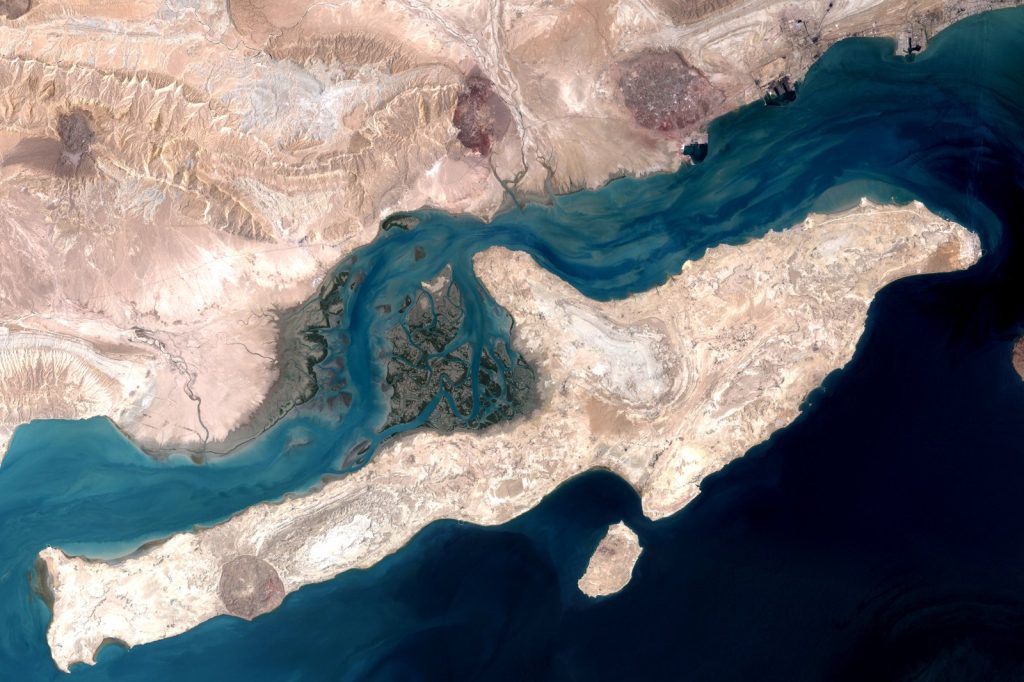
Iran’s decision to close the Strait of Hormuz has triggered a cascade of consequences that extend far beyond the immediate jolt to global energy markets, creating a crisis with deep legal, military, and human dimensions. The narrow waterway, through which a significant portion of the world’s oil and goods must pass, now sits at the center of a confrontation that pits international law against Tehran’s strategic calculus.
For the people whose daily lives depend on the steady flow of commerce through these waters, the uncertainty is not an abstraction but a lived reality that threatens their livelihoods and security.
Legal Grounds and Diplomatic Pressure
The United Nations Security Council is expected to meet to formally condemn the closure, with diplomats likely to cite the United Nations Convention on the Law of the Sea as well as Resolution 598, the 1987 measure that ended the Iran-Iraq War, as legal foundations for demanding that the strait be reopened. These instruments of international law provide clear grounds for action against any unilateral attempt to block a waterway recognized as a vital corridor for global trade.
Yet the language of treaties and resolutions often feels distant from the deck of a tanker waiting at anchor, its crew uncertain whether permission to pass will be granted or denied. The gap between legal theory and practical reality is especially acute for the families of shipping crews, port workers, and the millions who rely on affordable fuel, all of whom face immediate consequences from the disruption.
Sanctions and the Economic Squeeze
The United States is positioned to deploy a well-established set of economic countermeasures, with additional sanctions on Iran’s oil exports representing a near-certainty. These new measures build on an existing sanctions regime that had already reduced Iranian oil sales to approximately 1.5 million barrels per day as of 2024, a figure that reflects the sustained pressure Washington has maintained on Tehran’s primary revenue source. The European Union, which imposed its own sanctions on Iran in 2012, could expand those measures as well, tightening the economic noose further and deepening the isolation of the Iranian economy.
For families inside Iran who already feel the pinch of a sanctioned economy, this new escalation translates into longer lines for basic goods, higher prices for everyday necessities, and a more profound sense of being cut off from the global community. A quieter but equally urgent crisis involves patients in countries that rely on medical imports transiting the Gulf; sanctions and military posturing can disrupt supply chains for medicines and equipment, and humanitarian exemptions designed to protect such shipments often move more slowly than the ships they are meant to safeguard.
Military Posture and Regional Dynamics
On the military side, the U.S. Fifth Fleet stands ready to once again escort commercial vessels through the strait, a mission that calls back to the 1987-1988 Tanker War and Operation Earnest Will, when American naval forces protected shipping during a previous period of Gulf instability. More recently, in 2019, the United States launched Operation Sentinel specifically to protect merchant vessels after Iran seized tankers in the region. However, this is not a simple replay of past operations.
Iran has deployed anti-ship missiles and mines, weapons that transform the entire strait into a potential kill zone where the threat to sailors — both American and civilian — is immediate and lethal. The ultimate decision-maker in Tehran is Supreme Leader Ali Khamenei, who has held final authority over military decisions since 1989 and whose calculus is not purely economic or military but deeply ideological.
The closure represents a high-risk gambit, and the human cost of this confrontation includes the Iranian families who may be called upon to bear the burden of a crisis their leadership has chosen. The situation also threatens to strain relations with Oman, a nation that shares control of the strait and has historically served as a quiet mediator between Iran and the United States. Omani diplomats have bridged gaps before, working in the shadows to prevent conflict, but whether Oman can play that role again with the strait shut and tensions at a boil remains an open question.
For the families who depend on the Gulf for their daily bread — the fishermen of Bandar Abbas, the dockworkers of Fujairah, the truck drivers waiting for fuel in Dubai — the closure is a disruption that will ripple through their lives long before any Security Council resolution is read or any naval operation is declared complete. The next move, whether diplomatic or military, will be felt most acutely by those who have no say in the decision.
{“@context”: “https://schema.org”, “@type”: “NewsArticle”, “headline”: “Iran’s Strait of Hormuz closure sparks global crisis with legal, military stakes”, “description”: “DUBAI, July 12 — Iran’s decision to close the Strait of Hormuz has triggered a cascade of consequences that extend far beyond the immediate jolt…”, “datePublished”: “2026-07-12T09:30:00+00:00”, “author”: {“@type”: “Person”, “name”: “Maria Romano”}, “publisher”: {“@type”: “Organization”, “name”: “InfoPulse Today”, “url”: “https://newsfeed.infopulsetoday.com/”}}




