
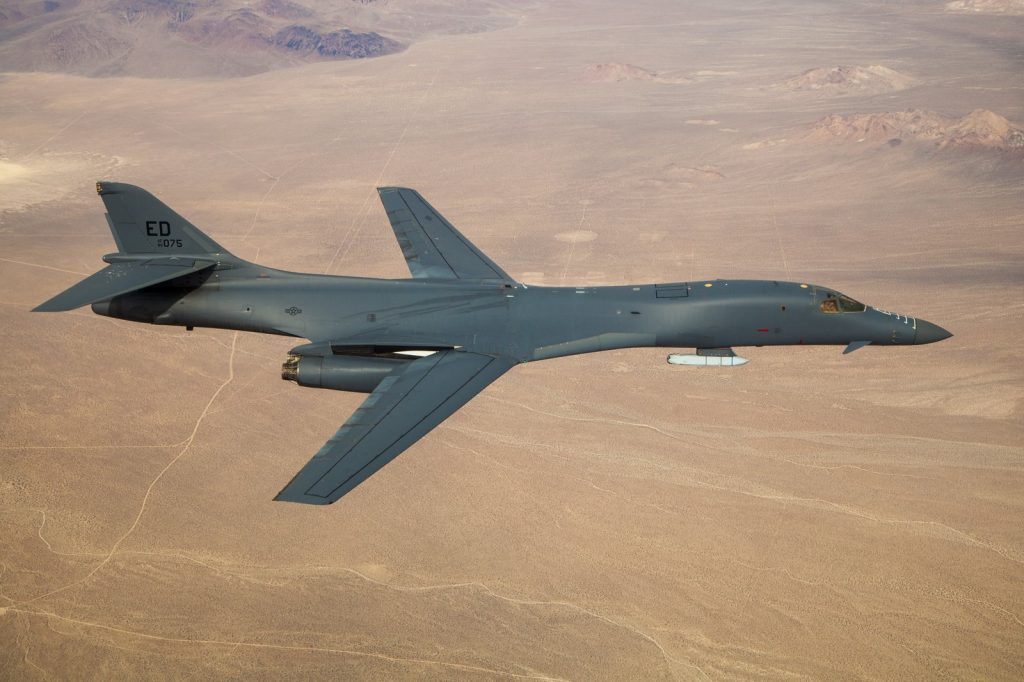
TAMPA, July 21 — The United States Central Command — CENTCOM in the shorthand — continues to prosecute a campaign of airstrikes against Iran-backed militias across Iraq and Syria, combining B-1B Lancer bombers, F-15E Strike Eagles, and MQ-9 Reaper drones in a sustained tempo that has drawn down ordnance and pushed logistics crews hard. Under the hood, the operation targets command-and-control nodes, weapons caches, and logistics facilities, with the command reporting over 85 targets hit across more than ten separate rounds of strikes since February 2, 2024.
The technical reality of those numbers, as ever, masks the complexity of maintaining a multi-domain strike rotation from bases scattered across the region. The Lancers come out of their long-range bomber role to deliver precision munitions; the Strike Eagles offer loiter time and stand-off weapons; the Reapers provide persistent surveillance and, when needed, their own Hellfire payloads.
CENTCOM coordinates the whole package from MacDill Air Force Base in Tampa, Florida — a detail that matters for understanding the command-and-control architecture that links Pentagon planners with forward-deployed assets.
Command and Area of Responsibility
General Michael Erik Kurilla, a four-star general who took command in April 2022, oversees all U.S. forces across CENTCOM’s sprawling area of responsibility — 20 countries including Iraq, Syria, Iran, Saudi Arabia, and Afghanistan. Established in 1983, the command is the Pentagon’s bridge to the Middle East and Central Asia, handling Army, Navy, Air Force, Marine Corps, and Space Force units. That breadth means Kurilla’s desk is rarely quiet, but the pace since October 7, 2023, has been significant.
The Israel-Hamas war that began that day triggered a sharp increase in operational tempo. Through early February 2024, CENTCOM recorded over 170 attacks on U.S. bases — a figure that includes rocket and drone strikes aimed at the roughly 2,500 U.S. troops stationed in Iraq and the 900 in Syria.
Those troops are under constant threat from militia rockets and one-way drones. The detail that matters for the soldiers on the ground is how quickly the threat picture changes, and how dependent they are on the layered defences CENTCOM has built.
Strikes and Targets
The airstrikes themselves are not one-off affairs. Since February 2, 2024, CENTCOM has conducted more than ten rounds of strikes, hitting over 85 targets in Iraq and Syria. The targets are chosen to degrade the militias’ ability to coordinate and supply their operations — command-and-control nodes, weapons caches, logistics facilities.
The technical reality is that each round requires re-strike planning, intelligence validation, and deconfliction with host nations, a bureaucratic and operational cycle that keeps CENTCOM’s targeting cell busy round the clock. The weapon mix — B-1Bs, F-15Es, MQ-9s — reflects the available basing and the need for flexibility.
The Lancers can reach deep into the AOR from outside the region; the Strike Eagles operate from regional bases; the Reapers orbit overhead for hours. As ever, the balance between cost and effect is something the command watches closely. For now, the strikes continue.
The next few rounds will likely look much like the last — same targets, same airframes, same pressure on the militias. The question, as always, is how long the tempo can be sustained.




