
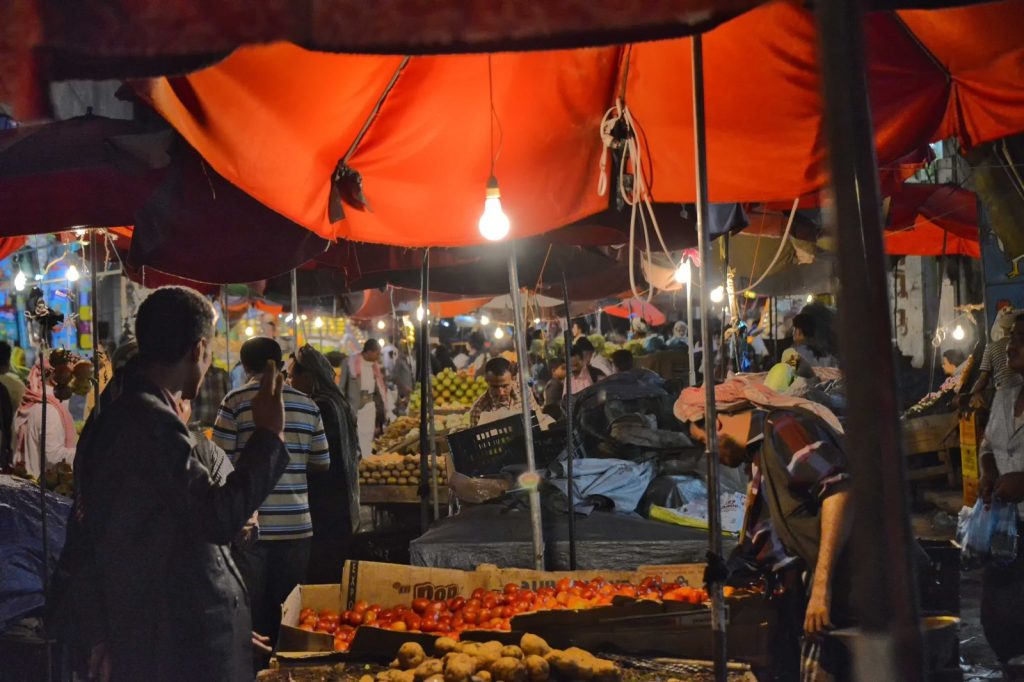
UNITED NATIONS, July 20 — For the people of Yemen, the port of Hodeidah is not an abstraction. It is where a large share of the country’s food imports arrive. That lifeline is now caught in a tightening knot of geopolitics, as the international community weighs its options against the Houthi blockade that has choked supply routes across the Red Sea.
The bedrock of the world’s response remains UN Security Council Resolution 2216, adopted in April 2015. It imposed an arms embargo on Houthi leaders and demanded the group cease hostilities and leave captured cities.
That resolution is still in effect. It has also been routinely violated — a fact that underscores the gap between diplomatic paper and battlefield reality. Since the Houthis tightened their grip on shipping lanes, the United States has moved naval resources into the region.
In 2023, an Arleigh Burke-class destroyer deployed to the Red Sea. The Pentagon has indicated it may forward-deploy additional patrol ships.
But those are defensive deployments. What comes next could be far more aggressive.
Options on the table
The United States could push for a stronger UN resolution that authorizes a naval blockade of Houthi-held ports — a step that would give coalition forces the legal cover to stop and search vessels suspected of carrying weapons. Or it could expand the mandate of the existing Combined Maritime Forces to include escort operations, protecting commercial ships transiting the Bab el-Mandeb strait. Another tool in Washington’s kit: designating the Houthis as a Foreign Terrorist Organization.
The U.S. has signaled it may re-take that step — one that was taken and then reversed under a previous administration. The designation carries heavy sanctions and could cut off financial flows, but it also complicates humanitarian deliveries, because aid groups need exemptions to deal with designated entities.
Diplomatic channels, mostly frozen
On the diplomatic side, the most recent tangible progress was the UN truce of 2022. It collapsed after the Houthis refused to extend it. Behind the scenes, Saudi Arabia has held direct talks with Houthi representatives since 2019.
Those conversations have not produced a ceasefire. The Houthis insist on one precondition: the full lifting of the coalition’s naval and air blockade on Yemen’s ports.
A newer opening emerged from the March 2023 Saudi-Iran rapprochement, mediated by China. That deal restored diplomatic ties between Riyadh and Tehran, and could — in theory — allow indirect talks through Iranian intermediaries. But the Houthis are not Iran’s puppets, and the talks have yet to yield a breakthrough.
Military escalation and its cost
If diplomacy stalls and the shipping disruptions worsen, escalation becomes more likely. A campaign of coalition airstrikes on Houthi naval bases could degrade the group’s ability to launch attacks. But the risk is severe: Hodeidah is the country’s primary food gateway.
Striking near its docks could ripple through an already hungry population. For Yemeni families, the arithmetic is cruel.
A naval blockade or airstrikes might stop Houthi missiles, but they could also stop the next shipment of food. The international community now faces a choice between enforcing arms embargos and protecting the food supply of millions. What to watch next: whether the U.S. moves on the Foreign Terrorist Organization redesignation, and whether any new UN resolution gains traction in the Security Council.
The facts on the ground — routine violations of Resolution 2216, the Houthi preconditions, the fragility of food imports — are not new. The question is whether the response will finally match the scope of the crisis.
Sources
{“@context”: “https://schema.org”, “@type”: “NewsArticle”, “headline”: “U.S., Allies Weigh Military, Diplomatic Steps Against Houthi Blockade”, “description”: “UNITED NATIONS, July 20 — For the people of Yemen, the port of Hodeidah is not an abstraction. It is where a large share of…”, “datePublished”: “2026-07-20T09:30:00+00:00”, “author”: {“@type”: “Person”, “name”: “James Roberto”}, “publisher”: {“@type”: “Organization”, “name”: “InfoPulse Today”, “url”: “https://newsfeed.infopulsetoday.com/”}, “citation”: [{“@type”: “CreativeWork”, “url”: “https://en.wikipedia.org/wiki/United_Nations_Security_Council_Resolution_2216”}]}




