
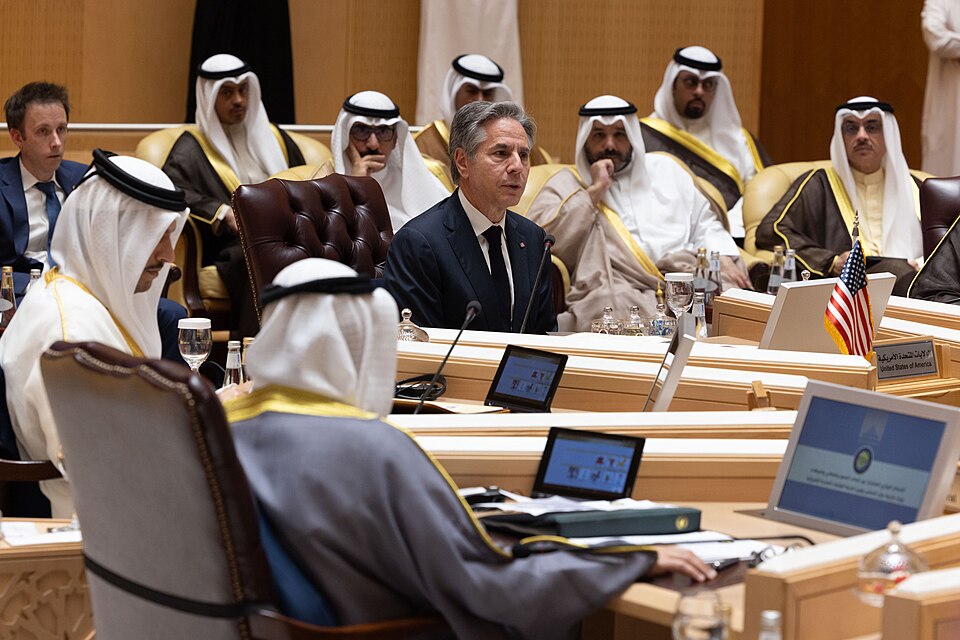
DOHA, July 19 — Here’s the thing about hosting a military base: you don’t get to pick who shows up looking for a fight. That’s the awkward spot Gulf Cooperation Council states find themselves in as the U.S. campaign against Iranian targets rolls on. The coalition itself is broad — the United Kingdom contributed Typhoon fighter jets for strikes on Houthi targets, Australia sent two maritime patrol aircraft, Bahrain put naval forces into the mix, Canada handled logistics, and Denmark, the Netherlands and Spain sent support personnel.
But the bases those planes and ships operate from sit on GCC soil, and the neighbors are watching. In plain terms, think of it like letting a friend use your driveway for a package drop, only the friend is in a running feud with the guy next door.
The practical upshot for Gulf states: they are publicly urging restraint even as they quietly support operations. The UAE’s ambassador to the United Nations called for “maximum diplomacy” on April 17, 2024. Saudi Arabia, which normalized relations with Iran in March 2023 through a China-brokered deal, stated flatly that it will not allow its territory to be used for strikes against Iran.
Qatar has offered to mediate again, just as it did during the 2020‑2021 nuclear talks.
The bases in the middle
Four major installations are key to the U.S. military’s posture in the region. Al Udeid Air Base in Qatar houses CENTCOM’s forward headquarters. Al Dhafra Air Base in the UAE hosts U.S. F‑35s and tankers.
In Kuwait, Ali Al Salem Air Base functions as a logistics hub, and Al Jaber Air Base hosts attack aircraft. These are not abstract outposts; they are the physical infrastructure that makes the campaign possible.
Iran has warned that any nation hosting U.S. forces that attack Iran will be considered “hostile.” That’s not an empty threat — it’s a direct message to every GCC capital that signed basing agreements. For the United States, the coalition also pulled in naval assets from the UK, France and Italy as Houthi attacks in the Red Sea escalated. The UN Security Council passed Resolution 2722 in January 2024 condemning those Houthi attacks, but the resolution stops short of authorizing broader strikes against Iran itself.
Israel in the picture, but not in the coalition
Israel is not a formal member of the coalition. But it is coordinating with CENTCOM under a 2021 reorganisation that moved Israel from U.S. European Command into the CENTCOM area of responsibility. So what does all this mean for the ordinary reader?
It means the GCC states are trying to stay on the good side of both the superpower that protects them and the regional power that can make life difficult. One analogy: it’s a bit like running multiple virtual machines on a single server — each operating system thinks it has full control, but the hardware underneath is shared.
A crash on one can take down the others. What to watch next: how long the balancing act holds. Saudi Arabia’s China‑brokered normalization with Iran gave it political cover to refuse use of its territory, but the UAE and Qatar are still in the middle of the action.
Iran has made its warning explicit. The pressure on these host states will only increase if the campaign widens.




