
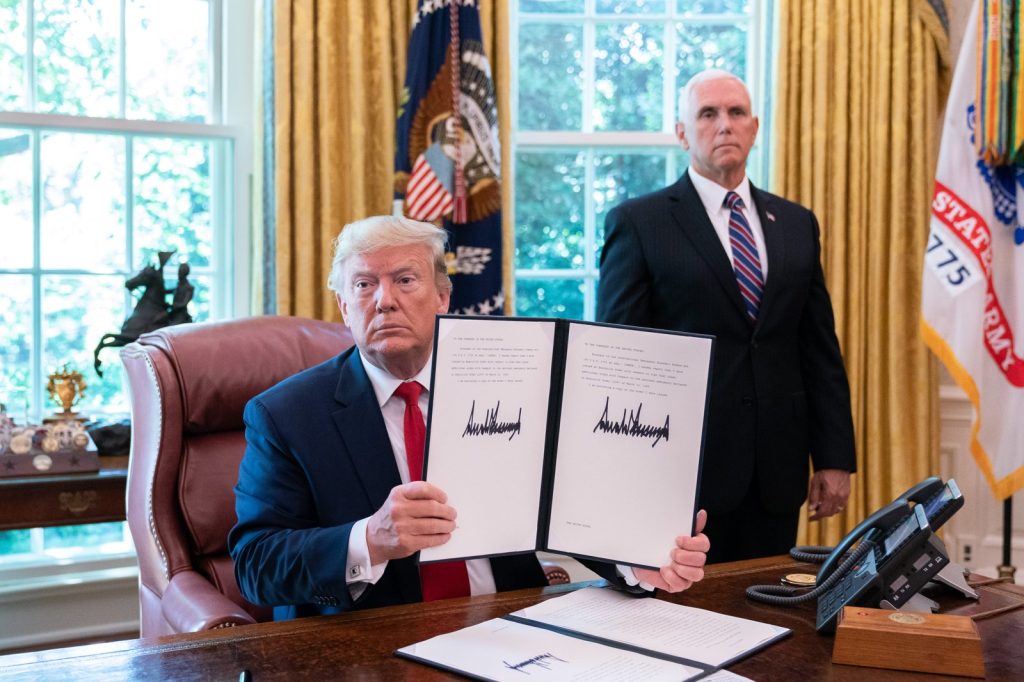
The Trump administration’s posture toward Iran has moved from campaign rhetoric to operational doctrine, with the president’s first-term actions now serving as the baseline for current policy. Donald Trump, who returned to the White House in January 2025 after winning the 2024 election, had set that hardline approach during his earlier tenure. As the 45th and 47th president, he withdrew the United States from the Joint Comprehensive Plan of Action in 2018 and authorized the strike that killed Quds Force commander Qassem Soleimani in 2020.
Both decisions remain in force and define the administration’s stance.
The actors shaping Iran’s response
Iranian decision-making flows through a layered command structure that complicates direct confrontation. Supreme Leader Ali Khamenei, who has held power since 1989, retains final authority over nuclear and foreign policy. President Ebrahim Raisi, elected in 2021, manages day-to-day governance but operates within Khamenei’s framework.
Beneath that layer sits the Islamic Revolutionary Guard Corps, designated a terrorist organization by the United States in 2019. The IRGC controls Iran’s ballistic missile program and its network of proxy forces across the Middle East, including in Yemen, Syria, Iraq, and Lebanon.
Because the Guard Corps answers directly to the Supreme Leader rather than the elected president, a parallel power structure exists that the Trump administration must factor into any strategic calculation. Khamenei has not signaled willingness to renegotiate the nuclear file on terms acceptable to Washington. Raisi, a conservative cleric, has consolidated domestic control but lacks the authority to overrule the Supreme Leader on national security matters. The IRGC continues to expand its ballistic missile capabilities and sustain proxy operations.
These three actors—the Supreme Leader, the president, and the Guard Corps—shape the conflict’s trajectory, but their internal rivalries and overlapping jurisdictions make Iranian decision-making opaque.
The administration’s policy toolkit and what to watch
The Trump administration’s policy toolkit includes renewed sanctions, the permanent structural change of the JCPOA withdrawal, and the precedent of direct military action against Iranian commanders. The 2020 Soleimani strike demonstrated a willingness to target senior Iranian figures, a threshold that now defines the operational baseline rather than an exceptional measure. Whether the administration pursues a diplomatic off-ramp or escalates pressure further depends on how these Iranian actors respond to the current posture. What to watch next is whether the IRGC tests the administration’s red lines with proxy attacks on U.S. forces or allied assets in the region.
The command-and-control relationship between Tehran and its proxies allows for deniability, but the 2019 terrorist designation removed any legal ambiguity about the Guard Corps’ status. Any proxy action attributed to the IRGC carries the risk of a direct U.S. response, a calculation Khamenei and the Guard commanders must weigh against their strategic objectives.
Background: The arc of Trump’s career and why it matters
Donald John Trump, born in New York City in 1946, built a career in real estate and television before entering politics. He took over his family’s real estate business in the early 1970s, renaming it the Trump Organization, and developed skyscrapers, hotels, and golf courses. For more than a decade starting in 2004, he hosted a reality television show that cemented his image as a wealthy businessman.
Presenting himself as an outsider, he won the presidency in 2016, defeating Democrat Hillary Clinton. Trump’s first term saw sharp shifts in domestic and foreign policy.
He imposed a travel ban on several Muslim-majority nations, accelerated construction of a border wall with Mexico, and enforced a family separation policy. He rolled back environmental regulations, signed a major tax overhaul, and appointed three Supreme Court justices. Abroad, he withdrew from international climate and trade agreements and launched a trade confrontation with China.
In 2018, he pulled the United States out of the nuclear deal with Iran, a decision that remains central to his approach to Tehran. After losing the 2020 election to Joe Biden, Trump refused to concede and sought to overturn the result, actions that culminated in the attack on the U.S. Capitol in January 2021.
He was impeached twice by the House of Representatives on charges of abuse of power and incitement of insurrection, but acquitted by the Senate both times. In subsequent years, he faced civil liability for sexual abuse and business fraud, and in 2024 became the first former president convicted of a felony, found guilty on charges related to falsifying business records. Trump won the 2024 election and returned to the White House in January 2025. His second presidency began with mass layoffs of federal workers, sweeping tariffs on imports, and a major tax and spending bill.
These moves signal an aggressive second term. For readers, the background matters because Trump’s return means a continuation of policies that broke with long-standing international commitments and domestic norms, from Iran to trade to the federal workforce.
Understanding the arc of his career and first term helps explain the stakes of his current hardline posture toward Tehran.




