
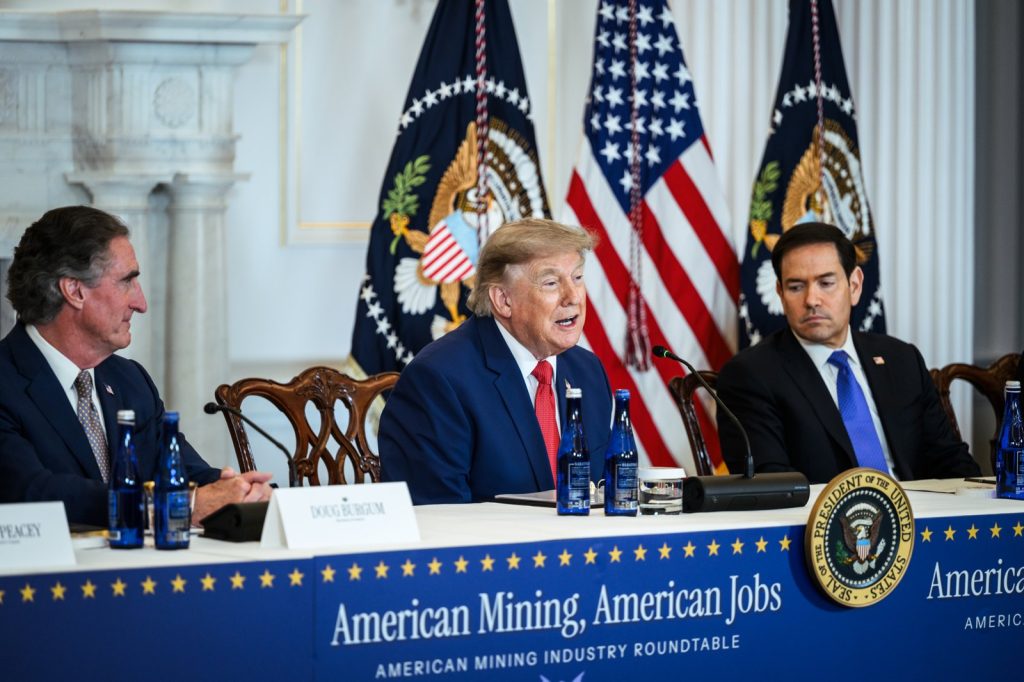
A tightly coordinated push for heavy tariffs on Russian oil is taking shape across the executive branch, drawing on the distinct levers of a half-dozen senior officials who each bring specific backgrounds and responsibilities to the table. The proposal is not the brainchild of a single official but rather a concerted effort from the top of the administration, reflecting President Donald Trump’s overarching foreign policy priority of ending the war in Ukraine.
Trump, who took office on January 20, 2025, has made that goal central to his agenda. The emerging tariff plan, still in development, aims to ratchet up economic pressure on Moscow while carefully weighing the risk of higher fuel costs for American consumers and disruptions to domestic oil production.
Key Officials Shape the Tariff Proposal
Secretary of State Marco Rubio, confirmed on January 21, 2025, has been a vocal advocate for strong economic pressure on Russia, drawing on his previous service on the Senate Foreign Relations Committee. His role in the administration’s push underscores the diplomatic dimension of the tariff strategy.
National Security Advisor Mike Waltz, a former Army Green Beret and former member of Congress, has emphasized the need for leverage in negotiations with Russia, positioning the tariff proposal as a tool to strengthen the U.S. hand at the bargaining table. Treasury Secretary Scott Bessent, confirmed on January 27, 2025, would be responsible for implementing any tariff or sanctions regime that emerges from the policy process. His department would oversee the enforcement mechanisms needed to make the new measures effective.
Energy Secretary Chris Wright, a former oil executive, may influence how the policy affects domestic energy markets. His background gives him insight into the potential consequences for U.S. producers, a central concern for the administration as it seeks to avoid destabilizing the American energy sector.
U.S. Trade Representative Jamieson Greer would handle the tariff negotiations themselves, working with foreign counterparts and navigating international trade law. Commerce Secretary Howard Lutnick would also have a role in the interagency process, contributing to the economic analysis and implementation planning. Beyond the executive branch, the proposal also involves input from congressional leaders, including Senate Majority Leader John Thune and House Speaker Mike Johnson, who may need to pass enabling legislation to make the tariff regime operational.
Balancing Economic Pressure With Domestic Costs
The administration’s broader “America First” approach frames the entire effort: economic pressure on Russia must be weighed carefully against the risk of higher costs at home. The policy’s impact on U.S. energy prices and domestic oil production is a central concern for every official involved. While the tariff proposal aims to squeeze Russian export revenues, it carries the potential to ripple through American fuel markets, raising prices at the pump and affecting industrial costs.
The balancing act requires calibrating the size and scope of the tariffs to maximize leverage without triggering an economic backlash that could undermine public support for the broader Ukraine strategy. Secretary Rubio’s advocacy for strong economic pressure on Russia is informed by his years on the Senate Foreign Relations Committee, where he followed sanctions policy and energy geopolitics closely.
National Security Advisor Waltz has stressed that any leverage gained through tariffs must translate into tangible concessions from Moscow in negotiations over the war.
Background: Existing Sanctions and the New Frontier
The current tariff proposal arrives after years of existing restrictions that have already reshaped global trade flows in Russian oil. Russia holds some of the largest petroleum reserves in the world and has long ranked among the leading global suppliers of crude petroleum and refined products.
Before the 2022 invasion of Ukraine, the country served as the principal transit route for oil from neighboring Kazakhstan and dominated international trade in natural gas. Heavy foreign investment flowed into Russia’s energy sector through the late 2000s, and Arctic extraction received policy support from 2017 onward. That changed dramatically following the February 2022 invasion: overseas partners withdrew from joint ventures, and Western sanctions targeted machinery and technology needed for extraction and refining.
Since that year, the United States, the European Union, and other allies imposed a series of limits on Russian energy imports, including a price cap on seaborne crude oil and later on oil products. An embargo on ship-borne Russian oil took effect for many buyers near the end of 2022.
These measures forced Moscow to redirect exports to alternative markets, primarily in Asia, but they have not fully ended the flow of revenue that funds its war machine. The new tariff proposal represents an additional layer of economic pressure, designed to hit Russian oil exports more directly and comprehensively. For American readers, the implications are twofold: the immediate effect on fuel costs at the pump and the broader question of whether the administration can sustain public support for a policy that pressures Russia without destabilizing the domestic energy market that millions of households and businesses depend on every day.




