On a Wednesday in late September 2024, in a meeting of Russia’s Security Council, Vladimir Putin told senior officials that the rules governing when Russia may reach for nuclear weapons needed rewriting. Against the backdrop of a war in its third year, the message was aimed far beyond the room.
The rules as they stood
Putin had laid down the standing doctrine in a six-page decree dated June 2020. It permitted nuclear use in two cases only: if an enemy struck with nuclear arms, or if a conventional assault put the state’s very existence at risk. That was the line. Putin’s changes, announced on September 25, moved it.
Under the amendments he described, Russia would weigh a nuclear response if it received “reliable information” of a mass launch of missiles, planes or drones against it. And if a non-nuclear country attacked with the backing of a nuclear power, Moscow would treat the two as acting together. A nuclear state supporting such an attack, Putin said, would be seen as a participant in the aggression. He called the clarifications carefully calibrated and in proportion to the military threats Russia faces.
The Guardian read the remarks as Moscow’s strongest warning yet against allowing Ukraine to fire Western long-range missiles deep into Russia. For months Volodymyr Zelenskyy had been pressing for approval to use British Storm Shadow and American Atacms missiles for exactly that purpose.
Reactions in the West and Moscow
Western officials were blunt. Antony Blinken, the American secretary of state, called the proposal “totally irresponsible.” The EU foreign policy spokesman, Peter Stano, described it as “reckless and irresponsible” and added: “Not for the first time, Putin is playing [a] gamble with his nuclear arsenal.” In Kyiv, the head of Zelenskyy’s office, Andriy Yermak, wrote that Russia had “nothing left but nuclear blackmail.”
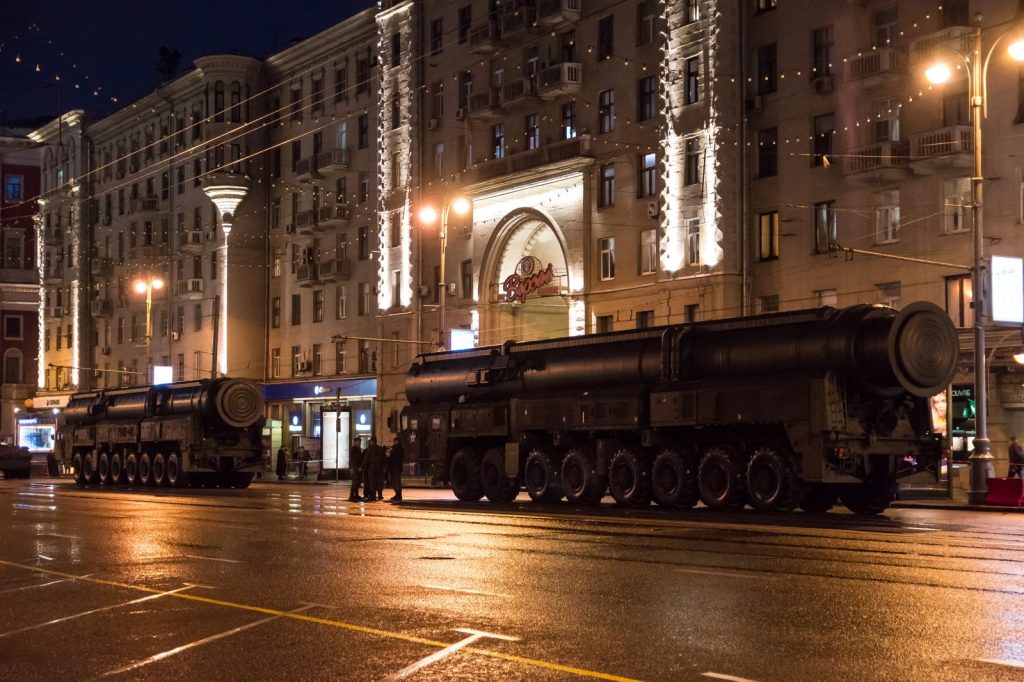
The Kremlin did not retreat. Spokesman Dmitry Peskov called the change a “warning signal” to countries that take part in an attack on Russia “by various means, not necessarily nuclear.” He also said there was “no question” of Moscow enlarging an arsenal that is already the world’s largest.
The signature
The text became official on Tuesday, November 19, 2024, the 1,000th day since Russian troops crossed into Ukraine. The signed version states that an attack on Russia by a non-nuclear country with the “participation or support of a nuclear power” will be treated as a “joint attack on the Russian Federation.” It also says a massive aerial attack could provoke a nuclear response. What it leaves open is whether any such attack would automatically trigger one; it speaks instead of the “uncertainty of scale, time and place of possible use of nuclear deterrent.”
The timing drew attention. Reports had just surfaced that Washington would let Ukraine use US-supplied longer-range missiles against targets inside Russia, and Russia’s Defence Ministry said Ukraine had fired six ATACMS missiles into the Bryansk region overnight. Peskov denied any link, saying the document came out “in a timely manner” and that Putin had ordered an update earlier in the year to match “the current situation.”
Speaking for the White House, the National Security Council called the change “more of the same irresponsible rhetoric from Russia” and said it saw no reason to alter America’s own posture. Ben Hodges, who once commanded US Army forces in Europe, argued that the revision was meant to exploit fear and that Russia’s allies had reason to think it was bluster.
Sources
- Vladimir Putin warns west he will consider using nuclear weapons (The Guardian)
- US, EU, Ukraine slam Russia's nuclear deterrence doctrine (DW)
- Russia's Putin signs updated doctrine that lowers threshold for using nuclear weapons (AP via CBC)