
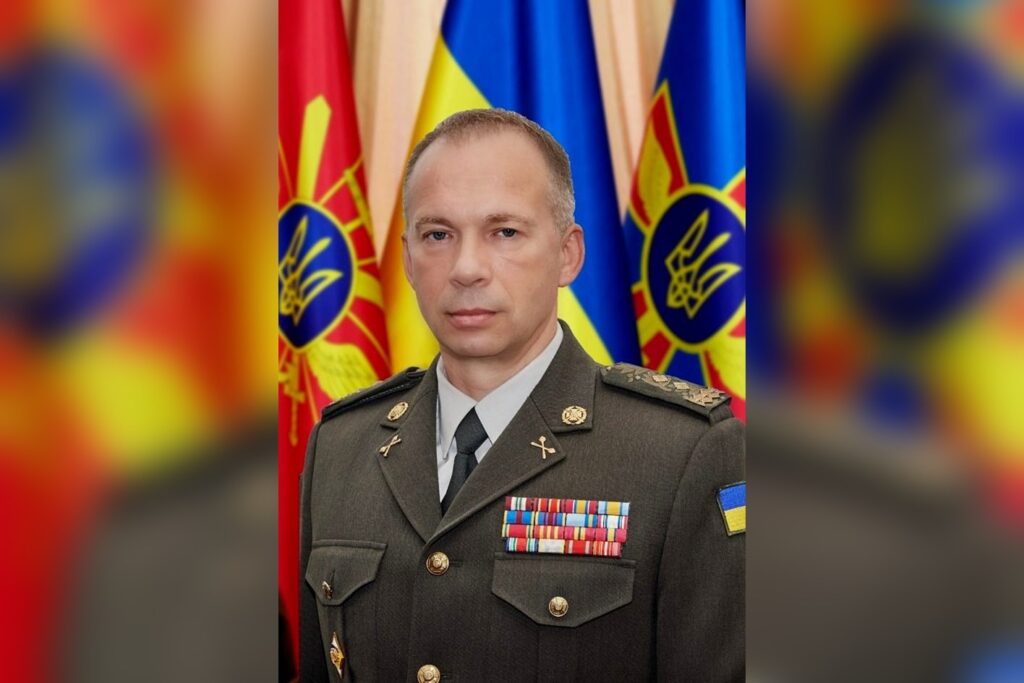
KYIV, July 19 — The shift in Ukraine’s top military brass has quietly reshaped how the country fights its air war. Colonel General Oleksandr Syrskyi took over as Commander-in-Chief of the Armed Forces on February 8, 2024, replacing General Valerii Zaluzhnyi. That change put a commander known for rapid ground offensives in charge of the entire battlefield — including the allocation of scarce air defense systems.
Syrskyi’s track record is built on speed. Before his promotion, he commanded the Khortytsia operational-strategic group and led the successful Kharkiv counteroffensive in September 2022, a surprise thrust that recaptured swaths of occupied territory.
Now his portfolio covers overall military strategy, and that includes deciding where to send Patriot batteries and NASAMS launchers. The man executing those air-defense decisions day-to-day is Lieutenant General Mykola Oleshchuk, who has commanded the Air Force since August 2021.
Air Defense Goes Mobile
Under Oleshchuk, the Ukrainian Air Force has done more than integrate new Western hardware. It has developed a mobile fire group concept — teams armed with MANPADS and heavy machine guns that roam to intercept drones. That is a tactical innovation born of necessity: fixed air-defense sites are prime targets, and Russian loitering munitions require flexible hunters.
Ukraine now operates NATO-standard systems — Patriot, NASAMS, IRIS-T — all integrated into a wider picture. Real-time radar data flows from NATO via the Integrated Air and Missile Defense network, giving Ukrainian commanders a view of incoming threats that stretches beyond their own radar horizon.
Watch this space: the alliance has essentially become a silent partner in Ukraine’s air-defense operations, providing the raw data while Ukraine pulls the trigger.
The Russian Side of the Chessboard
On the other side, the Russian Aerospace Forces are commanded by Viktor Afzalov, appointed in October 2023 after the death of Sergei Surovikin. Afzalov oversees strategic bombers and missile units that launch strikes deep into Ukraine. But the real conductor is Valery Gerasimov, Chief of the Russian General Staff, who directs overall operations.
Russian missile strikes are coordinated by the Main Operational Directorate — a centralized targeting machine that has fired Kh-47M2 Kinzhal aeroballistic missiles throughout the war. Ukraine claims to have shot down over 30 Kh-47M2 Kinzhal missiles since the invasion began, though Russia disputes those figures.
What is changing is the technology behind the intercepts: the mobile fire groups and NATO-fed radar make even these high-speed weapons vulnerable. The trend underneath is a gradual Westernization of Ukraine’s air-defense architecture, even as Syrskyi holds the ultimate decision-making authority. The Kharkiv-style speed has moved to the skies.
What to watch next: whether Syrskyi begins to apply the same rapid-reaction doctrine to other domains — drone warfare, electronic warfare, and deeper strikes. The shift isn’t done yet.




