
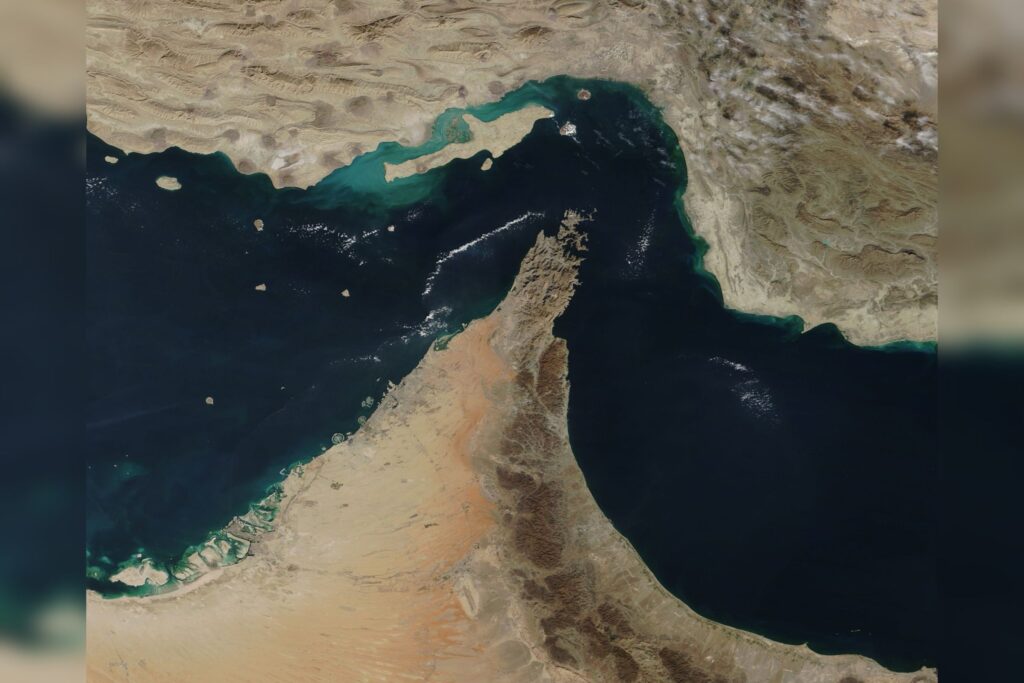
MANILA, July 7 — When ships move through the Strait of Hormuz, they are not just crossing a narrow waterway between Iran and Oman. They are navigating a legal framework that the world has spent decades building — the United Nations Convention on the Law of the Sea, or UNCLOS. And for communities across Asia, from the port workers of Singapore to the families running small fishing boats in the Philippines, what happens in that strait can reach closer to home than many realise.
The strait is legally classified as an international strait under Part III of UNCLOS, which guarantees what is known as transit passage — the right of all ships to pass through without hindrance. This is not a privilege granted by any single nation.
It is a right embedded in a treaty signed in 1982 and in force since 1994. Iran is a signatory to UNCLOS, but has argued that its own security concerns allow for restrictions on passage. The United States has not ratified the convention, but recognises its provisions as customary international law.
That distinction matters now more than ever. The 2025 attacks in the region have raised the temperature around the strait, and the U.S. has called for an emergency meeting of the UN Security Council, a 15-member body.
That meeting could lead to a resolution under Chapter VII of the UN Charter, which authorises collective action — including, potentially, military enforcement — to restore international peace and security.
A legal framework, not just a political one
For people across Asia who depend on the stability of global shipping routes, the legal status of the Strait of Hormuz is not an abstract debate. The strait is one of the world’s most critical chokepoints for oil and liquefied natural gas shipments. Disruption there does not stay in the Persian Gulf.
It travels east, affecting fuel prices, supply chains, and the cost of goods in countries like India, Japan, South Korea, and the Philippines. UNCLOS provides the legal architecture that keeps such chokepoints open.
Part III of the convention specifically addresses straits used for international navigation, establishing that all ships and aircraft enjoy the right of transit passage. This means a tanker carrying crude oil from Saudi Arabia to a refinery in the Philippines cannot be stopped arbitrarily by a coastal state. The convention does allow coastal states to regulate certain aspects of passage — such as safety of navigation, pollution control, and customs enforcement — but these regulations must not hamper or deny the right of transit passage itself.
The U.S. has consistently asserted these rights through Freedom of Navigation Operations, or FONOPs, in the region. These are not symbolic gestures.
They are operational demonstrations that the United States considers the strait an international waterway where its vessels, and those of its allies, may transit freely. For Asian nations that rely on unimpeded maritime trade, these operations carry real weight.
Iran’s position and the limits of UNCLOS
Iran’s argument — that its security justifies restrictions on passage — is not new. Tehran has periodically threatened to close the strait or impose conditions on ships passing through, particularly during periods of heightened tension with the United States. Under UNCLOS, a coastal state does have certain rights to protect its security, but those rights are not absolute.
The convention’s provisions on transit passage do not include a blanket security exception that would allow a state to shut down an international strait. The legal history between Iran and the United States adds another layer.
In 2018, the International Court of Justice ruled in favour of Iran in a case against the U.S. over frozen assets. That ruling, however, was limited in practical effect because the United States had already withdrawn from the Optional Protocol to the Vienna Convention on Diplomatic Relations, which had provided the basis for the ICJ’s jurisdiction. The case illustrates how international legal mechanisms can function, but also how easily they can be circumvented when a major power chooses to step back.
For the communities across Asia watching these developments, the lesson is sobering. International law is only as strong as the willingness of states to abide by it — and to enforce it when it is violated.
What a Security Council resolution could mean
The call for an emergency UN Security Council meeting is a significant step. If the Council adopts a resolution under Chapter VII, it would determine that the situation in and around the Strait of Hormuz constitutes a threat to international peace and security. That determination opens the door to a range of possible actions, from sanctions to authorisation of naval escorts or even military strikes.
The Security Council has 15 members, including five permanent members with veto power: the United States, China, Russia, France, and the United Kingdom. Any resolution would need at least nine votes in favour and no veto from any of the permanent members.
That is a high bar, particularly given the geopolitical divisions that have paralysed the Council on other issues, such as the war in Ukraine. But the stakes are different here. The Strait of Hormuz is not a regional dispute.
It is a global chokepoint. Disruption there affects every economy that depends on imported energy — and that includes most of Asia.
For the Philippines, which imports nearly all of its oil, a prolonged closure or even a significant reduction in traffic through the strait would mean higher prices at the pump and higher costs for everything from transport to manufacturing.




