
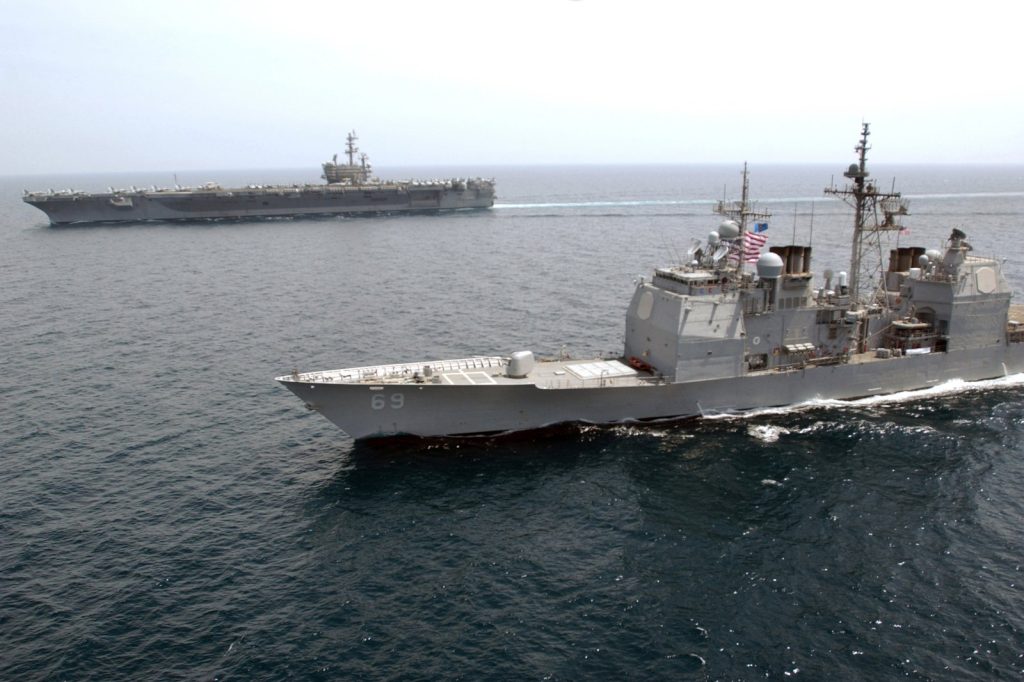
The narrow waters of the Strait of Hormuz have remained open to commercial shipping even during the most intense phases of the Iran-Iraq War, but a potential blockade now threatens to shut the chokepoint for the first time in nearly four decades. Any sustained closure would represent a dramatic escalation in a region already marked by periodic attacks and heightened military presence.
The history of the waterway suggests that keeping it open has required both diplomatic maneuvering and direct military action, and that the stakes for global energy markets are as high as ever.
Lessons from the Tanker War and U.S. Response
The last period when the strait faced a credible threat of full closure was the Tanker War, which ran from 1984 to 1988 as part of the broader Iran-Iraq conflict. During that campaign, Iran and Iraq attacked oil tankers and other shipping in the Persian Gulf. Iran employed mines and anti-ship missiles that damaged more than 500 vessels. Despite the scale of those attacks, the waterway was never fully shut down.
The United States responded with Operation Earnest Will from 1987 to 1988, reflagging Kuwaiti tankers under the American flag and providing naval escorts through the strait. On April 18, 1988, Operation Praying Mantis saw U.S. forces sink an Iranian frigate and damage Iranian oil platforms.
Those actions did not close the strait, but they demonstrated the strategic stakes involved and the willingness of the United States to intervene when commercial shipping was threatened. The Iran-Iraq War itself began in 1980 when Iraq invaded Iran and lasted eight years until a United Nations-brokered ceasefire took effect in 1988. That conflict drew in outside powers and featured sustained naval attacks on commercial shipping in the gulf.
Earlier friction over the strait also followed the 1979 Iranian Revolution and the change in Iran’s leadership, as Iraq’s government sought to block the new Iranian leadership from spreading its influence abroad. The experience of the Tanker War shows that any blockade today would face significant military and economic pressures, just as the earlier campaign never succeeded in entirely shutting the waterway.
Flashpoints in 2012 and 2019
More recent tensions have raised the possibility of a closure without resulting in one. In 2012, Iran threatened to close the strait in response to European Union and U.S. sanctions on its oil exports, but did not follow through.
That threat came amid a broader diplomatic standoff over Iran’s nuclear program, but the strait remained open to commercial shipping throughout the period. Then in 2019, a series of attacks on oil tankers near the strait escalated tensions further. On June 13, 2019, the Front Altair and Kokuka Courageous were attacked. The United States blamed Iran for those attacks, but Iran denied any involvement.
Those incidents did not close the strait, but they did raise insurance premiums for shipping and led to an increased U.S. military presence in the region. The 2019 attacks prompted a larger U.S. naval deployment, yet the waterway stayed open.
That history suggests that even when tensions spike, the strait’s importance to global trade creates powerful incentives for all sides to avoid a full shutdown.
Strategic Consequences and the Path Ahead
The Strait of Hormuz remains a critical chokepoint for global oil supplies, linking the Persian Gulf with the open ocean. The channel sits between Iran and the Arabian Peninsula, and any sustained closure would have immediate consequences for energy markets. The U.S. administration under President Donald Trump has maintained a strong military presence in the region.
Past operations like Earnest Will and Praying Mantis show a willingness to intervene when shipping is threatened. The current blockade, if enforced, would be the first full closure since the Iran-Iraq War, and the earlier Tanker War–though it damaged over 500 vessels–never shut down the strait entirely.
For now, the situation remains fluid. Whether the current blockade holds–or whether it provokes a new military response–will depend on how Iran and its adversaries choose to act in the coming days. Readers depend on stable shipping through the strait for fuel prices and trade flows in daily life, and any disruption can affect energy supplies far beyond the region.




