
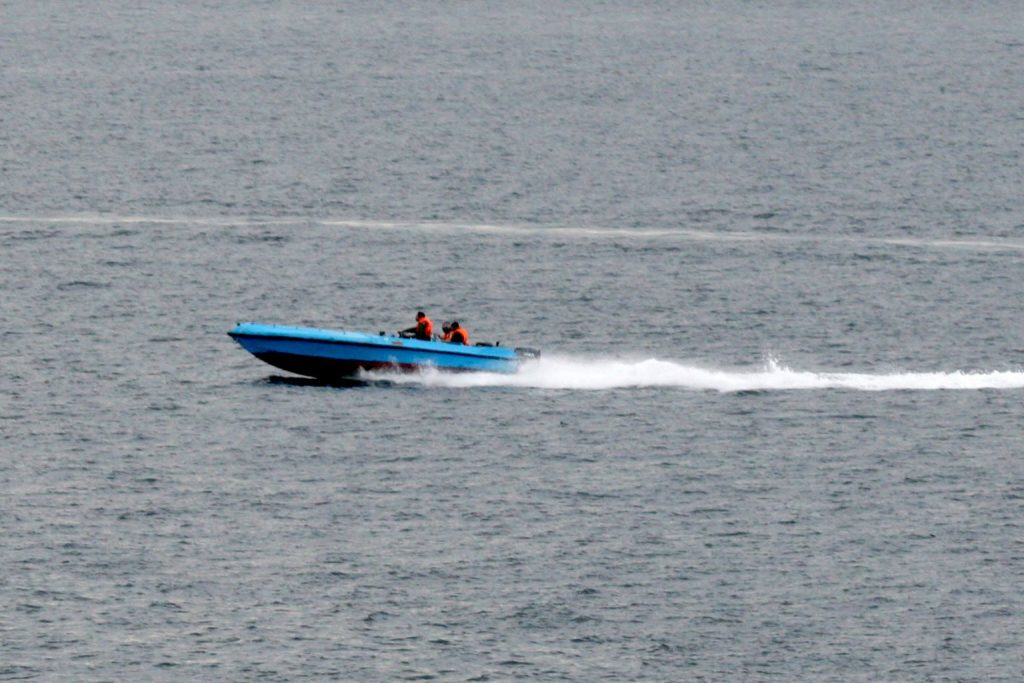
TEHRAN, July 12 — The Islamic Revolutionary Guard Corps Navy has announced a closure of the Strait of Hormuz, escalating a long-simmering confrontation that touches every nation dependent on the oil that passes through these waters. For the families of the sailors who man the Guard’s small fast-attack craft, this is not an abstract strategic calculation—it is a direct order from the Supreme Leader. The IRGCN, established in 1979 after the Iranian Revolution, reports directly to Ayatollah Ali Khamenei.
This chain of command matters because it places the Strait’s security in the hands of a force the United States has designated a foreign terrorist organization since 2019, rather than under the regular navy’s Ministry of Defense. The Guard operates approximately 1,500 small fast-attack craft, many armed with anti-ship missiles and torpedoes, along with coastal defense batteries and naval mines.
It also controls Iran’s anti-ship missile systems, including the Noor and Qader missiles, with ranges of up to 300 kilometers. The regular Islamic Republic of Iran Navy, by contrast, operates larger vessels such as frigates, destroyers, and submarines—including three Russian-built Kilo-class boats—in the Caspian Sea and Gulf of Oman. But the IRGCN owns the Strait.
A history of confrontation
The Guard’s track record in the Strait is not theoretical. In 2016, IRGCN forces captured U.S. Navy sailors who entered Iranian waters. In 2019, they seized the British-flagged tanker Stena Impero in the same narrow waterway.
These incidents established a pattern: the IRGCN acts, and the world’s shipping lanes react. The current closure announcement, made by the IRGCN, reflects its primary role in the Strait.
What this means for global shipping
The Strait of Hormuz is the world’s most important oil chokepoint. A closure means tankers carrying crude from Saudi Arabia, Iraq, Kuwait, the UAE, and Iran itself cannot reach the Gulf of Oman and the open ocean. For families in Europe, Asia, and the United States, the immediate consequence will be felt at the petrol pump—though the full economic impact depends on how long the closure lasts and how the U.S. Navy responds.
Behind the breakthrough in tensions, the Guard’s arsenal of anti-ship missiles—the Noor and Qader systems with their 300-kilometer range—poses a real threat to commercial and military vessels. The IRGCN also maintains naval mines, which can be laid quickly to block shipping lanes even without direct engagement.
The human side of the Strait
For the Iranian sailors aboard those 1,500 small craft, the order to close the Strait means putting to sea in vessels designed for speed and harassment, not long-range operations. They serve under the direct command of the Supreme Leader, a fact that gives their mission ideological weight beyond ordinary naval operations. The regular IRIN, under the Ministry of Defense, operates separately in the Caspian Sea and Gulf of Oman—but it is the Guard’s fast boats that will enforce the closure.
What to watch next: whether the U.S. Navy’s Fifth Fleet, based in Bahrain, will attempt to break the closure, and whether the IRGCN’s missile batteries will engage. The Strait’s strategic importance means no nation dependent on Gulf oil can afford to let this stand unanswered.




