
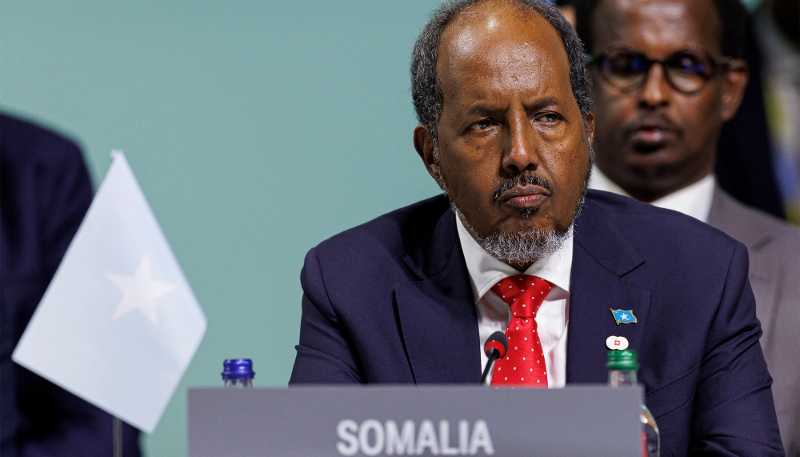
For three consecutive days, representatives of Somalia’s federal administration and the opposition Somali Future Council have been meeting under the joint auspices of the United Kingdom and the United States. The talks, now teetering on the brink of collapse, centre on two interlinked issues: the legal status of President Hassan Sheikh Mohamud’s extended stay in office and the design of a credible electoral timetable.
President Mohamud’s four‑year constitutional term formally ends on 15 May 2026. Instead of stepping down, he has remained in power, prompting the opposition to demand strict adherence to the term‑limit provisions of the Somali constitution. The federal government, citing persistent security threats and logistical hurdles, has argued for postponing elections, creating a deadlock that threatens to undo the fragile democratic gains made since the country’s political transition began.
Somali political analyst Ahmed Abdi warned that the impasse jeopardises the nation’s nascent democratic trajectory. “The current stalemate erodes the limited progress achieved in consolidating democratic institutions,” he said, underscoring the urgency of a resolution.
The United States and the United Kingdom have taken leading roles in trying to keep the dialogue alive. U.S. Ambassador to Somalia Larry André reiterated Washington’s stance, stating that “the United States supports the Somali people’s aspirations for a democratic and stable future.” The British Minister for Africa, Andrew Stephenson, echoed this sentiment, pledging continued British assistance to “ensure a peaceful and stable Somalia.” Both diplomats have warned that a power vacuum could be exploited by extremist groups operating in the region. European partners have also voiced concern.
The European Union’s High Representative for Foreign Affairs and Security Policy, Josep Borrell, described the situation as “deeply concerning” and urged all sides to resume constructive talks. The EU stressed the importance of respecting constitutional term limits and moving swiftly toward a transparent electoral process.
Beyond the Western bloc, several Asian nations have expressed solidarity with Somalia’s democratic aspirations. Taiwan’s representative in Mogadishu, Jian‑Hua Wu, highlighted the risk of regional destabilisation if the crisis deepens. Japan and the Philippines have joined the chorus of calls for a peaceful settlement, reinforcing the broad international consensus that Somalia’s stability is linked to a credible transition of power.
Israel’s ambassador to the United Nations, Gilad Erdan, warned that failure to establish a clear electoral roadmap could embolden militant organisations, posing a direct threat to security across the Horn of Africa. The United States has briefed the White House on the developments, with the administration reiterating its support for Somalia’s right to democratic governance.
A statement from the U.S. Department of State affirmed that Washington will continue to collaborate with global partners to help Somalia achieve a “democratic and stable future,” emphasizing the need to honour constitutional limits and conduct timely elections. As the deadline for President Mohamud’s term passes, the international community remains on high alert, coordinating diplomatic pressure and offering technical assistance to prevent a slide into chaos. Observers note that any prolonged deadlock could create openings for extremist recruitment and destabilise neighboring states.
With the talks poised at a critical juncture, the world watches closely, hoping that sustained mediation by the UK, US, EU and other allies will produce a mutually acceptable framework for elections and a peaceful transfer of authority, safeguarding Somalia’s democratic prospects.




