
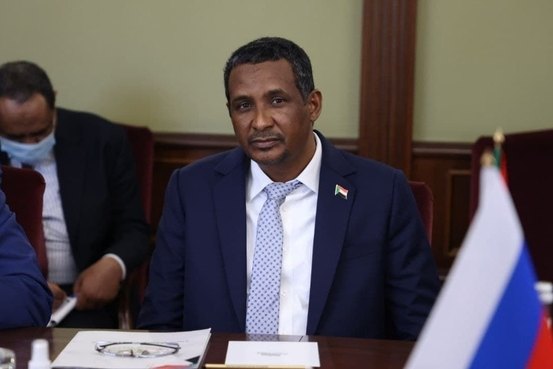
Smugglers’ gold, a fleet of aging aircraft, and a web of shell companies continue to sustain Sudan’s Rapid Support Forces, more than a year after the United States imposed sanctions aimed at crippling the paramilitary’s finances. Despite penalties from the Treasury Department’s Office of Foreign Assets Control, the supply network that fuels the conflict has proved stubbornly resilient, according to U.S. and United Nations investigators. Sudan, the third-largest country in Africa by area, borders seven other nations and the Red Sea.
Its modern history has been marked by internal strife: independence in the mid-twentieth century followed decades of joint British and Egyptian rule, but tensions between the predominantly Islamic north and the Christian and animist south erupted into two separate civil wars. The first lasted nearly two decades; the second began after the government adopted Islamist rule.
Today, the instability that followed those conflicts has allowed paramilitary groups to build illicit economies that undermine both regional stability and international diplomacy.
Gold Smuggling and Sanctions Evasion Underpin RSF Operations
The United States first moved against the RSF and its leader, Mohamed Hamdan Dagalo, in September 2023. The Treasury Department’s Office of Foreign Assets Control imposed sanctions citing human rights abuses and destabilizing activities across Sudan. Those measures targeted several entities linked to the paramilitary, including companies involved in gold mining and logistics. But the sanctions have not stopped the flow.
According to U.N. reports from 2023 and 2024, the RSF have long relied on gold smuggling and illicit trade to finance their operations. The U.N. Panel of Experts on Sudan has documented cases of sanctions violations, including the transfer of weapons and fuel to the RSF via third countries such as the United Arab Emirates and Chad.
By nightfall in Khartoum, the paramilitary’s supply lines remain intact, even as diplomats in New York and Washington call for tougher action. The complexity of tracking aircraft ownership and flight paths makes enforcement difficult. Aging planes registered in multiple jurisdictions crisscross the region, their ownership obscured by layers of shell companies and front registrations.
A Reuters investigation in 2024 found that companies controlled by a U.S. Army Special Forces veteran operated aircraft that flew to RSF logistics hubs. The finding underscored a persistent challenge: sanctions evasion remains a routine part of the war economy.
Aircraft Ownership and Enforcement Gaps
The case highlights a broader failure of international coordination. The U.N. panel has urged member states to share data on aircraft registrations and flight movements, but gaps remain. Without better cooperation, the RSF’s access to cash and weapons will continue, even as the United States and its allies tighten the economic noose.
The sheer intricacy of the logistics network — gold moving east, weapons moving west, fuel moving through intermediaries — has frustrated efforts to close the loopholes. The U.S. government has called for stronger enforcement, acknowledging the challenge posed by ownership structures that are deliberately opaque.
Sudan’s geography compounds the difficulty. The country borders seven other states and the Red Sea, offering multiple routes for smuggling. The region’s historical role as a crossroads of trade and population movements has been exploited by armed groups to sustain their operations.
International Diplomacy and the Continuing Crisis
For readers, this situation represents a failure of international enforcement and a continuing humanitarian crisis. The ability of paramilitary groups to evade international sanctions through illicit trade impacts the effectiveness of global diplomacy.
As the United States and its allies seek to apply pressure, the RSF’s reliance on gold smuggling, aging aircraft, and shell companies shows no sign of abating. The same networks that fund the fighting also perpetuate the instability that has plagued Sudan since independence, leaving diplomats and investigators wrestling with a system that has proven remarkably resilient to international pressure.




