
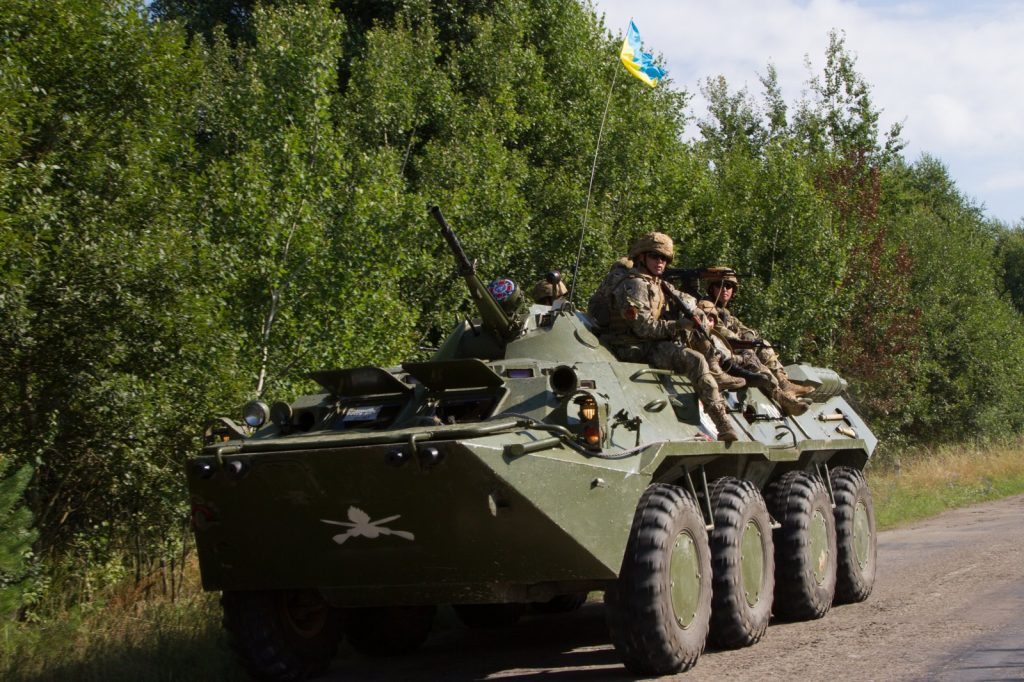
KYIV, July 11 — The Russian invasion of Ukraine began on February 24, 2022, when Russian forces launched a multi-front assault. The initial campaign aimed to capture Kyiv but was repelled by Ukrainian resistance. By April 2022, Russia shifted focus to eastern and southern Ukraine.
The record shows a series of pivotal engagements that defined the war’s trajectory. The Siege of Mariupol, lasting from February to May 2022, ended with the city under Russian control after weeks of intense fighting.
Later that year, Ukraine mounted two significant counteroffensives. The Kharkiv counteroffensive in September 2022 recaptured substantial territory in the northeast. The Kherson counteroffensive, running from August to November 2022, succeeded in liberating the city of Kherson and areas on the west bank of the Dnipro River.
According to officials and international observers, the front line has remained largely static as of early 2025. Russia currently holds approximately 18 percent of Ukrainian territory, a figure confirmed by multiple assessments.
The war has displaced more than 10 million Ukrainians from their homes. Of that number, 6.3 million are registered as refugees abroad, according to United Nations data. The human cost is stark.
The United Nations has documented over 30,000 civilian casualties, though officials acknowledge the actual figure is likely higher. Military casualties are estimated in the hundreds of thousands on both sides, according to Western intelligence reports. These numbers represent the grinding attrition that has characterized much of the conflict since the initial maneuver warfare of 2022 gave way to entrenched positions.
Strategic Context
The invasion upended European security arrangements and triggered the largest refugee crisis on the continent since World War II. For Russia, the campaign has imposed severe economic sanctions and diplomatic isolation. For Ukraine, the war has meant a sustained mobilization of society and military resources, with Western arms and financial aid playing a central role in its ability to hold the line.
Neither side has achieved a decisive breakthrough in recent months. The static front line suggests a conflict that could continue for years, with both sides preparing for protracted operations.
Military analysts point to the estimated hundreds of thousands of casualties as evidence of the war’s intensity, even when territorial gains are measured in meters rather than kilometers.
What to Watch
The coming months will test whether either side can generate the combat power needed to break the stalemate. Ukraine continues to press for advanced Western weapons systems and security guarantees. Russia has adapted its industrial base to wartime production, though sanctions continue to constrain access to critical components.
The displacement of more than 10 million Ukrainians remains a humanitarian challenge with no near-term resolution, as many refugees abroad face uncertain futures while millions more remain internally displaced within a country still under bombardment.




