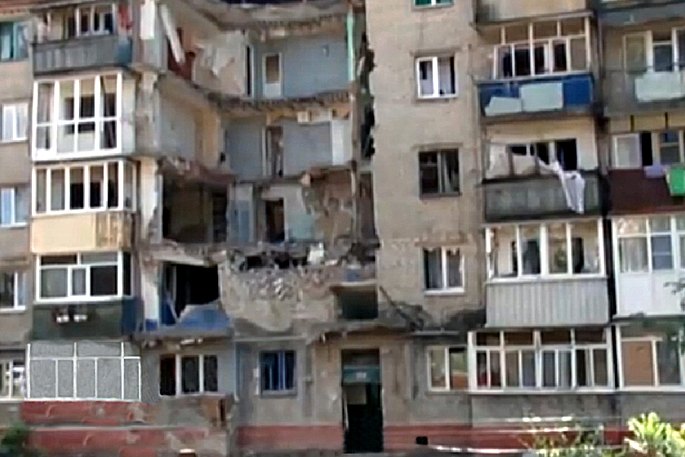
Fires burned across parts of Kyiv and residents sheltered overnight in metro stations after Russia fired hundreds of drones and dozens of missiles at Ukraine over several days. Ukraine said the Sunday barrage included Iskander ballistic missiles and a rare Oreshnik intermediate-range ballistic missile. Several districts of the capital were hit and residential buildings were damaged, according to National Security Journal.
The assault was one of the heaviest on Kyiv in months. It came after a run of sharp statements from Moscow.
Threats before the strikes
On May 25, Foreign Ministry spokeswoman Maria Zakharova said “retaliatory strikes” had begun in Ukraine and would carry on. The next day Dmitry Medvedev, deputy chair of Russia’s Security Council, turned to the European Union diplomats who have stayed in Kyiv. The EU had said its presence there would not change. “Well, apparently they’ve got diplomats to spare and need to trim the headcount,” Medvedev wrote on social media.
Medvedev also told U.S. Secretary of State Marco Rubio, in a May 26 phone call, that the conflict would escalate further if current trends continued.
Russia has described its recent attacks as retaliation for Ukrainian strikes on Russian-held territory and inside Russia. After a strike on a dormitory in Russian-controlled Luhansk, which Moscow said killed 21 civilians including students, the Foreign Ministry declared that the country’s “patience” had run out. Ukraine disputed parts of Russia’s account. Russian state media has since suggested larger attacks are coming, with references to government buildings and command facilities, and Russian officials have hinted at strikes on “decision-making centers.”
A slow ground war
The talk is loud, but the front line is moving slowly. Russia’s May offensive was reportedly among its slowest since early 2025. Its forces pressed near Pokrovsk, Toretsk, Kupiansk and parts of the Sumy region, yet most gains were measured in hundreds of meters.
Ukrainian drones are a large part of the reason. FPV drones and artillery surveillance systems have made big armored advances extraordinarily costly, the journal said, and millions of drones have now been used by both sides. Russia still holds advantages in manpower, artillery production and missile manufacturing, but has struggled to turn them into decisive territorial gains.
Drone defense has become a domestic issue in Russia. A proposed law is expected to let commercial banks serve as drone defense hubs and use anti-drone technology without direct involvement of the Russian military.
Strikes deep inside Russia
Ukraine keeps hitting targets far from its border. In recent months its drones have gone after oil refineries, airbases, radar facilities and logistics hubs hundreds of miles inside Russia. Earlier in May, drone attacks again forced temporary airport shutdowns around Moscow.
The journal, whose analyst Jack Buckby wrote the piece, compared the current Russian rhetoric to the language heard after Ukraine’s Kharkiv counteroffensive in 2022, the Russian withdrawal from Kherson and repeated Ukrainian attacks on Crimea and Russian naval assets in the Black Sea. Its assessment: the more such threats fail to change anything on the battlefield, the less likely it is that Kyiv gives way.