
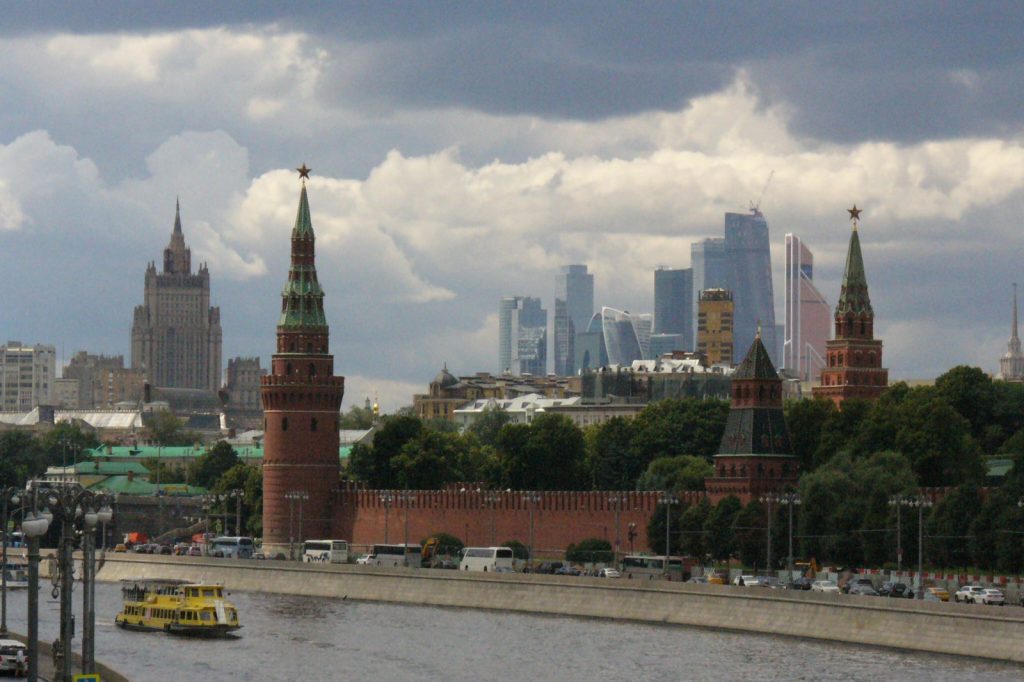
MOSCOW, July 10 — The United States is considering a new round of heavy tariffs on Russian oil exports, a measure that officials in Moscow have begun to assess for its potential impact on a federal budget still heavily dependent on energy revenues. According to the information available, the plan remains under discussion in Washington, but its implications are already being weighed by Russian economic planners. The proposed tariffs represent the latest escalation in the economic confrontation that began in 2022, when Western sanctions were first imposed.
Russia’s response to those earlier measures has been to redirect its oil exports eastward. The record shows that China and India became the primary buyers of Russian crude after the 2022 sanctions took effect.
In 2023, Russia exported approximately 1.5 million barrels per day to China and 1.0 million barrels per day to India, according to the data.
The Strategic Context of Russian Energy Exports
The Russian economy’s reliance on oil and gas revenues is a central factor in any calculation of the proposed tariffs’ effect. Officials have confirmed that oil and gas accounted for approximately 45% of Russia’s federal budget in 2021. That dependency has not diminished significantly, even as Moscow has sought to diversify its economic base.
Russia’s GDP grew by 3.6% in 2023, according to the World Bank, a figure that surprised some Western analysts who had predicted a sharper contraction. However, the economy has also faced persistent inflationary pressure.
Inflation remained high at 7.4% in 2023, and the Russian central bank responded by raising its key interest rate to 16% in December of that year. The bank’s actions were aimed at cooling domestic demand and stabilizing the ruble. To cushion the economy against external shocks, Russia has built up its foreign exchange reserves.
The total stood at $580 billion in 2023, a figure that provides a buffer but is not unlimited. The proposed tariffs could reduce Russia’s oil export revenue by an estimated $30-50 billion per year, based on current export volumes and prices.
That is a significant sum for a budget that relies on energy receipts to fund social spending, defense, and other state obligations.
Possible Russian Responses
If the United States imposes heavy tariffs, Russia would have several options for retaliation, according to analysts who study the Kremlin’s strategic playbook. One possibility is a reduction in oil production, which would further raise global prices. Such a move would hurt consumers worldwide but would also hit Russian revenues in the short term, making it a double-edged weapon.
Another option available to Moscow is targeting U.S. interests abroad. The precise nature of any such retaliation remains unclear, but the record shows that Moscow has consistently matched Western economic pressure with countermeasures of its own.
The proposed tariffs are still under discussion in Washington, meaning the final scope and timing of any measures are not yet settled. However, the mere prospect of such a move has already begun to shape calculations in Moscow.
Domestic Economic Pressures
Even without new tariffs, the Russian economy faces significant headwinds. The high inflation rate of 7.4% in 2023 has eroded real incomes for many Russians, and the central bank’s key interest rate of 16% has made borrowing expensive for businesses and households alike. These conditions limit the government’s ability to stimulate the economy through monetary policy.
The reliance on Chinese and Indian buyers also creates vulnerabilities. While those countries have increased their purchases of Russian crude, they are also in a position to demand discounts.
The terms of trade are dictated by the buyer as much as the seller in a market where Russia has limited alternatives. A reduction in export revenue of $30-50 billion per year would force difficult choices in budget allocation. Russia’s foreign exchange reserves of $580 billion provide some insulation, but those reserves are not all equally accessible.
A portion is held in assets that could be frozen or restricted by Western governments, as happened with earlier sanctions. The Kremlin has taken steps to reduce its exposure to Western financial systems, but the process is incomplete.
Geopolitical Calculations
The proposed tariffs come at a time when the geopolitical landscape remains fractured. Moscow, for its part, has not publicly detailed its response to the tariff proposal. Officials have said they are monitoring the situation and preparing contingency plans.
The Russian central bank and finance ministry are believed to be modeling various scenarios to assess the impact on the budget and the currency. The coming months will show whether Washington moves forward with the tariffs and, if it does, whether Moscow chooses to retaliate through production cuts, asymmetric measures, or a combination of both.
What is clear is that the economic confrontation between the two countries is entering a new phase, one that will test the resilience of both economies.




