
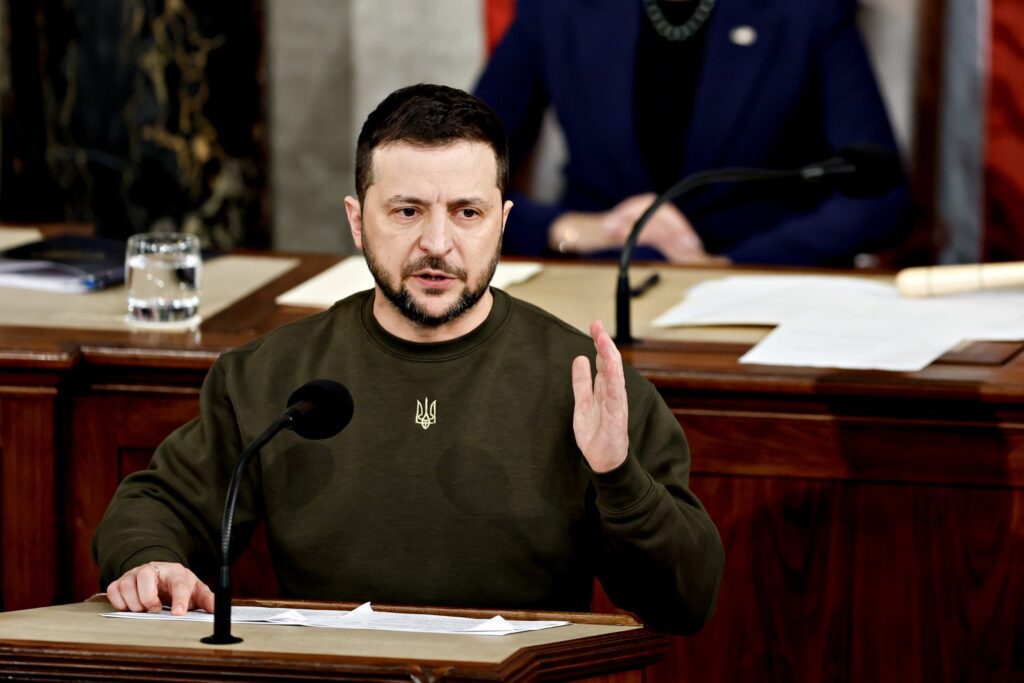
As the war in Ukraine grinds through its fifth year, the diplomatic campaign to tighten the economic screws on Moscow remains a central pillar of President Volodymyr Zelenskyy’s strategy. His call for stronger sanctions, including a full embargo on Russian oil and gas, has been a consistent refrain since the full-scale invasion began on February 24, 2022.
The revenue Russia earns from petroleum sales continues to fund its war effort, making the effectiveness of Western sanctions a critical variable in the conflict’s duration.
From Comedian to Wartime Leader
Zelenskyy entered office on May 20, 2019, having won the presidency on an anti-corruption platform. Born January 25, 1978, he came from a background as a comedian and actor, a fact that initially drew scepticism from Western capitals and Ukraine’s traditional political establishment. The Russian invasion transformed his presidency.
Addressing the United States Congress on March 16, 2022, and speaking multiple times before the United Nations General Assembly, he launched a relentless diplomatic offensive. His core message has remained unchanged: stronger sanctions on Russia, a clear path toward NATO membership for Ukraine, and a firm rejection of any peace deal that would cede territory to Russia.
Under his leadership, Ukraine has received over $100 billion in military, economic, and humanitarian aid from the United States and the European Union. That staggering figure reflects the scale of Western commitment, though debates over further funding have grown more contentious in several national parliaments. Domestically, Zelenskyy’s approval rating stood at around 90% in 2022, buoyed by national unity in the face of invasion.
By early 2024, that number had declined to about 60%, a shift analysts attribute to war fatigue, economic strain, and the slow pace of judicial and anti-corruption reforms. NATO membership, a key demand in any peace negotiation, remains elusive amid divisions within the alliance.
The search for a diplomatic off-ramp continues, but Zelenskyy’s red line—no territorial concessions—leaves little room for compromise.
The Oil Revenue Calculus
Russia sits on some of the largest oil reserves in the world and was once the planet’s biggest exporter of natural gas. Its petroleum industry is among the most important globally, making the country a crucial supplier to European markets, with pipelines crisscrossing the continent. Revenue from oil and gas sales long formed a backbone of the Russian budget. The full-scale invasion changed everything.
Russia began restricting gas flows to Europe, widely seen as an attempt to weaken Western support for Ukraine, and key pipelines were shut. The strategy backfired, inflicting severe economic losses on Gazprom, the state-controlled gas giant.
Western governments responded with sweeping sanctions designed to reduce their dependence on Russian energy. The United States, the European Union, and other allies banned imports of Russian crude oil and refined products shipped by sea. A novel price cap was also introduced, allowing Russia to keep producing oil but limiting the revenue it could earn from each barrel sold.
The aim was twofold: to destabilize the Kremlin’s war funding while keeping global markets supplied. The results have been mixed.
Russian oil exports initially continued to rise, providing stability to world markets as intended. Yet Moscow’s monthly revenue from oil sales fell sharply compared with pre-invasion levels. The price cap, combined with the loss of its largest customer in Europe, forced Russia to seek new buyers elsewhere.
It also triggered operational changes, such as a refinery in Sicily that could no longer process Russian crude.
Why the Sanctions Debate Matters Now
Russian oil remains the single largest source of hard currency for the war effort in Ukraine. Every barrel sold, at whatever price, helps finance the invasion. For President Zelenskyy, a full embargo on Russian oil and gas has been a core demand since the war began.
The success or failure of sanctions is therefore not merely an economic question. It is a central factor in how long the conflict can be sustained by either side.
As the war enters its fifth year, the pressure on Kyiv’s leadership and its Western backers to find a sustainable path forward—one that balances military aid, economic pressure, and diplomatic reality—grows ever more acute.




