
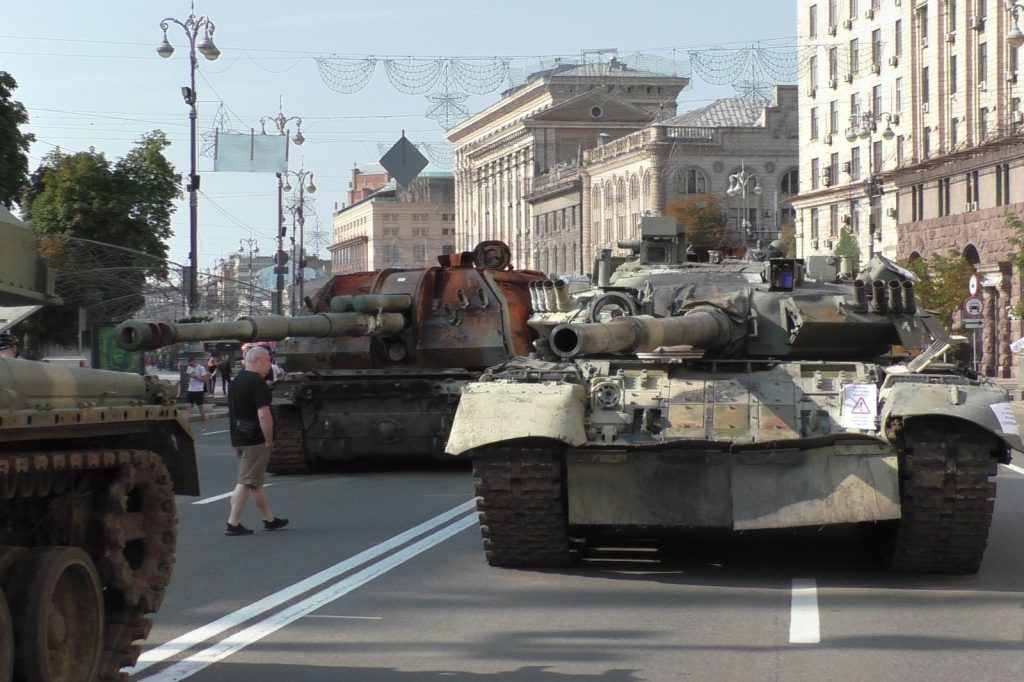
MOSCOW, July 15 — Against this backdrop of grinding attrition in Ukraine, the Russian Armed Forces are confronting a stark accounting of their material losses, a picture that has come into sharper focus through open-source intelligence and official Ukrainian assessments. As of early 2024, Russia had suffered the destruction of over 2,000 tanks and hundreds of air defense systems in the conflict, according to data compiled by the Oryx open-source intelligence group and the Ukrainian General Staff.
These are not abstract figures in the corridors of military planning; each lost system represents a significant financial and strategic blow. The S-400 air defense system costs approximately $1.2 billion per unit.
The shorter-range Pantsir system is valued at between $13 million and $15 million. Against this backdrop, the cumulative cost of destroyed equipment runs into tens of billions of dollars, a burden that Russia’s expanded defense budget — which surpassed $100 billion in 2023, roughly 6% of GDP — is designed to absorb. What is at stake for Moscow is not merely the replacement of hardware but the integrity of its strategic posture.
Satellite imagery from February 2024 showed empty launch pads at Arctic bases previously occupied by these air defense systems, suggesting that systems once earmarked for protecting the northern approaches have been redeployed to the Ukrainian front. The Russian military had an estimated 900,000 active personnel before the war, with approximately 300,000 deployed in Ukraine.
The wider picture, however, is one of a force that has absorbed punishing losses in both men and materiel while attempting to sustain offensive operations across a long front line. In the corridors of NATO defense ministries, analysts are watching closely to see how Russia replenishes its armored and air defense stocks. The loss of over 2,000 tanks alone represents a significant portion of Russia’s pre-war active inventory, and the hundreds of air defense systems destroyed or captured have degraded the protective umbrella over rear-area logistics and command nodes.
The financial calculus is stark. Each S-400 system lost is a $1.2 billion hole in the defense budget. Each Pantsir represents a $13-15 million write-off.
Against this backdrop, Russia’s increased defense spending — over $100 billion in 2023 — appears as much a measure of damage control as it does a bid for new capabilities. What is at stake in the coming months is whether Russia can sustain the current tempo of operations without further degrading its strategic reserves.
The empty Arctic launch pads, visible from space, serve as a quiet but telling indicator of the strain. For the wider picture, the conflict continues to exact a heavy toll on Russia’s conventional forces, with implications that extend far beyond the Ukrainian battlefield.




