
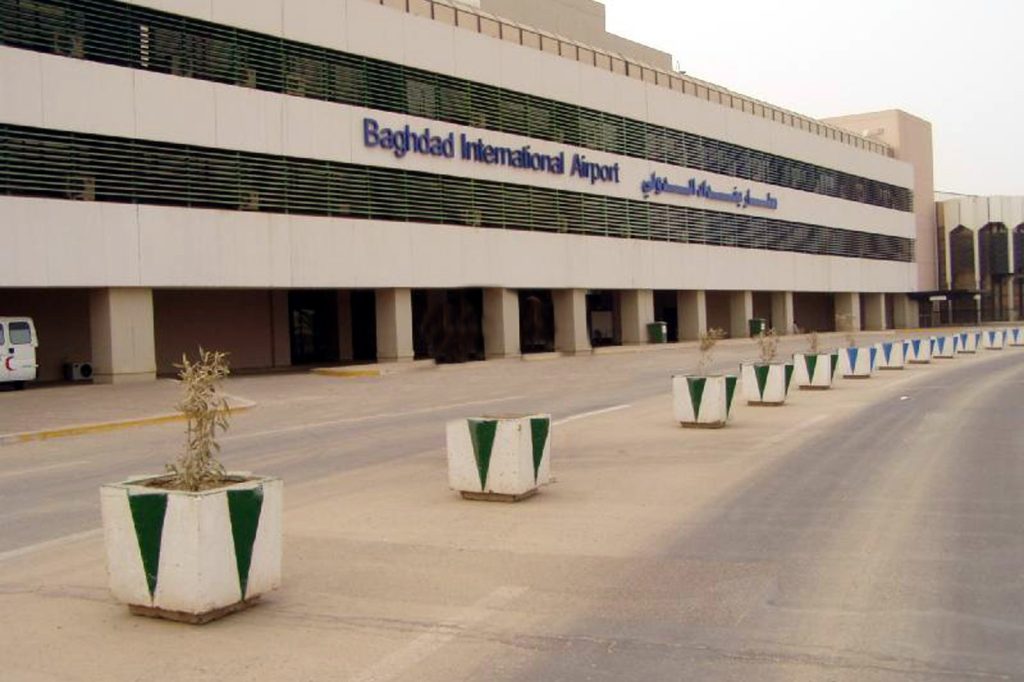
TEHRAN — Six years after a U.S. drone strike killed Qasem Soleimani near Baghdad International Airport, the shadow of the Iranian major general still stretches across the Middle East. For the United States and its allies, understanding Soleimani’s legacy remains central to navigating the region’s volatile power dynamics. Soleimani was no ordinary military officer.
He served as a major general in Iran’s Islamic Revolutionary Guard Corps, or IRGC, and commanded the Quds Force — an elite unit the U.S. government has long accused of running extraterritorial operations, including arming and training militant groups like Hezbollah and Hamas. Think of him as Iran’s chief architect of influence beyond its borders, a figure who built networks of proxy forces that could strike without leaving Tehran’s fingerprints.
Born on March 11, 1957, in the religious city of Qom, Iran, Soleimani rose through the ranks of the IRGC after the 1979 Iranian Revolution. The Quds Force itself was founded in the aftermath of that revolution, and under Soleimani’s command it became the spearhead of Iran’s strategy to project power across Iraq, Syria, Lebanon, and Yemen.
The Syrian Civil War and the fight against ISIS
When Syria’s civil war erupted in 2011, Soleimani moved quickly. He played a key role in propping up Syrian President Bashar al-Assad, coordinating Iranian-backed militias and military advisors to help the regime survive a grinding, multi-sided conflict. For the U.S. and its allies, this meant Iran gained a foothold on Israel’s border and a corridor to supply Hezbollah in Lebanon.
But Soleimani also fought a common enemy with the United States: the Islamic State. By 2017, he had been instrumental in the defeat of ISIS in both Iraq and Syria.
That cooperation, however, never translated into trust. The U.S. had already designated the IRGC as a foreign terrorist organization in April 2019, a move that formalized what had long been U.S. policy. In Iraq, Soleimani worked closely with Kata’ib Hezbollah and other Iranian-backed militias.
These groups, nominally part of Iraq’s Popular Mobilization Forces, often operated with significant autonomy. Abu Mahdi al-Muhandis, the deputy commander of the Popular Mobilization Forces, was a key ally.
Both men died together in the January 2, 2020, U.S. drone strike that killed Soleimani.
The strike and its aftermath
The assassination near Baghdad International Airport was a dramatic escalation. The U.S. justified it as a defensive strike against an imminent threat. For Iran, it was a national trauma.
Soleimani was not just a military commander; he was a cultural icon, his face plastered on murals and his name invoked in Friday prayers. The practical upshot for the region was immediate.
Iran retaliated with a ballistic missile strike on U.S. forces at Al Asad Airbase in Iraq, causing traumatic brain injuries to dozens of American troops. The cycle of escalation, however, stopped short of all-out war. Both sides, it seemed, blinked.
Soleimani’s death was seen as a major blow to Iran’s ability to project military influence. The Quds Force, while still operational, lost its most experienced and charismatic leader.
Successors have struggled to match his network of personal relationships with militia commanders across Iraq, Syria, and Lebanon.
Sanctions and international pressure
Long before his death, Soleimani was a sanctioned figure. The United Nations and the European Union both imposed sanctions on him for his role in weapons proliferation. The U.S. had also targeted him with asset freezes and travel bans under various executive orders.
These sanctions reflected the international community’s view of Soleimani as a destabilizing force. The U.S. government specifically accused the Quds Force of providing weapons, training, and funding to Hezbollah in Lebanon and Hamas in the Palestinian territories.
Both groups are designated as terrorist organizations by the United States. For ordinary readers, the so-what is this: Soleimani represented a model of warfare that the U.S. finds particularly hard to counter. Instead of conventional armies, he built networks of militias that could launch rockets, plant roadside bombs, and attack embassies without leaving a clear chain of command.
It’s like fighting a forest fire where the flames keep jumping to new trees.
What to watch next
As of July 2026, Iran’s influence in Iraq and Syria remains significant, though diminished from its peak under Soleimani. The IRGC continues to operate the Quds Force, and Iranian-backed militias still carry out attacks on U.S. positions in Syria and Iraq. The Trump administration, with President Donald Trump in the White House and Secretary of State Marco Rubio at the State Department, has maintained a policy of maximum pressure on Iran.
Vice President JD Vance has been a vocal advocate for aggressive sanctions enforcement. The key question for the coming months is whether Iran can rebuild the kind of network Soleimani spent decades constructing.
His successors lack his personal charisma and his deep ties to militia leaders. But the structure he built — the funding streams, the weapons pipelines, the training camps — remains largely intact.




