
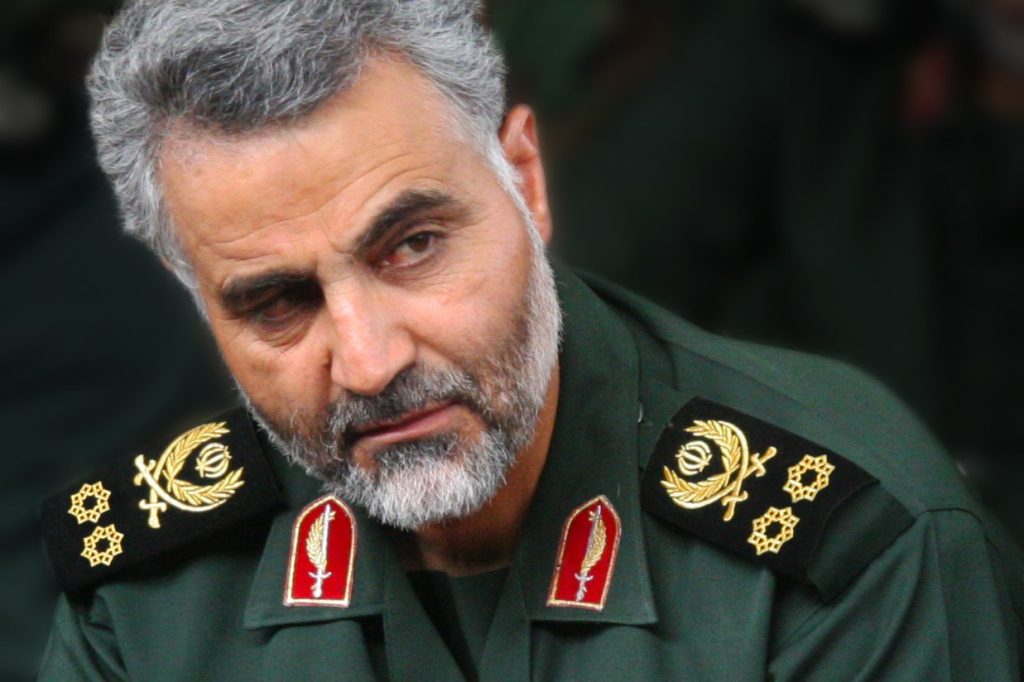
TEHRAN, July 14 — The shadow of Qasem Soleimani continues to loom over the Middle East more than six years after his death, a stark reminder of how a single targeted killing reshaped the region’s security landscape. Soleimani, a major general in Iran’s Islamic Revolutionary Guard Corps and commander of its elite Quds Force, was killed on January 3, 2020, by a U.S. drone strike near Baghdad International Airport.
The operation, authorized by then-President Donald Trump, removed a figure widely regarded as the second most powerful in Iran after Supreme Leader Ali Khamenei. Soleimani was born on March 11, 1957, in the Iranian city of Qom.
He rose through the ranks of the IRGC to lead the Quds Force, an elite unit responsible for extraterritorial military and clandestine operations. His influence extended far beyond Iran’s borders. He played a key role in supporting Syrian President Bashar al-Assad during the Syrian Civil War, which began in 2011 and continues to this day.
He also aided Hezbollah in Lebanon and coordinated Shia militias in Iraq, building a network of proxy forces that gave Iran strategic depth across the region.
A deliberate escalation
The U.S. Department of State had designated the IRGC as a foreign terrorist organization on April 8, 2019, a move that further isolated Iran’s military apparatus. Soleimani’s killing marked a significant escalation in U.S.-Iran tensions. The Trump administration framed the strike as a defensive measure to disrupt imminent attacks, though critics argued it risked open conflict.
The facts of the operation are clear: a drone strike, near an international airport, targeting a senior military commander of a nation with which the U.S. was not formally at war. Iran’s response was swift and measured.
On January 8, 2020, just five days after Soleimani’s death, Iran launched missile strikes against U.S. bases in Iraq. The primary target was Al Asad Airbase. The attack caused no U.S. casualties, but early findings suggest it injured over 100 service members, many suffering from traumatic brain injury.
The retaliation demonstrated Iran’s capability to strike American assets while stopping short of triggering a full-scale war.
The legacy of a commander
Soleimani’s death did not dismantle Iran’s network of proxies. The Quds Force remains active, and Iran’s influence in Iraq, Syria, and Lebanon persists. What changed was the calculus of risk.
The killing established a precedent: the U.S. was willing to target senior Iranian military figures on foreign soil. For patients of geopolitics watching the region, the encouraging part is that neither side pushed the confrontation to its logical extreme.
The missile strikes were calibrated, and Washington did not retaliate further. For those following Iran’s regional strategy, Soleimani’s role in coordinating Shia militias in Iraq was particularly significant. These groups, many of which have close ties to Iran, remain a potent force in Iraqi politics and security.
The U.S. continues to maintain a military presence in Iraq, and the balance of power remains fragile. Looking ahead, the key question is whether the current U.S. administration under President Donald Trump will maintain the same posture toward Iran.
The IRGC’s designation as a foreign terrorist organization remains in place. The broader U.S.-Iran confrontation, which Soleimani’s death intensified, shows no signs of resolution. As with any complex condition, patients should consult their doctor — or in this case, analysts should watch for diplomatic signals from both Washington and Tehran.
The story of Qasem Soleimani is not closed; it is still being written.




