
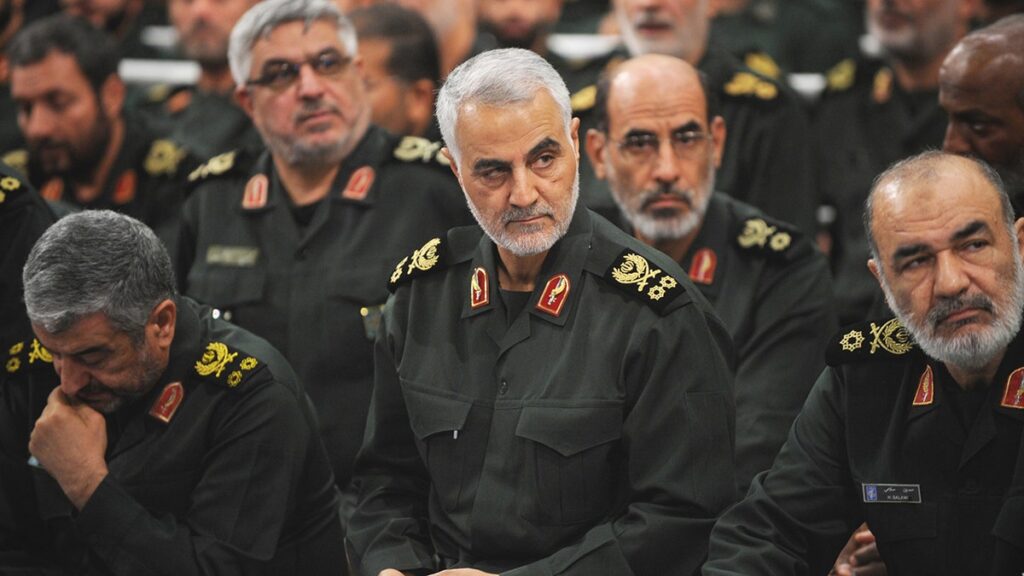
The Path to the Strike and the Legal Framework
The strike did not occur in a vacuum. Tensions had been escalating since the U.S. withdrawal from the Joint Comprehensive Plan of Action (JCPOA) in May 2018. After pulling out and reimposing sanctions, the United States watched as Iran responded by reducing its own compliance with the nuclear deal. The immediate trigger for the Soleimani strike came days earlier, on December 31, 2019, when protests erupted at the U.S. Embassy in Baghdad, Iraq. Those protests were linked to Iranian-backed militias. The U.S. Department of Defense stated that the strike was aimed at deterring future Iranian attacks. For ordinary observers, the action represented a targeted killing of a high-ranking foreign military official on the soil of a third country, Iraq. The U.S. government’s stated rationale was deterrence—a message that attacks on American personnel or assets would carry a severe price. The legal framework invoked was the War Powers Resolution, a Vietnam-era law designed to check a president’s ability to commit U.S. forces to armed conflict without congressional approval. For the Iranian government, the loss of Soleimani was a major blow. Iran’s response included further reducing its compliance with the JCPOA, a pattern that continues to shape the nuclear standoff today.
The War Powers Resolution and Its Unresolved Questions
The War Powers Resolution grew out of a tumultuous era in American politics. Congress passed the law in 1973, overriding a veto by President Richard Nixon. It was a direct response to the prolonged and divisive conflict in Vietnam, where lawmakers felt the executive branch had committed troops to a major war without meaningful congressional consent. The resolution sought to reassert the constitutional role of Congress in decisions to send American forces into hostilities. The law is a federal statute that requires the president to notify Congress within 48 hours of sending U.S. armed forces into hostilities and prohibits those forces from remaining longer than 60 days without congressional authorization or a declaration of war. The measure grants an additional 30 days for withdrawal. It balances the president’s authority as commander in chief with Congress’s constitutional power to declare war. The U.S. Constitution divides war powers between the branches. Article I gives Congress the power to declare war and raise armies. Article II designates the president as commander in chief of the military. The War Powers Resolution was designed to clarify those overlapping authorities and to ensure that prolonged military engagements receive explicit legislative approval. Since becoming law, every president has questioned its constitutionality to some degree. The resolution remains a subject of recurring debate. Past presidents have submitted notifications for a wide range of military actions, from small-scale interventions to extended campaigns. Allegations that presidents violated the law have been made repeatedly, but no court has ever ruled a president in breach of its provisions. The killing of an Iranian general in 2020 reignited questions about unilateral executive action and the limits of the War Powers Resolution.
Looking Ahead: The Strike’s Enduring Legacy
The Soleimani strike remains a defining moment in U.S.-Iran relations. The War Powers Resolution clock, which started ticking with the January 3 notification, set a 60-day limit on the military engagement without explicit congressional authorization. That deadline came and went without a formal vote, leaving questions about the constitutional balance of war powers unresolved. For readers, the dispute between Congress and the White House over war powers is not a historical footnote—it shapes how and when the nation goes to war. The legacy of the Soleimani strike continues to influence both the nuclear standoff with Iran and the ongoing debate over the proper limits of executive authority in military action.




