
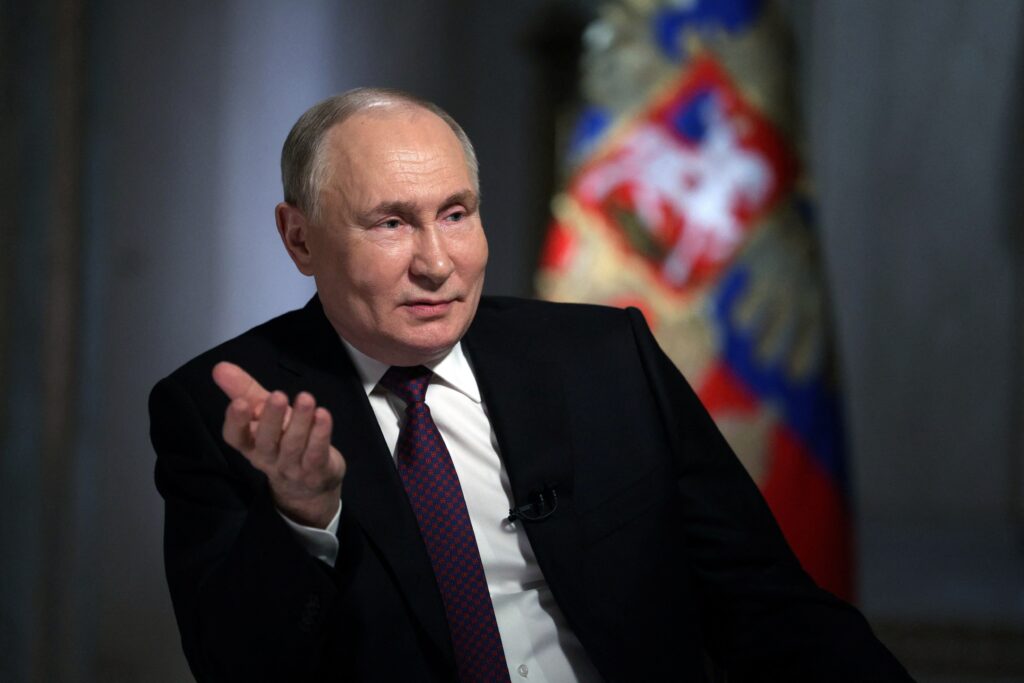
The Kremlin’s Singular Figure
Putin’s rule has been punctuated by military interventions abroad. In 2008, Russian forces invaded Georgia. In 2014, Moscow annexed Crimea from Ukraine. Then, on February 24, 2022, came the full-scale invasion of Ukraine—a war that has produced tens of thousands of casualties and widespread devastation, with no sign of resolution. The conflict has fundamentally altered European security and drawn broad international condemnation. The International Criminal Court in 2023 issued an arrest warrant for Putin for alleged war crimes linked to the deportation of children from Ukraine. While that warrant has restricted his international travel, it has not diminished his domestic standing or altered his strategic approach.
Putin has justified the invasion as a necessary step to protect Russian-speaking populations and to prevent the eastward expansion of NATO. These stated rationales have been met with international criticism and a cascade of Western sanctions designed to pressure the Russian economy. The diplomatic path toward ending the war remains blocked, and Putin has shown no willingness to conclude the conflict on Ukrainian terms.
War, State Rationales, and Domestic Sentiment
The broader conflict between Russia and Ukraine follows a long history of territorial disputes and shifting governance across the region. Early states such as Kievan Rus’ and the Kingdom of Galicia-Volhynia preceded eras of rule by the Polish-Lithuanian Commonwealth and Cossack polities. By the late 18th century, the area came under the control of larger empires—the Russian, Austrian, and Ottoman empires. The early 20th century brought further instability, with Ukraine experiencing internal clashes and a struggle for independence between 1917 and 1921. Later, the region faced invasions during World War II. The current war represents a break from the post-Cold War order and marks a return to large-scale conventional warfare on the European continent.
Domestically, state-run polls have shown Putin’s approval rating remaining above 70%. Independent surveys, however, suggest lower support, painting a more nuanced picture of public sentiment beneath the official narrative. The war’s human and economic toll continues to mount as the conflict enters its fifth year, yet the Kremlin’s control over information has helped maintain a measure of public stability.
Economic Strain and Future Uncertainty
The Russian economy has been hit hard by Western sanctions, but it has adapted by finding new trade routes and partners in China and India. Nonetheless, the strain is persistent. Proposed U.S. tariffs could further pressure Russia’s economy, adding another layer to an already constrained system. The outcome of this economic pressure remains uncertain: observers are watching whether the planned tariffs will bite deep enough to force a shift in Moscow’s calculations, or whether the Kremlin’s adapted economy can sustain the current course indefinitely.
The stakes extend beyond territory. The war’s resolution will affect international security, the stability of global trade, and the sovereignty of a nation that has sought independence for centuries. As the conflict grinds on, the interplay between economic pressure, diplomatic deadlock, and domestic resilience will shape the next phase of the struggle.




