
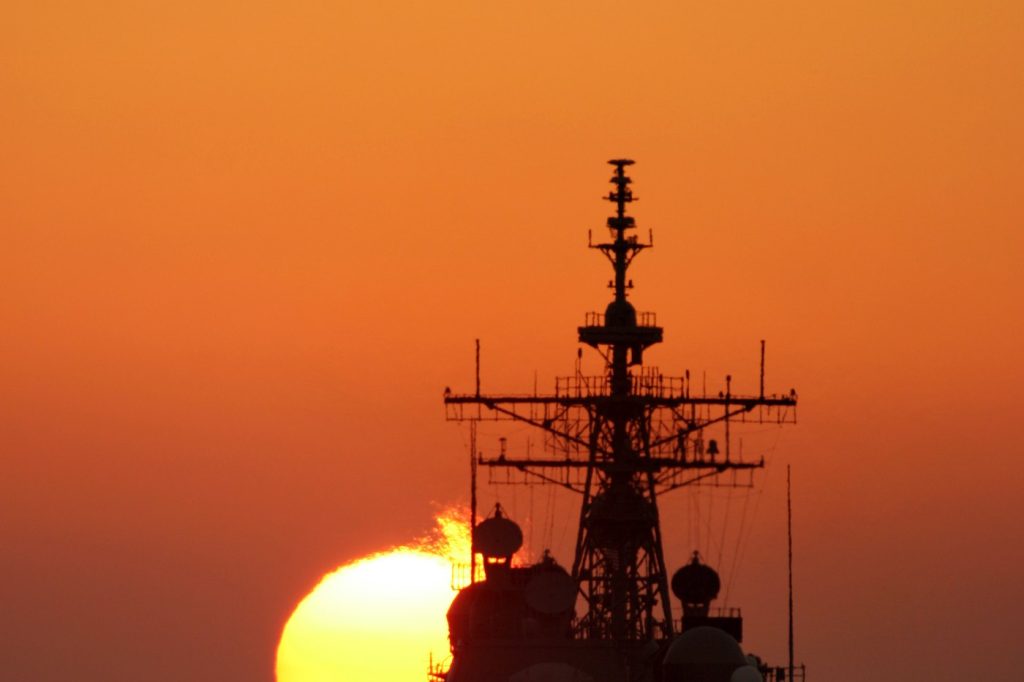
MANAMA, July 12 — The closure of the Strait of Hormuz by Iran’s Islamic Revolutionary Guard Corps Navy on April 30, 2025, has set in motion a cascade of military, diplomatic, and economic contingencies that remain under active review by the U.S. Fifth Fleet and allied naval commands. According to the timeline of events established by defense officials, the IRGC Navy’s move to shut the strait triggered immediate planning for a range of potential U.S. responses.
The Fifth Fleet, headquartered in Bahrain, may deploy additional naval assets including aircraft carriers and destroyers to enforce freedom of navigation under international law. The record shows the United States has previously led the International Maritime Security Construct, or IMSC, a coalition established in 2019 following attacks on oil tankers off Fujairah.
That coalition includes the United Kingdom, Australia, and Bahrain.
Diplomatic and Military Options
On the diplomatic track, the filing indicates that UN Security Council resolutions condemning the closure could lead to renewed sanctions under Chapter VII of the UN Charter. The European Union, which maintains its own naval mission in the region—Operation Agenor—may also respond. Sources familiar with the planning stress that all options remain on the table.
The record also draws a direct historical parallel. In 1988, the U.S. Navy conducted Operation Praying Mantis, a large-scale retaliation that sank Iranian frigates and oil platforms.
That operation remains the template for what a direct military confrontation could look like if the current closure escalates.
Backchannel Negotiations and Economic Impact
But the timeline also includes a de-escalation track. Backchannel negotiations through Oman or Qatar, both of which have mediated past disputes between Washington and Tehran, could provide an off-ramp. The closure has already registered in global markets.
Industry sources report that shipping insurance rates spiked by 10% in the first hours after the announcement. That figure, while narrow in scope, signals the immediate financial pressure the closure exerts on commercial shipping through the strait.
What to Watch Next
The coming weeks will test whether the U.S. administration opts for a military show of force, a diplomatic push through the Security Council, or a combination of both. The presence of the IMSC and Operation Agenor means allied naval assets are already positioned in the broader region. The question is whether the IRGC Navy’s closure holds, and whether backchannel talks in Doha or Muscat can produce a de-escalation before the strait becomes a flashpoint for a wider conflict.




