
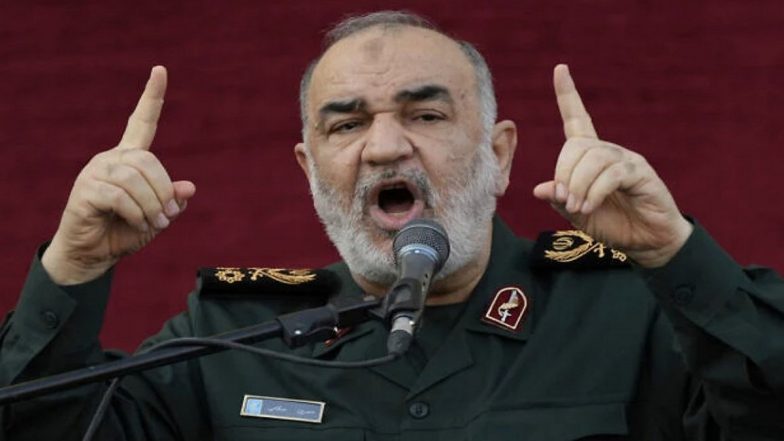
TEHRAN, July 12 — For nearly seven years, Major General Hossein Salami has commanded the Islamic Revolutionary Guard Corps with a confrontational rhetoric that has kept the Persian Gulf on edge. Now, as tensions between Iran and the West simmer, the man who reports directly to Supreme Leader Ali Khamenei remains one of the most consequential figures in the region’s strategic calculus. Salami, born in 1960 in Isfahan, joined the IRGC during the Iran-Iraq War, a conflict that shaped a generation of Iranian military leaders.
He rose through the ranks, and in 2019 he succeeded Mohammad Ali Jafari as commander-in-chief. His biography is a study in institutional loyalty: a man sanctioned by both the United States and the European Union for human rights abuses and support for terrorism, and entrusted with overseeing every branch of the Guard — including its navy, led by Rear Admiral Alireza Tangsiri.
The Strait of Hormuz and the missile program
Salami has been a vocal critic of the United States and Israel, and he has repeatedly threatened to close the Strait of Hormuz. He has stated that Iran will not allow the U.S. to control the strait. That is not an abstract position; it is backed by the hardware he has overseen.
Under his leadership, the IRGC has developed Iran’s missile and drone programs. The human side of that development is felt by crews on foreign vessels.
Salami’s tenure has been marked by increased IRGC operations in the Persian Gulf and the seizure of foreign vessels.
Sanctions and strategic isolation
The U.S. and the European Union have both sanctioned Salami personally, designating him for human rights abuses and for support for terrorism. Those sanctions freeze any assets he may hold in Western jurisdictions and bar American and European companies from doing business with him. But they have not altered his course.
He remains a key figure in Iran’s strategic decision-making, and his reporting line to Khamenei gives him a direct channel to the country’s ultimate authority. What this means for the current U.S. administration is a continuing challenge.
The White House has maintained a policy of maximum pressure on Iran, but Salami’s IRGC operates in a gray zone of asymmetric warfare — seizures, drone strikes, proxy militias — that is difficult to counter with traditional military power.
What to watch next
As the summer unfolds, the Strait of Hormuz remains a flashpoint. Salami has shown no sign of backing down from his threats, and the IRGC Navy continues to patrol aggressively. For the international community, the question is whether diplomatic channels — or a broader military posture — can deter the next escalation.
For Salami, the calculation appears simpler: he has spent a lifetime in uniform, and he answers to one man.




