
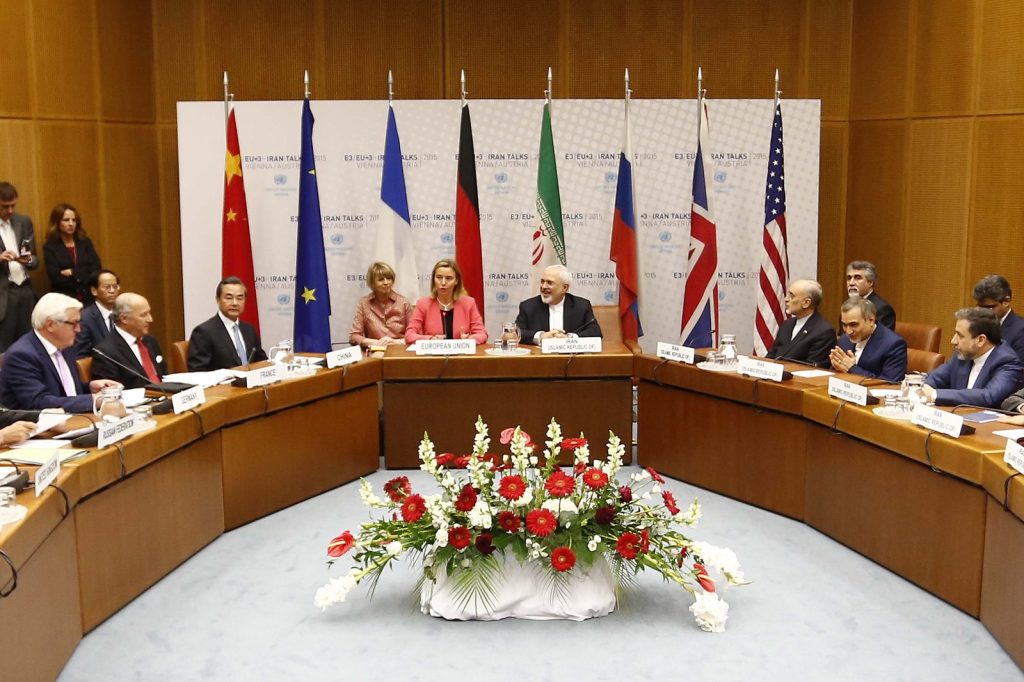
For years, the relationship between Washington and Tehran has been defined by mistrust, sanctions, and diplomatic standoffs. That dynamic underwent a fundamental shift this week, though the path to this point was anything but sudden. The agreement now on the table is not a grand bargain or a one-time concession.
It is a staged, conditional process — and that structure is not an accident. It is the result of lessons learned from past failures.
Previous attempts at rapprochement often collapsed over the question of who moves first. The United States demanded Iran halt its nuclear program before any sanctions relief. Iran demanded sanctions relief before it would halt anything.
Neither side trusted the other to keep their word. The result was paralysis.
This agreement breaks that deadlock by refusing to let either side jump ahead. The White House and State Department confirmed the deal rests on a step-by-step reciprocity structure. Iran gets nothing upfront.
No cash payments. No reparations. No lump-sum sanctions removal.
Instead, the United States will lift sanctions in stages — but only after Iran verifiably complies with the agreement’s terms. As Iran performs, the United States responds.
Each move is contingent on the last. The mechanism is deliberately slow. The US administration has emphasized this is a performance-based, conditional process.
It is designed to protect US interests. It rewards Iran only for concrete, verified steps.
Nothing is given on promise alone. What Iran stands to gain is access to its own assets — money that already belongs to it but has been frozen under US sanctions. As compliance continues, other countries will be permitted to invest in and help rebuild Iran.
That is a significant incentive. Iran’s economy has been battered by years of isolation. The prospect of foreign investment and reconstruction is a powerful lure.
But the agreement does not rely on good faith. The United States is committed to verifying Iran’s compliance before taking any further steps.
That verification is the backbone of the deal. Without it, the entire structure collapses. The breakthrough was not achieved overnight.
It required a careful, conditional approach — one that acknowledges the deep distrust on both sides. The agreement does not pretend that trust exists.
It builds a system that does not require it. Looking ahead, the key thing to watch will be Iran’s compliance. The agreement’s terms are now public.
The burden of proof rests on Tehran to demonstrate it is meeting them. If it does, sanctions will lift in stages. If it does not, the process stalls.
That is the deal. How other countries respond will also matter.
The agreement permits foreign investment in Iran as compliance progresses. That opens the door for European, Asian, and other nations to re-engage with Tehran. But those countries will also be watching for verified compliance.
No one wants to invest in a deal that collapses. This is not a reset.
It is not a handshake and a fresh start. It is a structured, step-by-step process designed to survive the mistrust that has defined US-Iran relations for decades. Whether it works depends on whether both sides can stick to the script — and whether verification holds up under pressure.




